
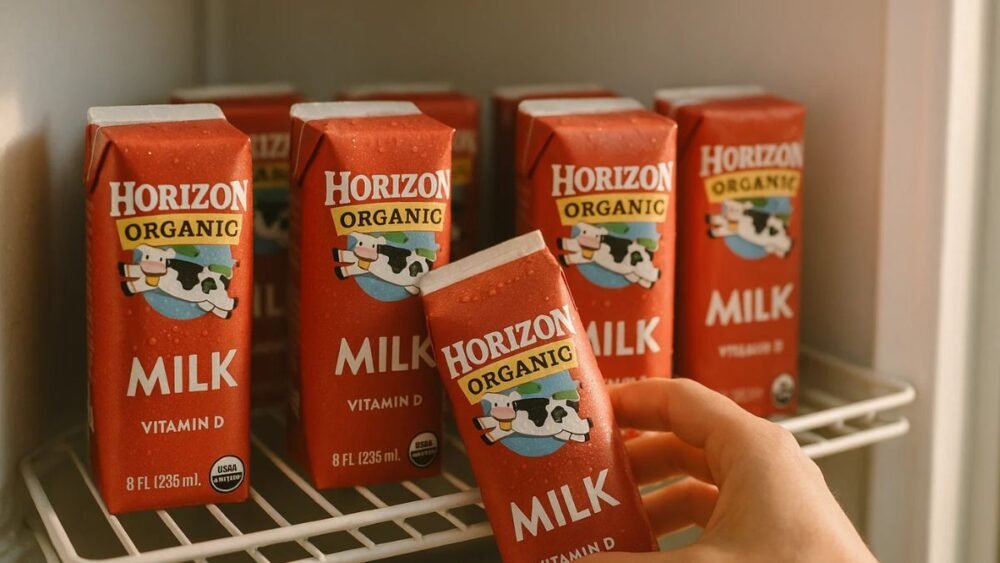
If you’ve recently stocked your fridge with Horizon Organic Milk, you might want to double-check those cartons. Horizon Organic Dairy, LLC has voluntarily recalled nearly 20,000 cases of its “Aseptic Plain Whole Milk” 8-ounce cartons after discovering that some could spoil before their printed “Best By” dates.
Jump To
What’s Behind the Recall
The recall affects milk cartons with “Best By” dates from March 3 through March 7, 2025. It covers both the 12-pack cartons (UPC 3663207113) and the single 8-ounce cartons (UPC 3663207127). Distribution was limited to California, Arizona, and Nevada, according to FDA-tracked delivery data.
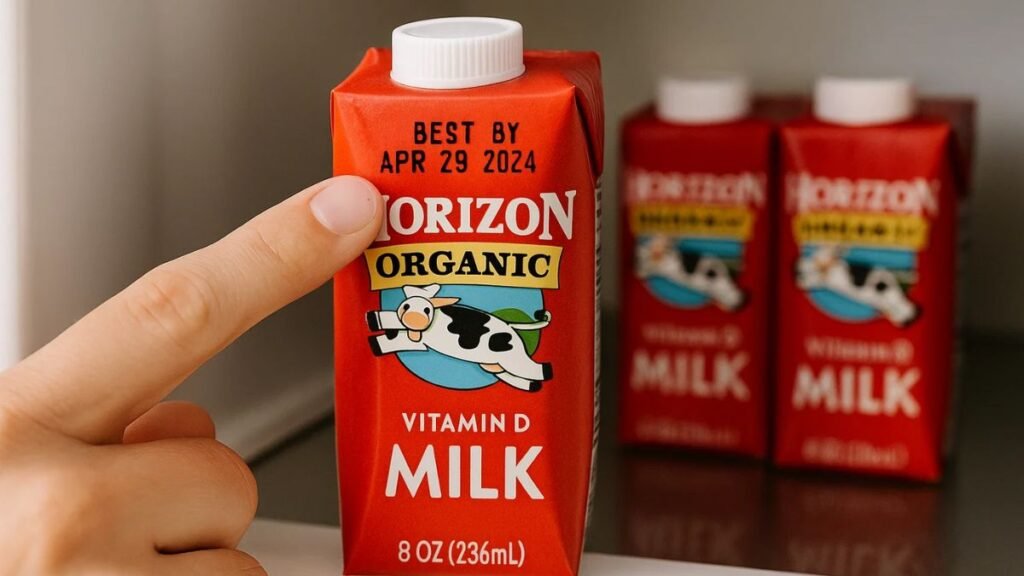
Here’s the key detail: this isn’t about bacteria or contamination. Instead, Horizon Organic points to processing-related heat damage that may have altered milk quality. Experts note that even pasteurized milk isn’t immune to spoilage if production steps go slightly off-track.
If you want to understand more about how milk quality can shift even after pasteurization, check out our recent piece on hard-boiled eggs vs. cottage cheese for freshness and nutrition, which dives into how dairy processing affects shelf life.
The Risk to Consumers
The FDA classifies this as a Class II recall, meaning serious harm is unlikely, but temporary or medically reversible issues are possible. Drinking spoiled milk, as nutritionists point out, can trigger stomach upset, nausea, or vomiting. Even if the milk doesn’t contain harmful bacteria, the sour taste or off smell can make it unsafe or just plain unpleasant.
I spoke with a local consumer-safety advocate who stressed, “You might think milk is fine because it’s sealed and pasteurized — but sometimes production errors sneak through. Better safe than sorry.”
What You Should Do
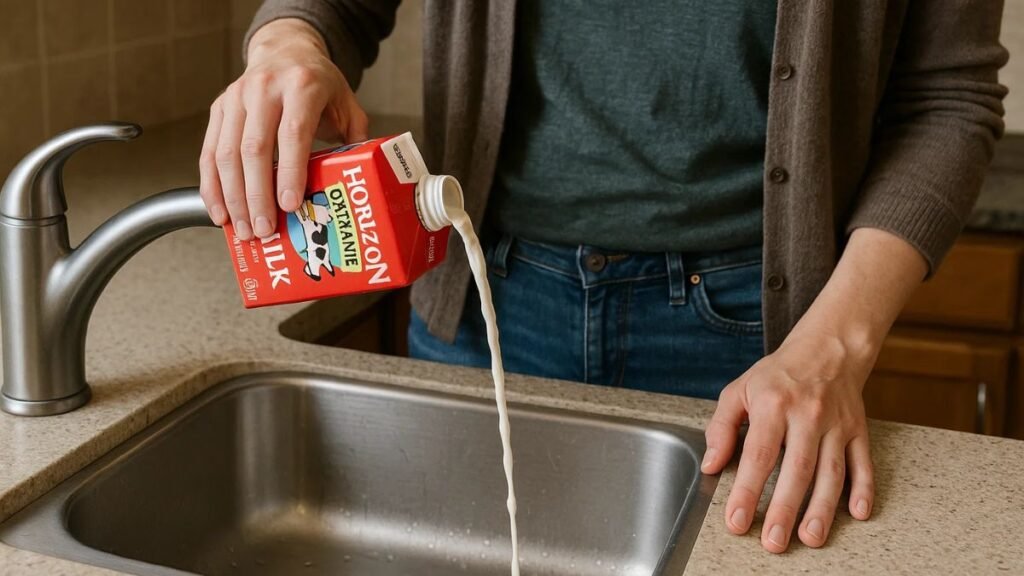
If you have one of the affected cartons at home:
- Check the “Best By” date: Look for 03 MAR, 04 MAR, 06 MAR, or 07 MAR 2025.
- Verify the UPC: 3663207113 for 12-packs or 3663207127 for single cartons.
- Do not drink it — even unopened. Toss it out or return it to the store.
- Keep proof of purchase: a receipt and packaging could be useful for refunds or questions.
For further guidance, the FDA’s website remains the most up-to-date resource on dairy recalls and safety recommendations.
A Deeper Look at Dairy Safety
While contamination from bacteria, allergens, or chemicals makes headlines more often, this recall highlights a less obvious but real risk: production and quality-control failures. Heat damage, improper pasteurization, and packaging mishaps can all compromise milk safety.
Food safety experts stress that vigilance doesn’t stop at the store. Consumers should regularly check labels, expiration dates, and the condition of packaging. Even trusted brands like Horizon Organic aren’t immune to human or machine errors.
This incident also ties into broader research about milk freshness. A recent study on pasteurized orange juice found that processing and storage conditions can dramatically affect shelf life — a reminder that temperature and handling matter more than we often realize (see our coverage here).
What This Means Going Forward
For dairy producers, the Horizon recall underscores the importance of rigorous quality checks at every production stage. For regulators, the lesson is clear: swift, transparent communication protects consumers and maintains trust. And for you, the consumer? Even “low-risk” products like milk deserve respect.
Next time you reach for your morning glass, take a moment to check that carton. Freshness isn’t just a label — it’s a guarantee that must be earned.
If you enjoyed this article, don’t forget to follow and subscribe for more health tools, recipes, and news!
Sources
- U.S. Food and Drug Administration (FDA) – Official recall notice and guidance on dairy product safety. https://www.fda.gov
- Food Safety News – Coverage on milk recalls, Class II FDA recall classification, and spoilage risks. https://www.foodsafetynews.com

Muhammad Ahtsham is the founder of EatLikeFit.com and a nutrition researcher dedicated to healthy weight management. He provides practical, science-backed advice on high-protein diets and affordable meal planning to help readers achieve their fitness goals simply and effectively.