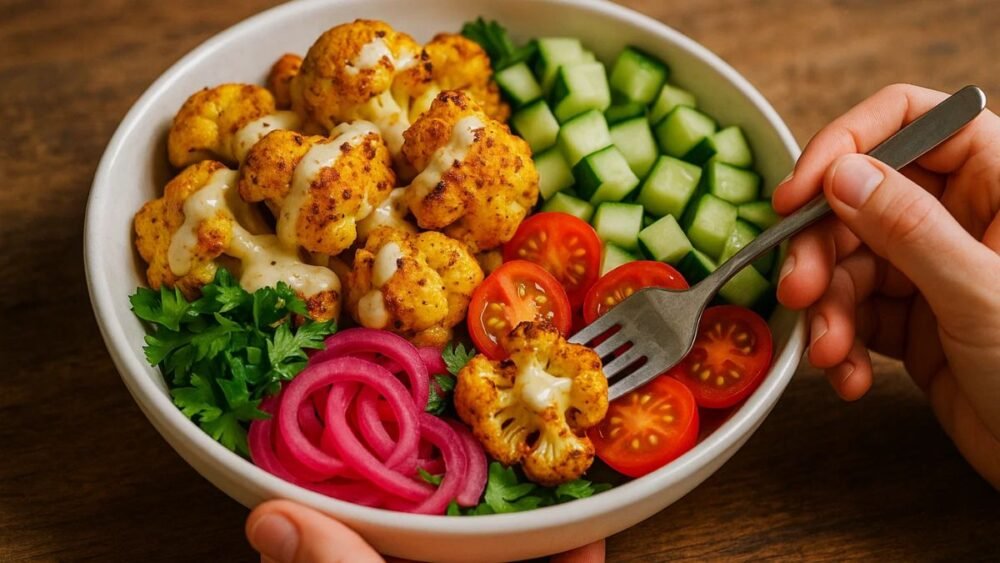
Lately, something interesting has been stirring in kitchens across the U.S.—home cooks, fast-casual spots, and food bloggers alike are all hopping on the cauliflower shawarma bowl bandwagon. What once felt like a niche, plant-forward twist on a Middle Eastern favorite has suddenly exploded into mainstream menus and meal prep routines.
Originally embraced as a vegetarian alternative, the cauliflower shawarma bowl is now shaping everything from weeknight dinners to grocery shopping habits. And if you’ve noticed it popping up in your Instagram feed, you’re not imagining things—food analysts call this a “tipping point,” the exact moment a dish moves from curious to irresistible.
Jump To
A Modern Twist on an Age-Old Flavor
Shawarma has been a beloved staple across the Middle East for generations, but swapping slow-roasted meat for roasted cauliflower is a distinctly contemporary move. Imagine cauliflower florets dusted with cumin, paprika, turmeric, and garlic, roasted until they’re golden and slightly crisp. The aroma alone could pull anyone into the kitchen.
What makes the bowl so mesmerizing isn’t just the spice—it’s the play of textures and temperatures. Warm, fragrant cauliflower meets cool, tangy tahini or yogurt. Add a squeeze of bright lemon, crisp cucumbers, pickled onions, and fresh herbs, and suddenly each bite is both comforting and refreshing.
For home cooks, this dish is a revelation. It feels indulgent but remains firmly in the “better-for-you” category. Nutrition experts note that cruciferous vegetables like cauliflower are packed with fiber, vitamin C, and antioxidants, making them a perfect choice for health-conscious meals (USDA.gov).
Why Everyone’s Talking About This Bowl
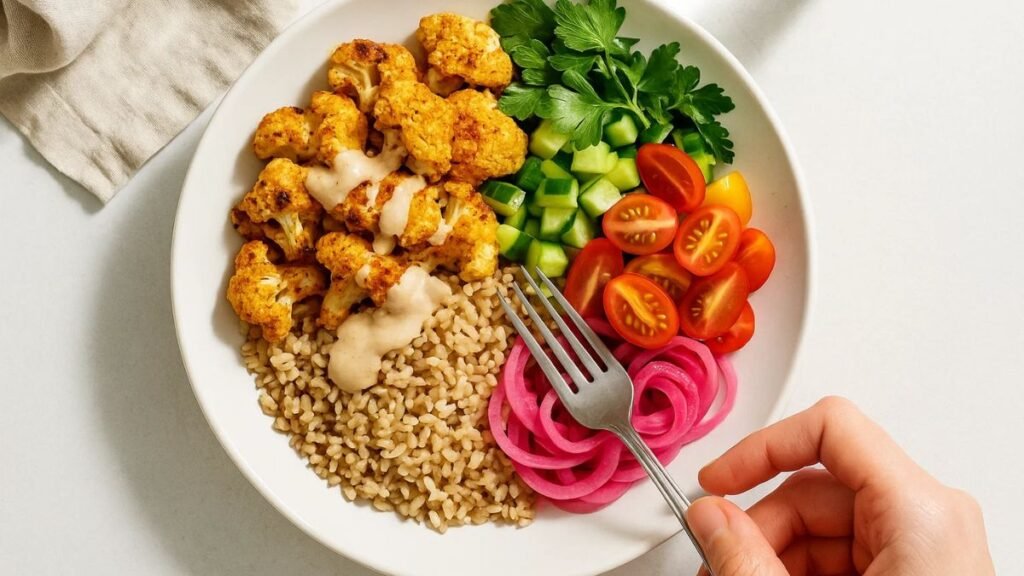
The cauliflower shawarma bowl didn’t become trendy overnight. Its rise is fueled by cultural shifts, lifestyle changes, and yes, a little social media magic. Some factors are predictable, while others caught even industry insiders by surprise.
1. Plant-Forward Eating Is Here to Stay
Searches for plant-based meals have skyrocketed over the past year. People don’t have to be fully vegetarian to embrace more veggies—they’re just trying to eat smarter without giving up flavor. Roasted cauliflower delivers exactly that: hearty, satisfying, and surprisingly versatile.
If you’re curious about other plant-forward swaps, you might enjoy our breakdown of hard-boiled eggs vs. cottage cheese for easy protein-packed meals.
2. Middle Eastern Flavors Are Going Mainstream
Za’atar, tahini, sumac, and shawarma spice blends are no longer confined to specialty stores. You’ll find them in supermarkets, meal kits, and even school cafeterias. The cauliflower shawarma bowl often acts as the gateway dish, introducing home cooks to these bold flavors without overwhelming them.
3. Quick, Affordable, and Meal-Prep Friendly
Cauliflower is a budget-friendly star. A single head can stretch across multiple meals, which is a boon when grocery prices keep rising. Most bowls take around 30 minutes to prepare, perfect for busy families or anyone prepping meals for the week.
And if you’re looking for more wholesome, easy-to-make bowls, you might check out this three-cheese and macaroni recipe that pairs comfort with convenience.
4. Instagram-Worthy Aesthetic
There’s no denying it: this dish looks incredible. Golden cauliflower, jewel-toned veggies, creamy drizzles of sauce—it practically begs to be photographed. On TikTok, Instagram, and Pinterest, it performs like a dream, making it a favorite among influencers and casual foodies alike.
What’s Actually in the Bowl
Recipes vary, but here’s the core lineup of a classic cauliflower shawarma bowl:
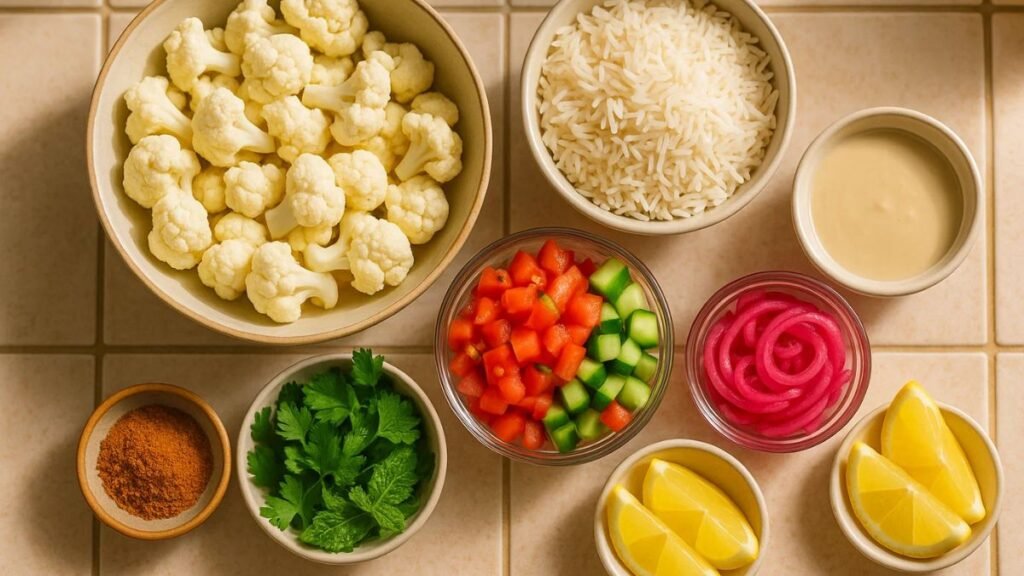
- Roasted, shawarma-spiced cauliflower
- Warm grains like basmati rice or quinoa
- Tahini, yogurt, or garlic sauce
- Pickled onions or cabbage
- Fresh veggies: cucumbers, tomatoes
- Herbs like parsley or mint
- A squeeze of lemon
Some bowls lean heavily on veggies, others on grains. High-protein additions—chickpeas, lentils, or even grilled chicken—often appear, keeping the meal filling without losing its fresh, plant-forward identity.
Nutritionists say this combination hits the sweet spot for many eating styles. Diets rich in vegetables, legumes, and whole grains are linked to long-term health benefits (NIH.gov). The cauliflower shawarma bowl fits squarely into that template.
The Comfort-Health Hybrid Everyone Craves
What makes this bowl resonate so strongly is its dual identity. It’s undeniably comforting—warm spices, creamy sauce, and hearty texture—but it’s still lighter and more nutrient-dense than most traditional comfort foods.
Post-pandemic, people are chasing this exact balance: indulgence without guilt, satisfaction without heaviness. Restaurant owners confirm the trend. Several fast-casual chains have introduced cauliflower shawarma bowls, reporting strong sales from diners eager to “eat clean” without sacrificing flavor.
More Than Just a Bowl
On the surface, it’s just seasoned cauliflower with colorful toppings. But its surge in popularity tells a bigger story: people want global flavors, more vegetables, and meals that are easy to adapt.
Quick, colorful, budget-conscious, bold, and flexible—it’s no wonder this bowl is everywhere. If food trends are like weather patterns, this one isn’t a passing shower. It’s shaping the way Americans cook and eat at home, and it looks here to stay.
Why are cauliflower shawarma bowls trending?
They combine bold Middle Eastern flavors with plant-forward ingredients, offer quick and affordable meal prep, and photograph beautifully on social media.
Are cauliflower shawarma bowls healthy?
Absolutely. They’re high in fiber, rich in vegetables, and can include whole grains or lean proteins. Health authorities recommend boosting intake of cruciferous vegetables like cauliflower.
If you enjoyed this article, don’t forget to follow and subscribe for more health tools, recipes, and news!

Cauliflower Shawarma Bowl
Equipment
- Baking sheet
- Mixing bowls
- Measuring spoons and cups
- Knife and cutting board
- Oven or air fryer
- Spoon for drizzling sauce
Ingredients
For the Cauliflower:
- 1 large head of cauliflower cut into florets
- 2 tbsp olive oil
- 1 tsp ground cumin
- 1 tsp smoked paprika
- ½ tsp turmeric
- ½ tsp garlic powder
- Salt and pepper to taste
For the Grain Base:
- 1 cup cooked basmati rice or quinoa
For the Sauce:
- ¼ cup tahini
- 2 tbsp Greek yogurt optional for creaminess
- 1 tbsp lemon juice
- 1 tsp olive oil
- Salt to taste
- Water to thin as needed
Toppings:
- ½ cup diced cucumbers
- ½ cup cherry tomatoes halved
- ¼ cup pickled onions or cabbage
- Fresh parsley or mint chopped
- Lemon wedges for serving
- Optional: cooked chickpeas or grilled chicken for protein
Instructions
Preheat the oven: to 425°F (220°C). Line a baking sheet with parchment paper.
Prepare the cauliflower: In a mixing bowl, toss cauliflower florets with olive oil, cumin, paprika, turmeric, garlic powder, salt, and pepper until evenly coated.
Roast the cauliflower: Spread florets in a single layer on the baking sheet. Roast for 20 minutes, tossing halfway, until edges are golden and slightly crisp.
Cook the grains: While cauliflower roasts, prepare your basmati rice or quinoa according to package instructions.
Prepare the sauce: Whisk together tahini, Greek yogurt, lemon juice, olive oil, and a pinch of salt. Add water a teaspoon at a time until smooth and pourable.
Assemble the bowl: Divide rice or quinoa between 4 bowls. Top with roasted cauliflower, cucumbers, tomatoes, pickled onions, and herbs. Drizzle with tahini sauce.
Optional protein: Add chickpeas or grilled chicken for extra protein.
Serve: Garnish with lemon wedges and extra herbs. Enjoy warm!
Notes
- The bowl can be fully meal-prepped and stored in the fridge for up to 3 days.
- Adjust spices according to taste. Add a pinch of cayenne for heat.
- Swap tahini sauce with yogurt-garlic sauce for a lighter version.

Muhammad Ahtsham is the founder of EatLikeFit.com and a nutrition researcher dedicated to healthy weight management. He provides practical, science-backed advice on high-protein diets and affordable meal planning to help readers achieve their fitness goals simply and effectively.