
You’ve been eating less. Exercising more. And yet that stubborn pouch around your midsection just won’t budge. Sound familiar?
Here’s the truth nobody tells you: if stress hormones are driving your weight gain, no amount of calorie cutting will fix it. The real problem might be cortisol — and the fix starts on your plate.
In this guide, you’ll discover the 7 science-backed foods that lower cortisol naturally, how they directly target belly fat, and the three foods you absolutely need to avoid if stress weight is your struggle.
Jump To
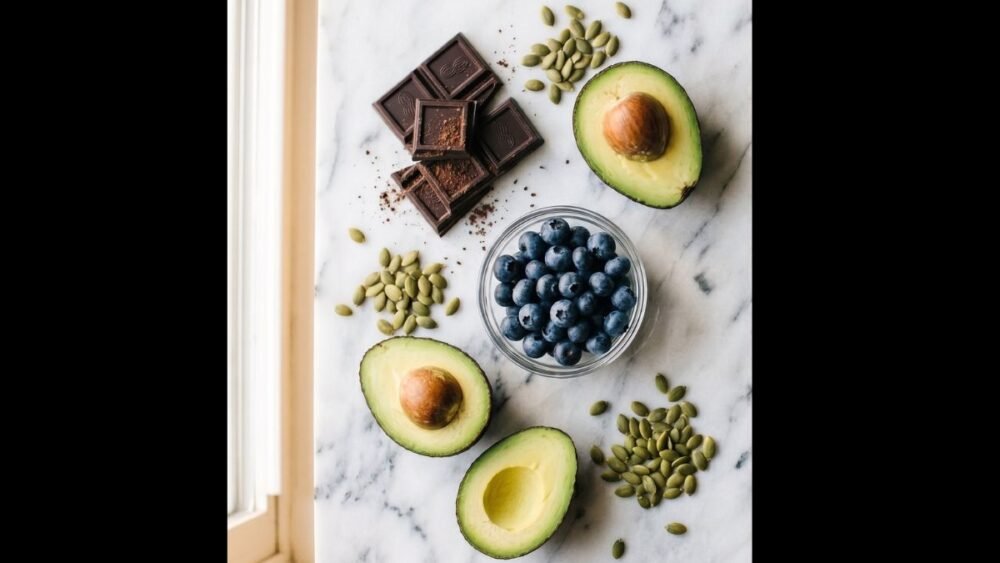
The best foods to lower cortisol and reduce belly fat include dark chocolate (70%+ cacao), avocados, wild-caught salmon, fermented foods like kefir and kimchi, green tea, pumpkin seeds, and blueberries. These work by reducing inflammation, regulating the stress hormone cortisol, and supporting adrenal and gut health.
What Is Cortisol and Why Does It Cause “Stress Belly”?
Cortisol is your body’s primary stress hormone, released by the adrenal glands as part of the “fight or flight” response. In short bursts, it’s actually helpful — it gives you energy and mental sharpness when you need it most.
The problem starts when stress becomes chronic.
Think about it: long work hours, bad sleep, scrolling through stressful news at midnight, or pushing through daily high-intensity workouts without adequate recovery. All of these keep cortisol elevated well beyond what your body was designed for.
When cortisol stays high for days or weeks at a time, your body shifts into survival mode. It slows your metabolism, increases cravings for sugar and fat, and — this is the key part — starts storing fat directly in the abdominal region. Visceral fat (the kind packed around your organs) is especially sensitive to cortisol.
So no, it’s not your willpower that’s failing you. Your hormones are just doing exactly what they’re programmed to do under stress.
Cortisol Belly vs. Normal Belly Fat: How to Tell the Difference

Not all belly fat is created equal, and knowing the difference matters.
Normal belly fat tends to be distributed more evenly across the body — hips, thighs, arms — and responds reasonably well to a calorie deficit and consistent exercise.
Cortisol belly, on the other hand, concentrates almost entirely around the midsection. It often feels firm or puffy rather than soft, and many people describe it as a “stress bloat” that flares up during particularly hard weeks. You might also notice it’s accompanied by fatigue, poor sleep, intense sugar cravings, and a feeling of being “wired but tired.”
If your belly seems disproportionately large compared to the rest of your body — and dieting isn’t moving it — elevated cortisol is a very likely culprit.
7 Best Foods That Lower Cortisol and Melt Belly Fat
1. Dark Chocolate (70% Cacao or Higher)
Yes, chocolate. Real chocolate.
Dark chocolate at 70% cacao or above is rich in flavonoids and polyphenols — plant compounds that have been shown to significantly reduce cortisol concentrations in the bloodstream. A 2009 study published in the Journal of Proteome Research found that eating 40 grams of dark chocolate daily for two weeks measurably lowered cortisol in participants reporting high stress.
The key is quality. Milk chocolate and candy bars won’t do it. Look for 70%+ cacao content and keep portions to one to two small squares per day.
2. Avocados (The Potassium Powerhouse)
Avocados deserve their superfood status, and here’s the cortisol-specific reason: they’re one of the richest sources of potassium, a mineral that directly helps regulate blood pressure that spikes under stress.
When you’re anxious or overwhelmed, your heart rate and blood pressure climb — this triggers more cortisol release. Potassium acts as a natural buffer, helping the cardiovascular system stay calm and preventing the kind of stress-eating spiral that cortisol loves to trigger.
Half an avocado contains more potassium than a banana. → See more high-potassium foods here
3. Wild-Caught Salmon (Omega-3 Fatty Acids)
Fatty fish like wild-caught salmon is one of the most powerful anti-cortisol foods you can eat. The mechanism is well-established: omega-3 fatty acids (EPA and DHA) reduce systemic inflammation — and inflammation is both a cause and consequence of elevated cortisol.
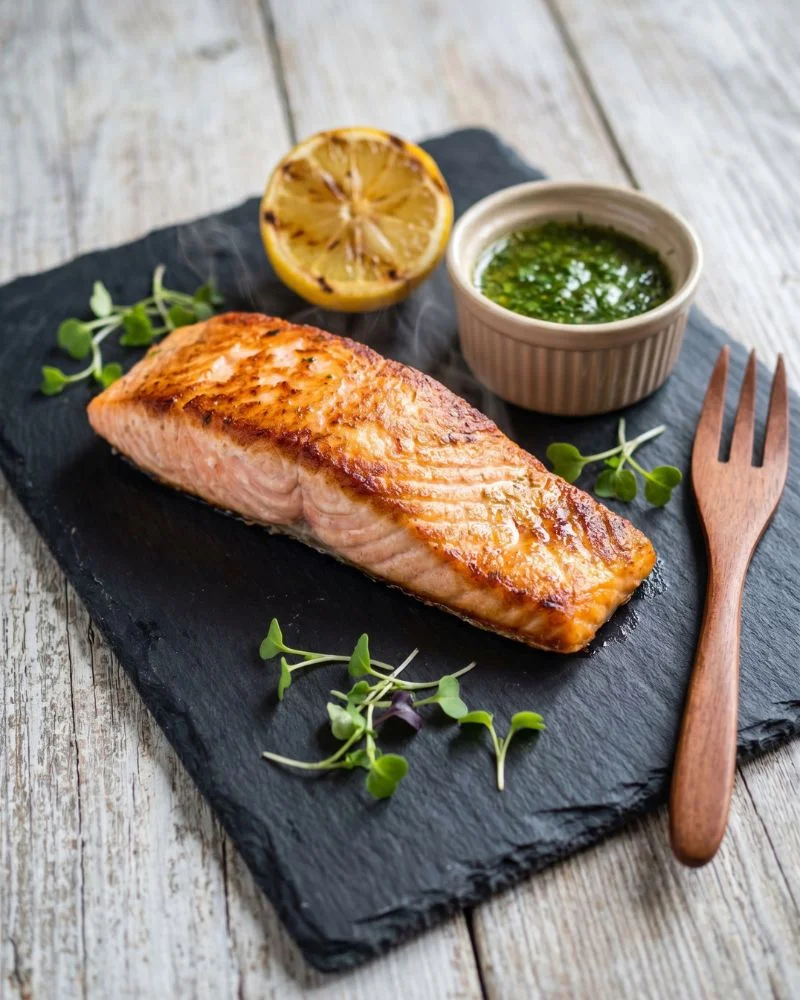
Research has shown that omega-3s can blunt the cortisol spike following psychological stressors. Eating salmon two to three times a week provides enough EPA and DHA to make a real difference over time. Sardines and mackerel are excellent budget-friendly alternatives.
4. Fermented Foods: Kefir, Kimchi, Greek Yogurt
This one surprises people, but the science is solid. Your gut and your brain are in constant communication through the gut-brain axis — a two-way signaling network connecting your digestive system directly to your stress response centers.
A healthy, diverse gut microbiome actively sends calming signals to the brain, dampening the cortisol response. Fermented foods like kefir, kimchi, sauerkraut, and Greek yogurt feed that microbiome with beneficial bacteria. If your gut flora is out of balance, your stress response is likely amplified too.
Start with one serving per day and work your way up — your gut needs time to adjust.
5. Green Tea & Matcha
Coffee first thing in the morning on an empty stomach is one of the fastest ways to spike cortisol. Green tea is a much smarter alternative for stress-prone individuals.
The reason? L-theanine — a rare amino acid found almost exclusively in tea leaves. L-theanine promotes alpha-wave brain activity, which creates a state of calm, focused alertness without the jittery cortisol spike caffeine produces. Matcha (concentrated green tea) offers the highest L-theanine content of any tea.
Swap your first coffee for a cup of matcha or green tea, especially on high-stress mornings. → Learn more about caffeine in matcha and explore our full list of best teas for energy
6. Pumpkin Seeds (Magnesium Magic)
Magnesium is called the “relaxation mineral” for good reason — it regulates over 300 enzymatic reactions in the body, including the HPA (hypothalamic-pituitary-adrenal) axis, which controls cortisol production. When magnesium levels are low, the HPA axis becomes overactive, leading to higher baseline cortisol levels.
Pumpkin seeds are one of the most bioavailable sources of magnesium available. A one-ounce serving delivers roughly 150mg — nearly 40% of the daily recommended intake. Sprinkle them on salads, blend them into smoothies, or eat them as a snack.
→ Pumpkin seeds vs. almonds — which is better for you?
7. Blueberries & Citrus Fruits (Vitamin C)
The adrenal glands — the organs that produce cortisol — have one of the highest concentrations of vitamin C in the entire body. That’s not a coincidence. Vitamin C is essential for adrenal recovery after a stress event.
When you’re chronically stressed, your adrenal glands burn through vitamin C at an accelerated rate. Replenishing it with blueberries, oranges, kiwi, and grapefruit helps the glands regulate cortisol output more efficiently. Blueberries also contain anthocyanins that reduce oxidative stress caused by elevated cortisol.
| Food | Key Nutrient | Cortisol Benefit |
|---|---|---|
| Dark Chocolate (70%+) | Polyphenols | Lowers cortisol in bloodstream |
| Avocados | Potassium | Regulates BP, reduces stress eating |
| Wild-Caught Salmon | Omega-3 (EPA/DHA) | Reduces inflammation, blunts cortisol spike |
| Kefir / Kimchi | Probiotics | Calms gut-brain axis |
| Green Tea / Matcha | L-Theanine | Calms nervous system without sedation |
| Pumpkin Seeds | Magnesium | Regulates HPA axis and cortisol production |
| Blueberries & Citrus | Vitamin C | Supports adrenal recovery |
3 Foods You MUST Avoid If You Have High Cortisol

Eating the right foods is only half the equation. These three categories actively worsen cortisol levels and should be minimized if stress weight is your concern.
High Caffeine on an Empty Stomach. Your cortisol naturally peaks in the morning — adding a double espresso before eating anything sends it even higher. If you’re sensitive to stress, eat a protein-rich breakfast first, then have coffee.
Refined Sugars and Processed Seed Oils. Both trigger systemic inflammation that feeds the cortisol cycle. Ultra-processed snack foods, fast food, and anything made with vegetable or canola oil are particular offenders. → Discover hunger-crushing snacks that won’t spike your stress hormones
Alcohol. Even moderate drinking disrupts deep sleep architecture — specifically REM and slow-wave sleep — and elevated cortisol the next day is a consistent, documented result. It feels relaxing in the moment because it suppresses the nervous system temporarily. But the rebound effect is real.
Bonus: Lifestyle Hacks to Reset Your Stress Hormones Naturally
Food is powerful, but it works best alongside some key lifestyle shifts.
Rethink your cardio. Daily high-intensity interval training (HIIT) when cortisol is already elevated can actually make things worse. Your body reads intense exercise as another stressor. Swap two or three HIIT sessions per week for brisk walking, light cycling, yoga, or low-intensity conditioning — your cortisol levels will thank you.
Prioritize 7–8 hours of sleep. Nothing resets cortisol more effectively than consistent, quality sleep. Even one night of poor sleep can elevate next-day cortisol by 37%, according to sleep research. Make sleep the non-negotiable.
Eat breakfast within an hour of waking. Skipping breakfast or extended fasting in the morning can extend that natural cortisol morning peak. A high-protein breakfast — eggs, Greek yogurt, smoked salmon — helps stabilize blood sugar and signals the body to dial back the stress response. → See dietitian-approved weight loss breakfast foods
Track Your Progress With These Free Tools
Managing cortisol isn’t just about what you eat — it’s about knowing your starting point and making adjustments over time. These free tools on EatLikeFit can help:
Reverse BMI Calculator — Instead of just telling you your BMI, this tool works backward to show you your target weight range. Useful for setting realistic goals when cortisol belly is involved.
Recipe Cost Calculator — Building cortisol-lowering meals on a budget? Use this to track the cost per serving of your anti-stress meal prep.
Recipe Converter Calculator — Scaling a salmon recipe or adjusting a batch of pumpkin seed granola? This tool converts ingredient quantities instantly — no math required.
FAQs
How long does it take to lose a cortisol belly?
With a consistent cortisol-lowering diet, proper sleep, and stress management, most people start noticing a reduction in bloating and midsection puffiness within 2 to 4 weeks. Significant fat loss typically takes 8 to 12 weeks of sustained lifestyle changes.
Does fasting increase cortisol levels?
For some people, yes. Prolonged intermittent fasting — especially skipping breakfast entirely — can act as a physiological stressor, temporarily raising cortisol levels. If you have stubborn belly fat linked to stress, eating a high-protein meal within an hour of waking may produce better results than fasting.
What is the best exercise to lower cortisol?
Low-intensity steady-state (LISS) cardio is ideal: brisk walking, swimming, light cycling, or yoga. These activities activate the parasympathetic nervous system (the “rest and digest” mode) rather than triggering the stress response. Avoid excessive daily HIIT if your cortisol is already elevated.
Can magnesium supplements help with cortisol belly?
Magnesium supplementation has been shown in studies to reduce cortisol levels, particularly in people who are deficient. However, getting magnesium through whole foods like pumpkin seeds, dark leafy greens, and dark chocolate provides additional co-factors that support absorption.
What breakfast foods are worst for cortisol?
Sugary cereals, pastries, flavored coffees, and energy drinks first thing in the morning all contribute to a cortisol spike. Prioritize protein, healthy fat, and fiber at breakfast — think eggs with avocado or Greek yogurt with blueberries.
Disclaimer
The content on EatLikeFit, including text, graphics, and other material, is for informational purposes only and does not constitute medical advice. We are not medical professionals. Always seek the advice of your physician or another qualified health provider with any questions you may have regarding a medical condition, diet plan, or hormonal health. Never disregard professional medical advice or delay in seeking it because of something you have read on this website.
Visit our official website for more healthy recipes, nutrition tips, wellness guides, and powerful health tools:
🌐 Visit EatLikeFit.com

Muhammad Ahtsham is the founder of EatLikeFit.com and a nutrition researcher dedicated to healthy weight management. He provides practical, science-backed advice on high-protein diets and affordable meal planning to help readers achieve their fitness goals simply and effectively.