
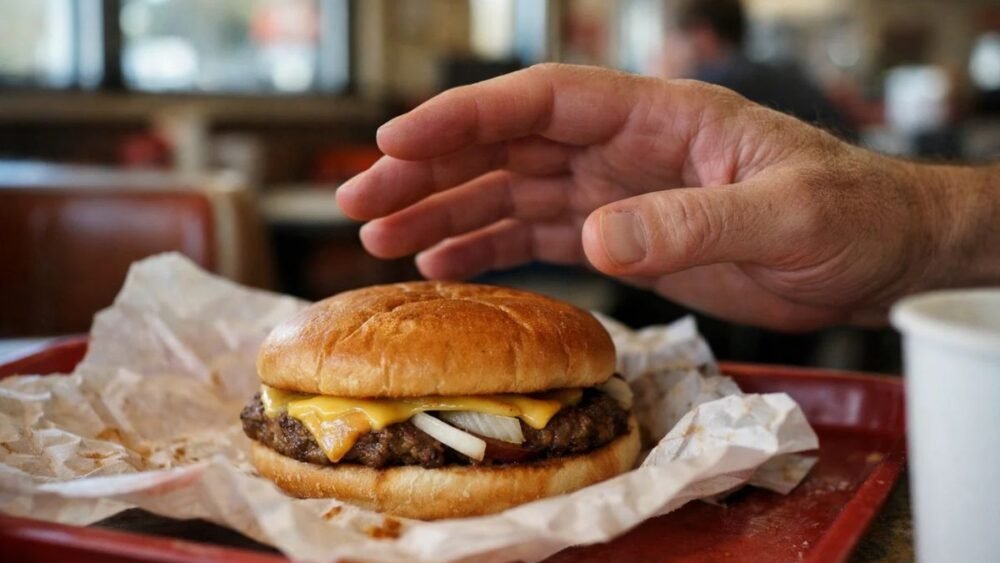
It started the way a lot of fast-food meals do — quick, routine, forgettable. Or at least it was supposed to be.
Instead, one Whataburger order in Texas has now spilled into a courtroom, after a man claims a single overlooked ingredient — onions — triggered a reaction serious enough to send him seeking medical care. I’ve covered plenty of food lawsuits over the years, but this one hits close to home for anyone who’s ever said, “No onions, please,” and trusted that request would be honored.
The lawsuit, filed recently, accuses the Texas-based burger chain of negligence after the customer says onions were added to his burger despite a clear request to leave them off. What followed, according to the complaint, was not just discomfort — but physical symptoms, anxiety, and medical bills he says could have been avoided.
Jump To
When a Custom Order Goes Wrong

According to court filings, the man ordered a Whataburger burger with a specific modification: no onions. He claims this isn’t a preference but a necessity, tied to a known sensitivity he routinely discloses when ordering food.
Here’s where things get tricky. The onions, he alleges, weren’t immediately visible when the burger arrived. Tucked under other toppings, they went unnoticed until he’d already taken several bites.
That’s when symptoms reportedly began.
The lawsuit says he experienced a reaction he believes was caused by onion exposure — severe enough to require medical attention. Beyond the physical impact, he claims the incident caused emotional distress and unexpected healthcare costs, turning what should’ve been a fast lunch into a lingering ordeal.
Nutritionists often note that ingredient sensitivities don’t always announce themselves instantly. Sometimes, the body reacts after exposure builds — which can make moments like this especially alarming.
What the Lawsuit Is Actually Claiming
This isn’t a case arguing that restaurants must be perfect. Instead, the legal argument centers on reasonable care.
The lawsuit alleges that Whataburger:
- Failed to follow clear order instructions
- Did not take adequate precautions during preparation
- Allowed cross-contact in a shared kitchen environment
- Created a foreseeable risk for customers with food sensitivities
The plaintiff is seeking compensation for medical expenses, emotional suffering, and other related damages.
Legal experts say cases like this often hinge on whether internal procedures were followed — not whether a mistake happened at all. Human error, courts recognize, exists. But ignoring safeguards? That’s where liability can emerge.
Are Onion Reactions Really That Serious?
Onion allergies and sensitivities don’t get the same attention as peanuts or shellfish, but medical professionals say that doesn’t make them harmless.
The FDA has long warned that food sensitivities can trigger a wide range of symptoms — from gastrointestinal distress to inflammation and, in rare cases, more serious complications. The CDC has also emphasized that clear communication and careful handling remain critical, especially when ingredients can be hidden beneath other foods.
For people with sensitivities, even trace amounts can cause problems. And when an ingredient isn’t visible, the risk quietly increases.
It’s a concern echoed in other food-related cases, including recent consumer lawsuits like the Poppi lawsuit update and the Chobani lawsuit in 2025, both of which spotlight how labeling and ingredient transparency are under growing scrutiny.
Whataburger’s Response So Far
Whataburger hasn’t commented directly on the specific lawsuit, but the company did release a general statement reaffirming its commitment to food safety and customer satisfaction.
Like many large fast-food chains, Whataburger notes that employees are trained to follow customization requests. At the same time, the company — again, like most of its competitors — acknowledges that shared kitchen spaces make it difficult to guarantee zero cross-contact.
That caveat could matter.
Legal analysts say disclaimers about shared preparation areas often become a focal point in court. If customers were warned, restaurants sometimes prevail. If not, things get murkier.
Why These Lawsuits Are Becoming More Common
This case doesn’t exist in isolation.
As allergy awareness grows and digital ordering becomes the norm, expectations have shifted. Consumers increasingly assume that customizations will be followed precisely — especially when health is involved.
Public health researchers estimate that millions of Americans live with food sensitivities. Advocacy groups argue that honoring special requests is no longer optional in modern food service. Restaurants, on the other hand, point to high-volume kitchens, rushed staff, and unavoidable human error.
We’ve seen similar tensions play out across the industry, particularly as chains face pressure from closures and restructuring — a trend documented in broader restaurant reports like recent hamburger chain restaurant closures nationwide.
What Customers Can Take From This
If you have a food sensitivity — even one others might dismiss — this lawsuit offers a few sobering reminders:
- Be explicit when ordering, especially in person
- Ask staff to confirm special instructions
- Check your receipt and food before eating
- Understand the risks of shared kitchens
Health experts also advise carrying medication if reactions are possible and avoiding assumptions, even at familiar restaurants.
It’s not about paranoia. It’s about awareness.
What Happens Next

The case is still in its early stages. A judge will review preliminary motions before deciding whether it moves toward trial or settles privately — which is how many food-related lawsuits ultimately end.
If it does proceed, it could help clarify how much responsibility fast-food chains bear when special requests are tied to health, not preference.
Either way, the message is clear: something as small as a few slices of onion can now carry significant legal weight.
A Small Mistake, Big Consequences
Fast-food restaurants serve millions of meals every day without incident. But cases like this underline how quickly things can escalate when trust breaks down.
For restaurants, it’s a reminder that customization isn’t just about customer satisfaction anymore — it’s about safety. For customers, it’s a prompt to stay vigilant, even when ordering something as familiar as a burger.
One topping. One order. One lawsuit.
Sometimes, that’s all it takes.
What is the lawsuit against Whataburger about?
A Texas man alleges that onions were added to his burger despite a clear request to leave them out, causing a reaction that required medical attention.
Can restaurants be sued for food order mistakes?
Yes. Lawsuits often depend on whether the restaurant exercised reasonable care and followed its own procedures.
Are onion allergies considered serious?
While less common, medical experts say onion sensitivities can cause significant symptoms for some individuals.
What responsibility do fast-food chains have for special requests?
Courts typically examine whether instructions were clear, procedures were followed, and risks were properly disclosed.
If you enjoyed this article, don’t forget to follow and subscribe for more health tools, recipes, and news!
Sources
- U.S. Food and Drug Administration (FDA) – Food Allergies & Food Sensitivities: What Consumers Need to Know
https://www.fda.gov/food/food-labeling-nutrition/food-allergies - Centers for Disease Control and Prevention (CDC) – Food Safety, Cross-Contact, and Allergen Awareness
https://www.cdc.gov/food-safety

Muhammad Ahtsham is the founder of EatLikeFit.com and a nutrition researcher dedicated to healthy weight management. He provides practical, science-backed advice on high-protein diets and affordable meal planning to help readers achieve their fitness goals simply and effectively.