
Walk through any skincare aisle and you’ll see the same promise repeated in different fonts: glow, smooth, repair, renew. It’s easy to believe great skin starts with a bottle. But talk to dermatologists and nutrition experts long enough, and the conversation shifts away from serums and toward something far more ordinary—what you drink.
As inflammation-related skin issues rise alongside ultra-processed diets, experts are paying closer attention to how nutrition affects the skin from the inside out. And one humble beverage keeps coming up in those conversations, not as a miracle cure, but as a quiet, consistent supporter of skin health.
For health-conscious readers trying to connect diet with real, visible results, this matters now more than ever.
Jump To
Why Skin Health Starts Beyond the Bathroom Mirror
Skin isn’t just a surface. It’s the body’s largest organ, constantly renewing itself, responding to hormones, stress, hydration, and diet. According to nutrition researchers, skin quality is strongly influenced by oxidative stress, inflammation, and blood sugar regulation—all processes shaped by what we consume daily.
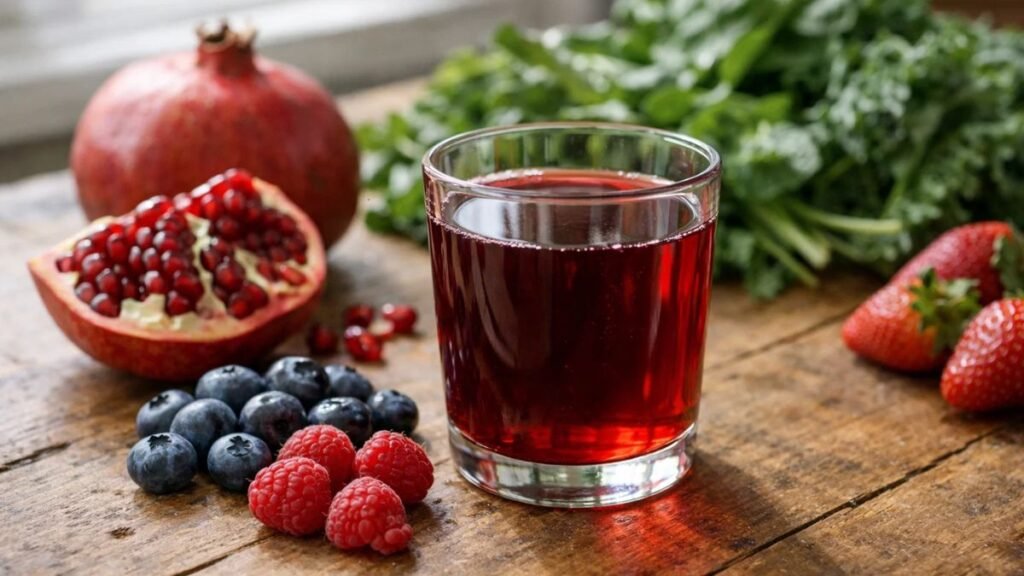
While whole fruits are always the gold standard, experts acknowledge that certain fruit juices can deliver concentrated nutrients that support skin function, particularly antioxidants like polyphenols and vitamins involved in collagen stability.
This growing interest in nutrition-based skin support is part of EatLikeFit’s broader analysis of how everyday food choices affect long-term wellness.
The Fruit Juice Experts Consistently Recommend
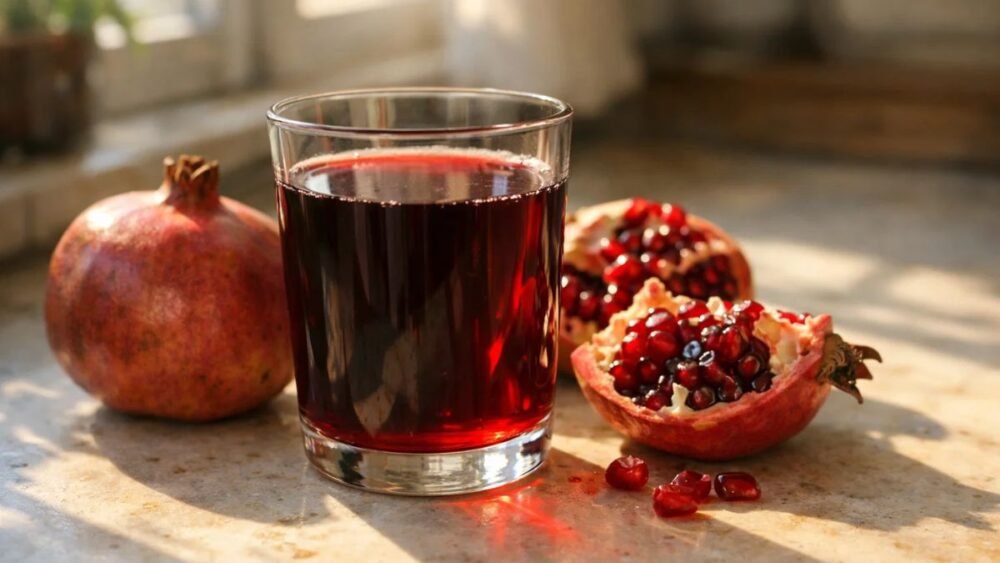
Ask registered dietitians and dermatologists which juice offers the most skin benefits, and one answer shows up again and again: pomegranate juice.
Pomegranates are unusually rich in polyphenols—plant compounds known for their antioxidant and anti-inflammatory properties. Research indicates these compounds help neutralize oxidative stress, one of the primary drivers of premature aging, dullness, and loss of elasticity.
Some studies suggest pomegranate antioxidants may also support the skin’s natural barrier function, helping it retain moisture and defend itself against environmental damage over time. In simpler terms: they help skin protect itself.
There’s another reason experts favor pomegranate juice. Compared to many popular fruit juices, it tends to have a lower glycemic impact when consumed in unsweetened form. That matters because repeated blood sugar spikes have been increasingly linked to acne, inflammation, and collagen breakdown.
Related: Beet Juice vs Pomegranate Juice
How It Compares to Orange Juice

Orange juice has long been associated with health, and it still earns credit for one major reason: vitamin C. This nutrient plays a central role in collagen production and skin repair, making it essential for maintaining firmness and resilience.
The issue, experts say, isn’t orange juice itself—it’s how it’s often consumed. Many commercial versions contain added sugars or are consumed in large portions, which can undermine their benefits. Excess sugar intake may contribute to inflammation, counteracting the very skin support people are seeking.
Pomegranate juice, when unsweetened and consumed in moderation, offers a denser antioxidant profile without the same sugar concerns. That balance makes it easier to use consistently, which experts emphasize is far more important than intensity.
What About Other Juices People Swear By?
Carrot juice frequently comes up in skin conversations, and for good reason. It’s high in beta-carotene, which the body converts into vitamin A—a nutrient essential for skin cell turnover and repair. Some people notice improved tone and brightness when they consume it regularly.
Still, moderation matters. Excessive intake can cause a yellow-orange tint to the skin, a harmless but noticeable condition known as carotenemia.
Aloe vera juice is another option dermatologists sometimes mention, particularly for people with sensitive or acne-prone skin. Its hydration and anti-inflammatory properties may help calm irritation. However, it can cause digestive discomfort in some individuals, so experts recommend starting slowly and choosing purified forms.
Related: Foods With More Vitamin C
The Safety Conversation Experts Don’t Skip
Health authorities consistently remind consumers that fruit juice is not a replacement for whole fruit. Juice lacks fiber, which plays a critical role in blood sugar control and gut health—both indirectly linked to skin condition.
Public health guidance emphasizes limiting free sugar intake to reduce systemic inflammation and metabolic stress. For skin health, that advice carries extra weight.
Most experts suggest keeping fruit juice intake between 4 and 6 ounces per day, ideally consumed with meals to slow sugar absorption and reduce glucose spikes.
Can Juice Alone Improve Your Skin?
Dermatologists are clear on this point: no single drink can replace sunscreen, sleep, stress management, or a balanced diet. Skin health is cumulative. It reflects habits built over weeks and months, not overnight fixes.
That said, nutrition does matter. When used strategically, the right juice can support the body’s natural repair systems from within.
Pomegranate juice stands out not because it’s trendy, but because its nutrient profile aligns closely with what skin cells need to defend themselves and maintain structure as we age.
Bottom Line
If you’re looking to support skin health through diet, experts consistently point to pomegranate juice as the best fruit juice option. Its antioxidant strength, lower inflammatory impact, and compatibility with long-term habits make it a smart addition—not a solution, but a support system.
Choose unsweetened varieties, keep portions modest, and remember that real results come from consistency, not extremes. Healthy skin, like most things in nutrition, rewards patience more than hype.
Related: Beetroot Powder vs Juice
FAQs
Is pomegranate juice good for skin?
Yes. Experts say its antioxidants help reduce oxidative stress and support collagen stability, both important for skin health.
How much fruit juice should I drink for skin benefits?
Most experts recommend no more than 4–6 ounces per day, ideally without added sugars.
Is juice better than whole fruit for skin health?
Whole fruit is generally better due to its fiber content, but certain juices can provide concentrated skin-supporting nutrients when consumed mindfully.
Sources
- Harvard T.H. Chan School of Public Health – Antioxidants and Health
https://www.hsph.harvard.edu/nutritionsource/antioxidants/ - American Academy of Dermatology (AAD) – How Diet Affects Your Skin
https://www.aad.org - National Institutes of Health (NIH) – Vitamin C Fact Sheet for Health Professionals
https://ods.od.nih.gov/factsheets/VitaminC-HealthProfessional/ - Journal of Nutritional Biochemistry – Pomegranate Polyphenols and Antioxidant Activity
- https://www.sciencedirect.com
- U.S. Food & Drug Administration (FDA) – Fruit Juice and Sugar Intake Guidance
- https://www.fda.gov

Muhammad Ahtsham is the founder of EatLikeFit.com and a nutrition researcher dedicated to healthy weight management. He provides practical, science-backed advice on high-protein diets and affordable meal planning to help readers achieve their fitness goals simply and effectively.