
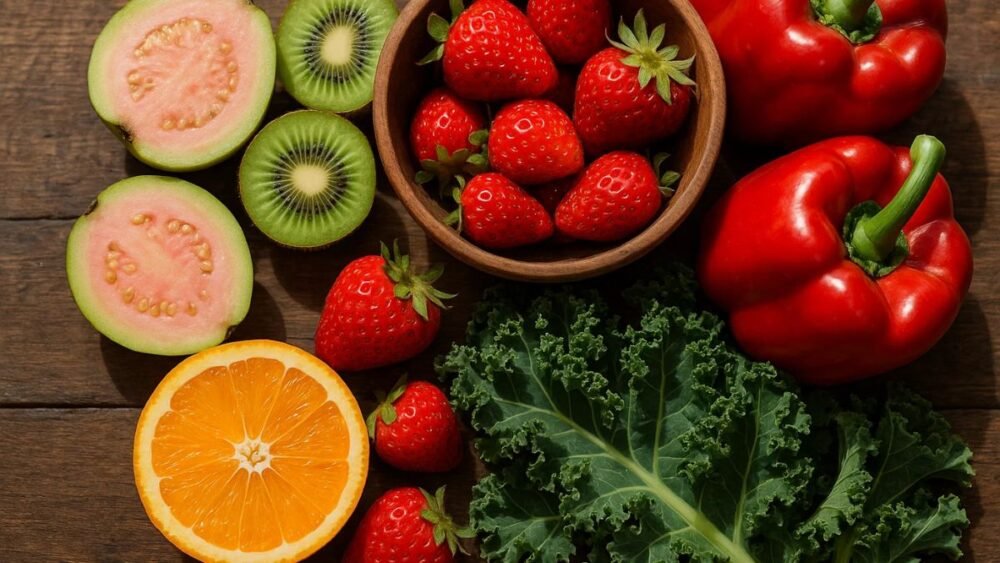
We’ve all grown up believing oranges are the holy grail of vitamin C. You catch a cold — someone hands you orange juice. But here’s the truth that might surprise you: oranges aren’t even close to the top of the list.
There are dozens of fruits and vegetables that quietly outshine the humble orange when it comes to vitamin C. Some even pack two to three times more. And they’re likely sitting right in your kitchen or at your local market.
Jump To
Why Vitamin C Deserves Your Daily Attention

Let’s start with the basics. Vitamin C — or ascorbic acid — isn’t just about fighting colds. It’s essential for collagen production, wound healing, and keeping your immune system sharp. It’s also a powerful antioxidant, meaning it helps protect your cells from everyday damage caused by stress, pollution, and even sunlight.
The body can’t store vitamin C for long, so you need to top it up regularly. That’s why finding rich, varied sources is so important — not just relying on oranges every morning.
What Does “More Than an Orange” Actually Mean?
A medium orange contains about 70–90 mg of vitamin C. So, anything that beats that number qualifies as a better source. And there are plenty.
Think guava, red bell pepper, or even kiwi — all of them surpass oranges by a wide margin. Some lesser-known heroes, like acerola cherries or Kakadu plums, blow them out of the water completely.
Let’s break it down.
The Vitamin C Power List: 30 Foods That Top Oranges 🥗

| # | Food | Approx. Vitamin C per serving |
|---|---|---|
| 1 | Guava | 125–200 mg per fruit |
| 2 | Red bell pepper | 150–190 mg per cup |
| 3 | Kiwi | 160 mg per cup |
| 4 | Strawberries | 95–100 mg per cup |
| 5 | Papaya | 90–100 mg per cup |
| 6 | Broccoli | 80 mg per cup, chopped |
| 7 | Brussels sprouts | 75–80 mg per cup |
| 8 | Kale | Around 80 mg per cup |
| 9 | Black currants | 180 mg per 100 g |
| 10 | Acerola cherries | Among the highest known sources |
| 11 | Rose hips | Extremely high — often used in supplements |
| 12 | Kakadu plum | Hundreds of mg — the ultimate superfruit |
| 13 | Chili peppers | Around 100 mg+ |
| 14 | Mustard greens | 117 mg per cup |
| 15 | Litchis (Lychees) | About 135 mg per cup |
| 16 | Moringa pods (Drumsticks) | 141 mg per 100 g |
| 17 | Parsley (fresh) | Surprisingly high for an herb |
| 18 | Red cabbage | 50–60 mg+ per cup |
| 19 | Tomato juice | 170 mg per cup |
| 20 | Paprika powder | High in concentrated form |
(Values may vary slightly depending on ripeness and variety.)
Notice something? Most of these foods are everyday items — not exotic superfoods. That’s the beauty of it: boosting your vitamin C doesn’t require fancy powders or pricey supplements.
The Secret: Eat Them Right
Vitamin C is delicate. It doesn’t love heat, air, or long cooking times. That means the way you prepare your food makes a huge difference.
Try eating them raw or lightly cooked — think steamed broccoli, fresh bell pepper slices, or a bowl of strawberries over breakfast yogurt. Even a quick stir-fry can work, as long as you don’t overdo it.
Frozen fruits and veggies are fine too — they often retain most of their nutrients when flash-frozen right after harvest.
How to Add More Vitamin C to Your Day
- Breakfast idea: Yogurt topped with sliced kiwi and strawberries.
- Lunch: Toss broccoli florets, guava chunks, and red pepper strips into your salad.
- Dinner: Stir-fry kale and Brussels sprouts, or roast red peppers with olive oil.
- Snack: A handful of acerola cherries, or a few strips of raw bell pepper with hummus.
Want to mix it up even more? Try my Broccoli or Cauliflower comparison — it’ll help you understand which cruciferous veggie gives you a bigger nutrient punch.
And if you love fruity flavors, you might also like this deep dive: Beet Juice vs. Pomegranate Juice — both are vitamin-rich, immune-supporting favorites.
How Much Do You Actually Need?
Most adults require around 75–90 mg of vitamin C daily (that’s just one guava or half a cup of red pepper).
In the UK, the guideline is a bit lower — about 40 mg per day. Either way, with the foods listed above, meeting your daily goal is effortless.
Can you have too much?
Not really from food. Your body flushes out the excess. But high-dose supplements — over 2,000 mg per day — might upset your stomach or cause kidney issues.
Does cooking destroy it?
Not completely, but yes, heat reduces it. Steaming or eating raw is best for preserving the vitamin.
Can one food cover all your needs?
Absolutely. Just one serving of guava or red pepper meets — or even exceeds — your entire day’s requirement. Still, it’s smart to mix and match. Different foods bring different nutrients to the table.
Beyond the Orange Myth 🍊
Once you break free from the “orange = vitamin C” mindset, your plate opens up to a rainbow of options — guavas, peppers, kiwis, kale, and more. Each brings its own story, flavor, and health benefits.
You don’t need supplements or complex routines — just real, colorful food.
And if you’re looking to support your immune system naturally, try pairing these foods with a 7-Day Smoothie Weight Loss Plan — it’s an easy, nutrient-dense way to start your day with a vitamin boost.
So next time someone says “grab an orange,” smile — and reach for something even brighter.
Final Thought:
Vitamin C isn’t just about avoiding colds; it’s about living with energy, glowing skin, and strong immunity. Nature’s richest sources are often the ones we overlook. Maybe it’s time to give them a little more love on your plate.
If you enjoyed this article, don’t forget to follow and subscribe for more health tools, recipes, and news!
Sources

Muhammad Ahtsham is the founder of EatLikeFit.com and a nutrition researcher dedicated to healthy weight management. He provides practical, science-backed advice on high-protein diets and affordable meal planning to help readers achieve their fitness goals simply and effectively.