

Bloating can make you feel uncomfortable, sluggish, and frustrated—even when you’re trying to eat healthy. One minute your clothes fit normally, and the next your stomach feels tight and swollen. Many people assume bloating means something is seriously wrong, but in most cases, it’s caused by everyday habits, certain foods, dehydration, or changes in digestion.
The good news is that relief doesn’t always require expensive supplements or restrictive diets. Simple foods already sitting in your kitchen may help support healthy digestion and reduce occasional bloating.
In this guide, you’ll learn why bloating happens, which foods may help, common mistakes to avoid, and practical habits that support long-term digestive wellness.
Jump To
Quick Summary
If you’re dealing with occasional bloating, foods that may help include:
- Bananas
- Greek yogurt
- Ginger
- Cucumbers
- Kiwi
- Oats
- Chia seeds
- Papaya
- Peppermint tea
These foods support hydration, healthy gut bacteria, bowel regularity, and digestion. They work best when combined with healthy eating habits and adequate water intake.
What Is Bloating?
Bloating is the feeling of fullness, pressure, or swelling in the abdomen. Sometimes your stomach physically appears larger, while other times it simply feels uncomfortable.
Occasional bloating is common and usually related to:
- Gas buildup
- Constipation
- Eating too quickly
- Excess sodium intake
- Hormonal changes
- Food sensitivities
- Changes in gut bacteria
According to the National Institute of Diabetes and Digestive and Kidney Diseases (NIDDK), occasional bloating affects millions of adults and is usually manageable through diet and lifestyle changes.
Why Does Bloating Happen?
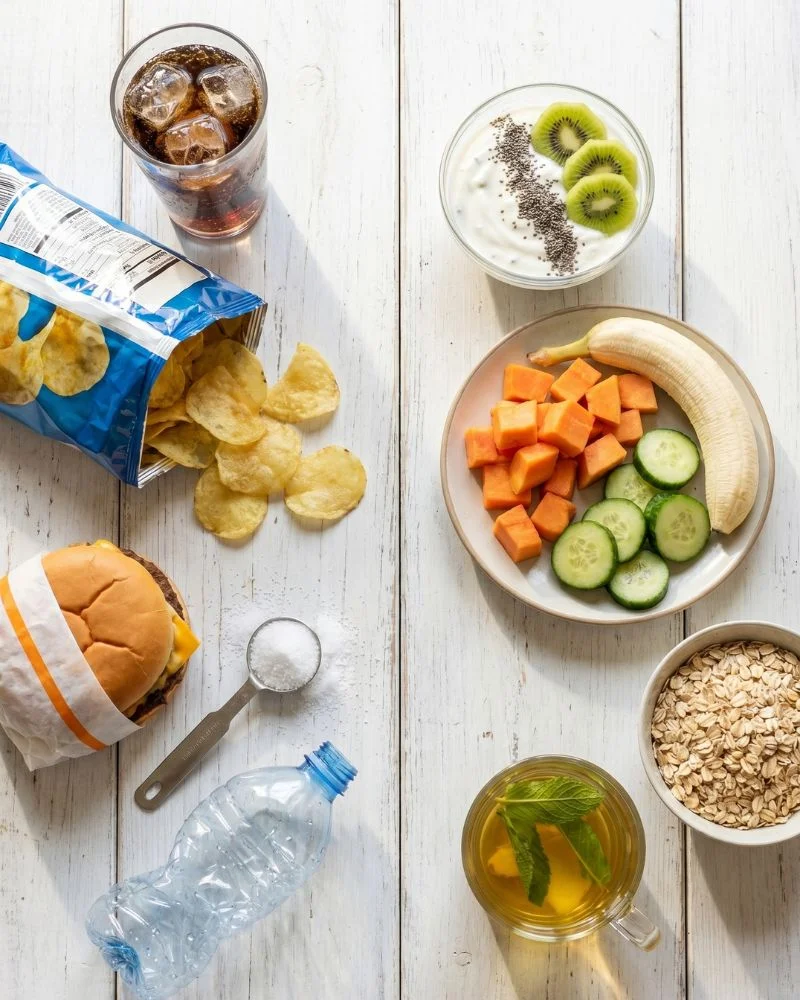
Many people don’t realize that bloating isn’t always caused by overeating.
Common causes include:
- Eating too fast
- Drinking carbonated beverages
- High sodium intake
- Low water intake
- Constipation
- Stress
- Hormonal fluctuations
- Digestive conditions like IBS
- Food intolerances
At EatLikeFit, we often recommend focusing on simple habits first before trying expensive cleanses or supplements.
Foods That Reduce Bloating Naturally
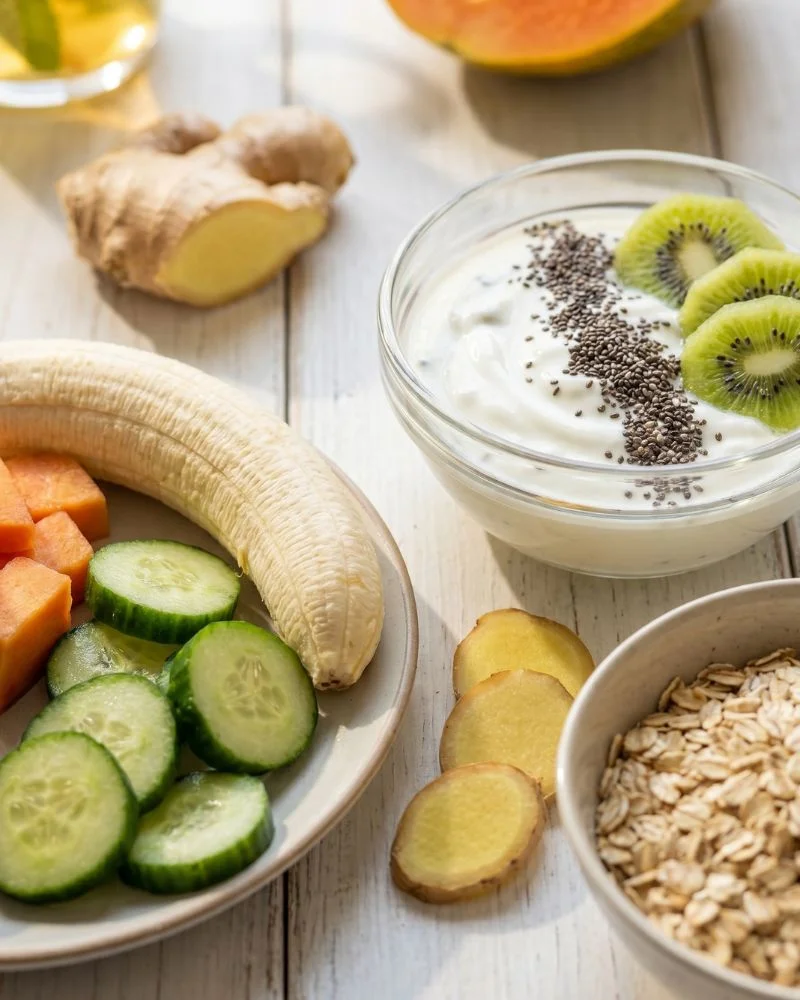
1. Bananas
Bananas are rich in potassium, which helps balance sodium levels and reduce water retention.
Why Bananas Help
Research suggests potassium-rich foods support fluid balance.
Benefits:
- Supports hydration
- May decrease water retention
- Easy to digest
Best Time to Eat
- Breakfast
- Post-workout
- Midday snack
Related: Easy Banana Recipe for Weight Loss
Bananas are one of the easiest foods to add when occasional bloating is linked to excess sodium or dehydration.
2. Greek Yogurt
Greek yogurt contains probiotics that support healthy gut bacteria.
How Probiotics Support Digestion
Healthy gut bacteria are associated with:
- Better digestion
- Regular bowel movements
- Reduced digestive discomfort
Choose plain Greek yogurt with live active cultures.
For high-protein ideas, see:
Greek yogurt supports gut health and may improve digestion over time.
3. Ginger
Ginger has been used for centuries to support digestion.
Why Ginger Helps
Research suggests ginger may help food move through the digestive tract more efficiently.
Ways to enjoy it:
- Ginger tea
- Smoothies
- Fresh grated ginger in meals
Ginger may help relieve occasional stomach discomfort and fullness.
4. Cucumbers
Cucumbers are mostly water, making them excellent for hydration.
Hydration Benefits
Proper hydration supports:
- Digestion
- Regular bowel movements
- Reduced water retention
Cucumbers also provide antioxidants.
When dehydration contributes to bloating, cucumbers can be a refreshing addition.
5. Kiwi
Kiwi is rich in vitamin C and fiber.
Fiber and Digestion Support
Research suggests kiwi may support:
- Bowel regularity
- Healthy digestion
- Reduced constipation
Kiwi is especially helpful for people whose bloating is linked to irregular bowel movements.
6. Oats
Oats provide soluble fiber, which feeds beneficial gut bacteria.
Benefits of Soluble Fiber
- Supports digestive wellness
- Encourages regular bowel movements
- Helps maintain fullness
For breakfast inspiration:
Increase fiber gradually and drink plenty of water to avoid worsening bloating.
7. Chia Seeds
Chia seeds absorb water and support bowel regularity.
Benefits include:
- Fiber
- Omega-3 fats
- Digestive support
Try adding them to:
- Smoothies
- Yogurt bowls
- Pudding
Related:
Small amounts of chia seeds may support healthy digestion.
8. Papaya
Papaya contains enzymes that help break down proteins.
Why Papaya Is Helpful
Papaya provides:
- Fiber
- Water
- Vitamin C
Many people find papaya easier to digest than heavier desserts.
Papaya may help support digestive comfort after meals.
9. Peppermint Tea
Peppermint tea has traditionally been used to ease digestive discomfort.
Why Peppermint Tea May Help
Research suggests peppermint may help relax digestive muscles.
Benefits:
- Warm and soothing
- Caffeine-free
- Easy to prepare
Peppermint tea can be a calming evening drink when bloating strikes.
Foods That May Make Bloating Worse
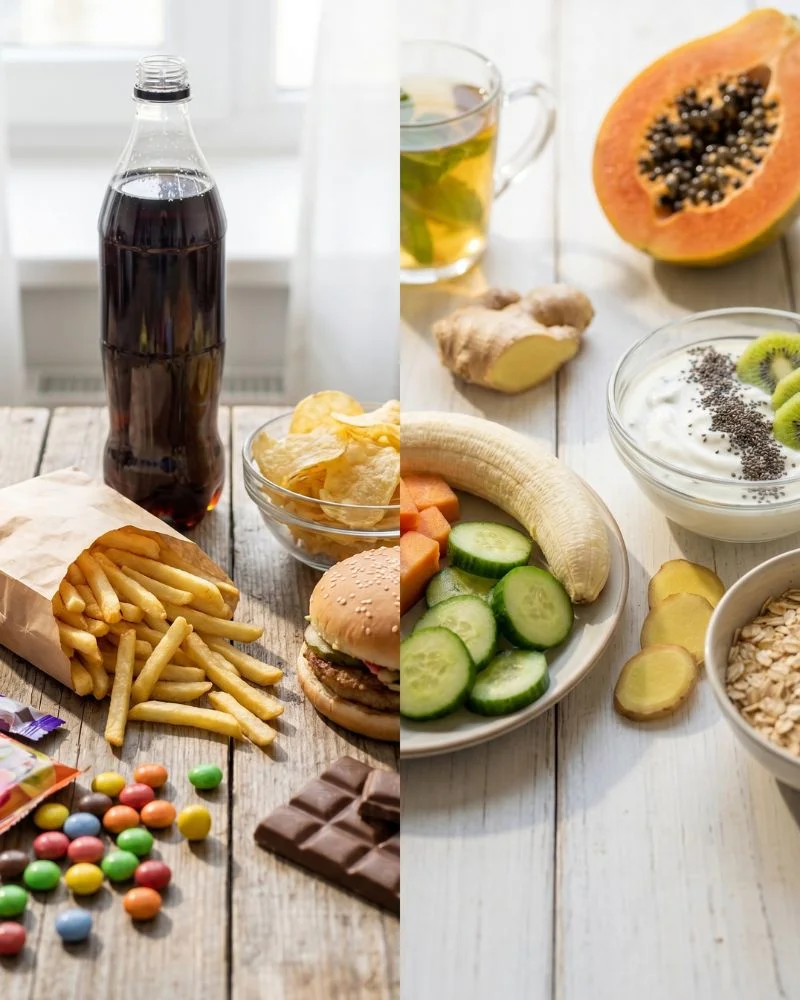
| Food | Why It May Cause Bloating |
|---|---|
| Soda | Carbonation creates gas |
| Salty processed foods | Increase water retention |
| Sugar alcohols | Can ferment in the gut |
| Excess fried foods | Slow digestion |
| Large meals | Overload the digestive system |
Common Mistakes
Many people accidentally make bloating worse by:
- Drinking too little water
- Increasing fiber too quickly
- Eating too fast
- Consuming excessive sodium
- Relying on detox teas
- Skipping meals
One small habit can make a big difference. Slow eating and proper hydration are often overlooked.
Expert Tips
As nutrition professionals often recommend:
Walk After Meals
Even 10 minutes of movement may support digestion.
Eat Slowly
Chew thoroughly and avoid rushing meals.
Increase Fiber Gradually
Too much fiber at once may worsen symptoms.
Watch Sodium Intake
Processed foods are a major source of hidden sodium.
Stay Hydrated
Water supports healthy bowel movements and digestion.
Who Can Benefit?
These foods may help:
- Adults with occasional bloating
- People eating high-sodium diets
- Individuals with mild constipation
- Those wanting better digestion
- Health-conscious adults pursuing weight management
When To Seek Medical Advice
Occasional bloating is normal, but persistent symptoms deserve attention.
See your healthcare provider if bloating occurs with:
- Severe pain
- Blood in stool
- Vomiting
- Unexplained weight loss
- Persistent constipation
- Symptoms that worsen over time
Practical Daily Habits
Try these simple habits:
- Drink enough water.
- Eat slowly.
- Avoid excessive sodium.
- Walk after meals.
- Prioritize whole foods.
- Sleep 7–9 hours.
- Manage stress.
At EatLikeFit, we often encourage sustainable habits instead of quick fixes.
Helpful EatLikeFit Tools
BMI Calculator
Useful for understanding your current body composition goals.
Related:
Recipe Nutrition Calculator
Helps estimate calories and nutrients for homemade meals.
Recipe Converter
Great for adjusting serving sizes.
Related Articles
If you’re trying to support overall health, these guides may also help:
- https://eatlikefit.com/high-volume-low-calorie-foods/
- https://eatlikefit.com/hunger-crushing-snacks-for-weight-loss/
- https://eatlikefit.com/foods-that-lower-cortisol-and-blast-belly-fat/
FAQs
What foods reduce bloating quickly?
Hydrating foods like cucumbers, bananas, kiwi, and peppermint tea may help relieve occasional bloating.
What foods commonly cause bloating?
Carbonated drinks, excess sodium, fried foods, and sugar alcohols are common triggers.
Is bloating always caused by food?
No. Hormones, stress, constipation, and digestive conditions may also contribute.
Does drinking water help bloating?
Yes. Adequate hydration supports bowel regularity and healthy digestion.
When should I worry about bloating?
Seek medical advice if bloating is severe, persistent, or accompanied by pain, weight loss, or blood in stool.
Final Thoughts
Occasional bloating is incredibly common, but it doesn’t have to control your day. Small changes—like drinking enough water, eating slowly, and choosing gut-friendly foods—can make a noticeable difference.
The best approach isn’t a restrictive cleanse or a miracle supplement. It’s building sustainable habits and paying attention to how your body responds.
Over time, simple foods like bananas, yogurt, ginger, kiwi, and oats may support digestion and help you feel more comfortable after meals.

Muhammad Ahtsham is the founder of EatLikeFit.com and a nutrition researcher dedicated to healthy weight management. He provides practical, science-backed advice on high-protein diets and affordable meal planning to help readers achieve their fitness goals simply and effectively.