
Recipe Converter Calculator
Instantly scale your ingredients like a pro chef
Jump To
Cooking is creative.
Baking is chemistry.
And scaling a recipe without thinking it through? That’s where things quietly fall apart.
I learned this the hard way years ago while doubling banana bread for a family gathering. The original loaf was perfect — moist, balanced, lightly sweet. But when I doubled it, something shifted. The texture felt heavier. The sweetness was louder. The rise wasn’t as beautiful.
The math was technically correct.
The result wasn’t.
That’s when I realized scaling recipes isn’t just multiplication. It’s precision. And that’s exactly where a Recipe Converter Calculator becomes one of the most underrated tools in a modern kitchen.
This guide breaks it down properly — what it is, how it works, why professional kitchens rely on it, and how you can use it to cook smarter, reduce waste, and stay consistent with nutrition goals.
What Is a Recipe Converter Calculator?
A Recipe Converter Calculator is a digital tool that automatically adjusts ingredient quantities when you change the number of servings in a recipe.
Instead of manually multiplying or dividing measurements (and hoping you didn’t miscalculate ¾ of something), the calculator handles the scaling instantly and accurately.
It’s especially useful when you:
- Double or halve recipes
- Cook for events or holidays
- Adjust meal prep portions
- Convert cups to grams (or vice versa)
- Track calories and macros precisely
If you’ve ever scaled desserts like Vanilla Cake with Strawberry Filling or batch-cooked something like Chicken Taco Soup Crock Pot Recipe, you already know small measurement shifts can change outcomes dramatically.
Why Manual Recipe Scaling Often Fails
At first glance, scaling seems easy.
Recipe serves 4? You need 8? Multiply everything by 2.
But cooking isn’t pure math. It’s ratios. It’s structure. It’s chemical reaction.
Common Mistakes When Scaling Recipes
- Over-salting when doubling
- Increasing baking powder too aggressively
- Confusing volume and weight measurements
- Rounding fractions incorrectly
- Ignoring pan size adjustments
- Forgetting cooking time shifts
For example, doubling ¾ teaspoon should give you 1½ teaspoons. But many people eyeball it. A slight overpour of baking powder in something like Chocolate Chip Banana Bread Recipe can create a metallic aftertaste or uneven rise.
Professional kitchens rarely “wing it.” They scale precisely — often digitally.
Consistency is reputation.
And even at home, consistency builds confidence.
How a Recipe Converter Calculator Actually Works
Behind the scenes, the logic is simple.
Scaling Formula:
New Amount = (Desired Servings ÷ Original Servings) × Original Ingredient Amount
Example Table
| Original Servings | Desired Servings | Ingredient | New Quantity |
|---|---|---|---|
| 4 | 8 | 2 cups flour | 4 cups |
| 6 | 3 | 1 tbsp oil | ½ tbsp |
| 2 | 5 | 100g sugar | 250g |
The formula is basic.
Human error is not.
When you’re adjusting 10–15 ingredients at once — like in Easy Ronzoni Lasagna Recipe — a single decimal mistake can throw everything off.
A calculator removes that risk.
Volume vs Weight: The Detail Most Home Cooks Miss
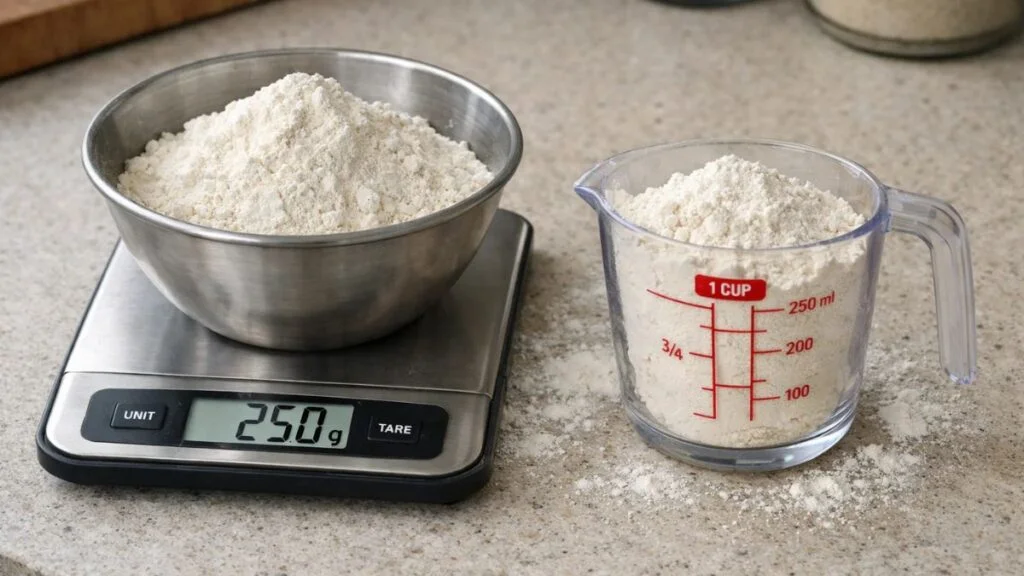
Here’s something many people don’t realize:
One cup is not always one cup.
Volume measurements include:
- Cups
- Tablespoons
- Teaspoons
- Milliliters
Weight measurements include:
- Grams
- Ounces
- Pounds
Professional bakers prefer grams because they eliminate density inconsistency.
For example:
- 1 cup of flour ≠ 1 cup of peanut butter in weight
- Packed flour vs spooned flour changes mass
- Protein powder varies dramatically in density
If you’ve baked something delicate like Foolproof Chocolate Lava Cake Recipe or experimented with alternatives like Banana Loaf Without Baking Soda, you’ve probably noticed structure depends heavily on accurate ratios.
Weight-based scaling is simply more reliable.
When Should You Use a Recipe Converter Calculator?
Whenever serving size changes.
But especially when:
- You’re batch cooking for the week
- You’re meal prepping high-protein recipes
- You’re adjusting calorie-controlled portions
- You’re hosting guests
- You’re modifying recipes for weight loss
For example, if you’re preparing protein snacks like Cookie Dough Protein Balls or breakfast meal prep like Banana Peanut Butter Overnight Oatmeal, portion precision matters for both nutrition and texture.
Ingredients That Scale Perfectly — And Those That Don’t
Not all ingredients behave the same when doubled.
Ingredients That Scale Linearly
- Flour
- Rice
- Pasta
- Sugar
- Water
- Broth
Ingredients That Need Caution
- Salt
- Baking powder
- Baking soda
- Yeast
- Spices
- Chili powder
Doubling salt often makes dishes overpowering. In recipes like Cincinnati Chili Recipe, spice balance can intensify quickly when scaled exactly 2×.
Professional chefs often increase seasoning by 1.5× first, then adjust gradually.
Cooking allows adjustment. Baking doesn’t.
Baking vs Cooking: Why Scaling Feels Different
Here’s the honest truth.
Cooking is forgiving.
Baking is structural engineering.
Flexible (Cooking)
- Soups
- Stews
- Chili
- Stir-fries
You can taste and adjust.
Precise (Baking)
- Cakes
- Muffins
- Cookies
- Protein bars
For example, if you double Healthy Banana Oatmeal Muffins, the leavening ratio affects crumb texture and moisture retention.
Too much baking soda? Bitter taste.
Too little? Dense center.
That’s chemistry.
Converting Units: The Hidden Layer of Scaling
Sometimes you’re not just changing servings — you’re converting units.
Common kitchen conversions:
- 1 cup = 16 tablespoons
- 1 tablespoon = 3 teaspoons
- 1 ounce ≈ 28 grams
- 1 cup ≈ 240 ml
But ingredient density complicates weight conversion.
If you’re tracking nutrition using tools like the Recipe Cost Calculator or adjusting protein targets with the PCOS Protein Calculator, accurate conversions matter.
Macro tracking requires precision.
Recipe Scaling & Weight Loss: Why It Matters
Portion control isn’t just about discipline — it’s about math.
If your daily target is:
- 30g protein
- 40g carbs
- 10g fat
Incorrect scaling disrupts balance.
Readers following structured plans like 7-Day PCOS Diet Plan PDF or Semaglutide Diet Plan PDF need ingredient accuracy to maintain calorie consistency.
Even small miscalculations compound over time.
Scaling tools protect progress.
Does Doubling a Recipe Double Cooking Time?
No.
Cooking time depends on:
- Thickness
- Pan size
- Surface area
- Heat distribution
Doubling cookie dough won’t double bake time.
But doubling a casserole in a deeper dish — like Mini Muffin Tin Chicken Pot Pies adapted to a larger pan — may increase cooking time due to thickness.
Heat penetration matters more than total volume.
Why Digital Tools Beat Manual Math
Let’s be honest.
Manual scaling introduces:
- Fraction confusion
- Decimal errors
- Unit mistakes
- Rounding imbalance
Digital tools eliminate:
- Guesswork
- Stress
- Inconsistency
They also:
- Save time
- Reduce food waste
- Improve accuracy
- Increase confidence
And when you’re already juggling grocery lists, macros, and timing? That mental clarity is underrated.

The Psychology of Precision
Something interesting happens when measurements feel reliable.
You experiment more.
You try new desserts like Dairy-Free Cupcake Recipe without fear.
You batch-cook soups.
You scale up holiday dishes confidently.
Precision builds trust.
And trust builds creativity.
FAQs
Can I just multiply every ingredient when doubling a recipe?
For base ingredients like flour and rice, yes.
For salt, spices, and leavening agents, increase gradually and taste when possible.
Is weight more accurate than volume?
Yes. Grams provide higher consistency, especially for baking.
Does scaling affect texture?
It can. Especially in baking where ingredient ratios impact structure and moisture.
Can a recipe converter calculator handle metric and imperial conversions?
Yes. Most advanced tools convert cups, grams, ounces, milliliters, and tablespoons automatically.
Final Thoughts
A Recipe Converter Calculator isn’t flashy.
It’s not trendy.
But it’s powerful.
It protects flavor balance.
It safeguards structure.
It supports macro tracking.
It reduces waste.
It improves confidence.
If you regularly adjust serving sizes — whether scaling desserts, batch cooking soups, or modifying high-protein snacks — this tool quietly becomes essential.
Precision creates consistency.
Consistency builds skill.
And that’s how good home cooks become exceptional ones.
If you enjoyed this article, don’t forget to follow and subscribe for more health tools, recipes, and news!

Muhammad Ahtsham is the founder of EatLikeFit.com and a nutrition researcher dedicated to healthy weight management. He provides practical, science-backed advice on high-protein diets and affordable meal planning to help readers achieve their fitness goals simply and effectively.