There’s a certain kind of comfort food that doesn’t really age out of our lives. Cookie dough is one of them. It’s the smell of the kitchen when you were younger, the sneaky spoonful taken before the tray hit the oven, the little act of rebellion that felt oddly joyful. For a long time, cookie dough sat firmly in the treat category—something you loved, but didn’t exactly feel great about eating.
Then life got busier. Workdays blurred together. Workouts became shorter but more intense. And suddenly, people started asking a different question: Why can’t snacks be comforting and functional?
That question is basically how cookie dough protein balls earned their place in the modern snack rotation.
They don’t scream “health food.” They don’t pretend to be something fancy. They just quietly work—giving you energy, keeping hunger in check, and scratching that nostalgic itch without the sugar crash that usually follows. And once you realize how easy they are to make, it’s hard not to keep a batch in the fridge.
Jump To
What Are Cookie Dough Protein Balls, Really?
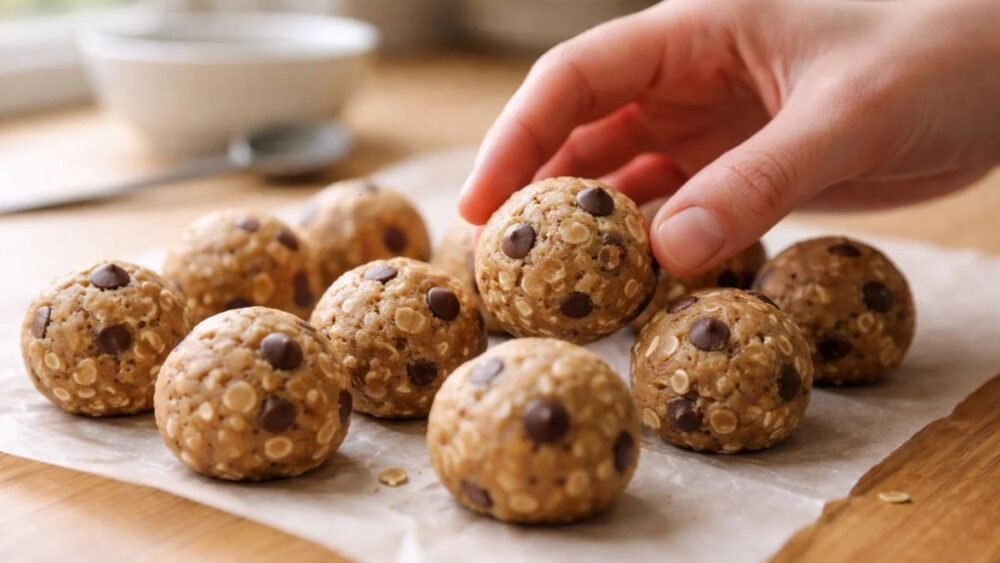
At their core, cookie dough protein balls are no-bake snacks built around a simple idea: recreate the flavor and texture of cookie dough using ingredients that actually support your body.
Instead of raw flour, eggs, and heaps of sugar, they rely on:
- Protein powder
- Nut or seed butter
- Oats or alternative flours
- Natural sweeteners
- A few flavor boosters like vanilla and chocolate chips
The result is something that looks like dessert, tastes like dessert, but behaves like fuel.
You mix everything in a bowl, roll it into small bites, chill it briefly, and you’re done. No oven. No mixer. No advanced kitchen skills. If you can stir, you’re qualified.
Serve This: Peanut Butter Protein Shake Recipe
Why These Little Bites Are Everywhere Right Now
Food trends come and go, but protein balls have shown unusual staying power. That’s not an accident.
They solve a real-life problem
Most people don’t struggle with knowing what to eat. They struggle with timing, convenience, and cravings. Cookie dough protein balls hit all three.
- They’re portable
- They’re ready when hunger strikes
- They feel indulgent instead of restrictive
That’s a rare combination.
They support steady energy, not spikes
A sugary granola bar might feel energizing for 20 minutes. After that? Not so much. Protein balls work differently because they combine protein, healthy fats, and fiber—three things that slow digestion and help stabilize blood sugar.
The energy comes on smoothly and sticks around.
They make “healthy” feel normal
This part matters more than people admit. When food tastes good and feels familiar, you’re more likely to stick with it. Cookie dough flavor removes the mental friction that often comes with healthier choices.
You don’t feel like you’re forcing yourself.
Nutritional Benefits That Add Up
On paper, a protein ball doesn’t look like much. It’s small. It fits in your palm. But nutritionally, it carries more weight than you’d expect.
Protein: the anchor
Protein is doing a lot of heavy lifting here.
It helps with:
- Muscle repair after workouts
- Keeping you full between meals
- Reducing random snacking later in the day
Most cookie dough protein balls land somewhere between 6–10 grams of protein per serving, depending on ingredients and size. That’s enough to make a difference without feeling heavy.
Healthy fats: slow-burning fuel
Nut butters, seeds, and coconut products provide fats that:
- Support brain function
- Improve nutrient absorption
- Deliver longer-lasting energy
This is the kind of fuel that doesn’t vanish an hour later.
Serve This: Add Protein to Oatmeal
Fiber: the quiet helper
Oats, flaxseed, and nut flours bring fiber into the mix. Fiber supports digestion, helps regulate blood sugar, and contributes to that “I’m good for now” feeling.
Typical nutrition snapshot (per 1 ball)
| Nutrient | Approximate Amount |
|---|---|
| Calories | 90–120 kcal |
| Protein | 6–8 g |
| Carbohydrates | 8–12 g |
| Healthy Fats | 4–6 g |
| Fiber | 2–4 g |
Exact numbers will vary, but the balance is what matters.
Are Cookie Dough Protein Balls Actually Healthy?
This is where honesty helps.
They can be very healthy. But like most foods, it depends on how they’re made.
What pushes them into “smart snack” territory
- Natural sweeteners like maple syrup, honey, or dates
- High-quality protein powder with minimal additives
- Whole-food bases like oats or nut flours
- Reasonable portion sizes
What can quietly sabotage them
- Too much added sugar
- Ultra-processed protein powders with fillers
- Oversized portions that turn snacks into meals
Homemade versions give you full control. Store-bought options can still work—but labels matter.
Ingredients That Make the Magic Happen
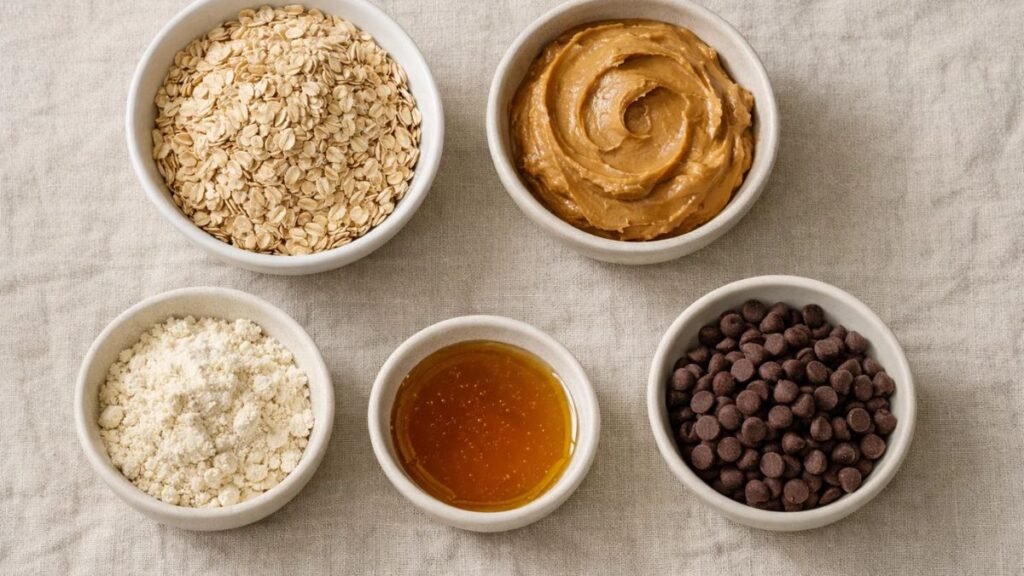
The beauty of cookie dough protein balls is how flexible they are. You can tweak almost every element.
Protein sources
- Whey protein – Creamy texture, classic flavor
- Plant-based protein – Pea, rice, or blends for vegan options
- Collagen peptides – Neutral taste, lower protein but easy to digest
Base ingredients
- Rolled oats or oat flour
- Almond flour for a softer texture
- Coconut flour (a little goes a long way)
Binding agents
- Peanut butter
- Almond or cashew butter
- Sunflower seed butter for nut-free needs
Natural sweeteners
- Maple syrup
- Honey
- Date paste
Flavor boosters
- Vanilla extract
- Mini dark chocolate chips
- A pinch of sea salt (seriously, don’t skip this)
How to Make Cookie Dough Protein Balls at Home
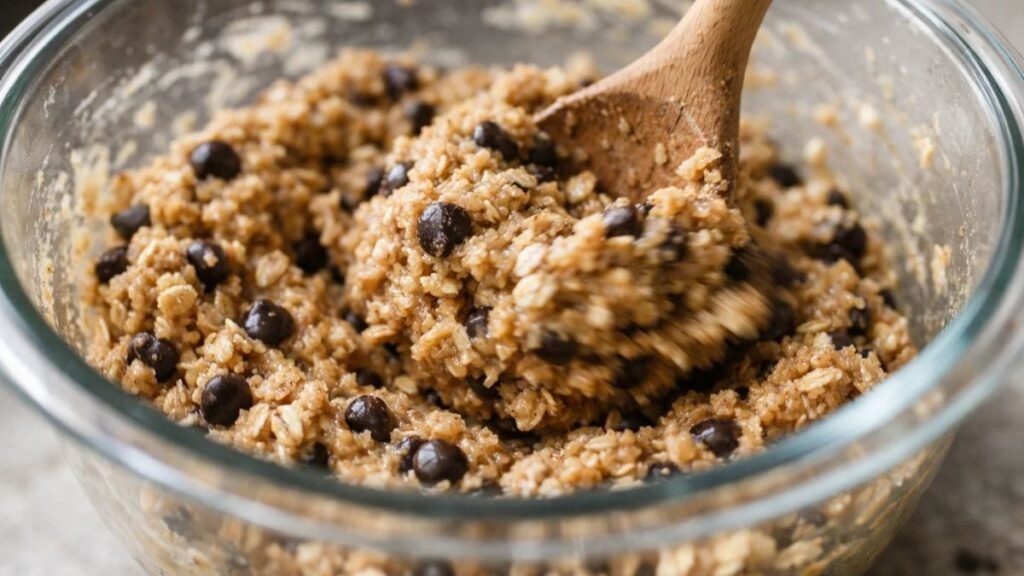
This is one of those recipes that sounds more complicated than it is.
Basic method
- Add all dry ingredients to a bowl
- Stir in nut butter and sweetener
- Mix until it forms a dough-like consistency
- Fold in chocolate chips
- Roll into bite-sized balls
- Chill for 20–30 minutes
That’s it. You’re done.
If the mixture feels too dry, add a splash of milk. Too sticky? A little extra oat flour usually fixes it.
Serve This: Why Overnight Protein Oats for Weight Loss
Variations for Different Diets and Preferences
This is where things get fun.
Vegan cookie dough protein balls
- Use plant-based protein powder
- Swap honey for maple syrup
- Choose dairy-free chocolate chips
Low-sugar version
- Cut sweetener in half
- Use unsweetened protein powder
- Lean on vanilla, cinnamon, or salt for flavor
High-protein version
- Increase protein powder slightly
- Add collagen peptides
- Use a thicker nut butter
Nut-free option
- Sunflower seed butter
- Tahini
- Pumpkin seed butter
There’s almost always a workaround.
When’s the Best Time to Eat Them?
Timing is flexible, but some moments really shine.
- Mid-morning when focus dips
- Pre-workout for quick energy
- Post-workout for recovery
- Afternoon snack instead of candy
- Dessert replacement when cravings hit
Because the macros are balanced, they don’t cause the blood sugar rollercoaster that sweets often do.
Homemade vs. Store-Bought: A Real Comparison
Both have a place. But they’re not equal.
Homemade protein balls
- Full ingredient control
- Lower sugar
- Fresher taste
- More cost-effective
Store-bought options
- Convenient
- Longer shelf life
- Often higher in sugar or additives
If you buy them, look for:
- Short ingredient lists
- At least 6g protein per serving
- No artificial sweeteners
Storage Tips That Actually Work
These are surprisingly low-maintenance.
- Refrigerator: up to 7 days
- Freezer: up to 3 months
Freezing half the batch is one of those small habits that makes life easier. They thaw quickly and keep their texture.
Serve This: Healthy Banana Oatmeal Muffins
Common Mistakes That Ruin the Experience
Even simple snacks can go sideways.
- Adding too much protein powder (chalky texture)
- Skipping salt (flat flavor)
- Using overly sweet protein powder
- Making balls too large (calorie creep is real)
Balance is the difference between “pretty good” and “why didn’t I make these sooner?”

How Protein Balls Support Weight Management
They’re not magic. Let’s be clear.
But they do support habits that matter.
- Fewer cravings for ultra-processed snacks
- Higher daily protein intake
- Less mindless overeating later
For people who struggle with boredom eating or emotional snacking, that’s huge.
Quick Takeaways
- Cookie dough protein balls are easy, no-bake snacks
- They combine protein, healthy fats, and fiber
- They’re customizable for almost any diet
- Homemade versions offer the best nutrition control
- Ideal for busy, real-life schedules
A Note on Expert Perspective
Nutrition professionals increasingly emphasize balanced snacking over strict restriction. Protein-forward snacks like these align well with modern guidance around satiety, blood sugar stability, and long-term consistency—things that actually help people stick with healthier routines.
Serve This: Gluten-Free Dairy-Free Desserts Recipes
FAQs
Are cookie dough protein balls safe to eat?
Yes. They don’t contain raw eggs or untreated flour.
Can kids eat protein balls?
Absolutely, especially when made with simple, whole ingredients and minimal sweetener.
Do protein balls replace meals?
Not really. They’re best as snacks.
Can I eat them every day?
Yes, in moderation and as part of a balanced diet.
Final Thoughts
Cookie dough protein balls are proof that healthy eating doesn’t have to feel like self-denial. They’re practical, comforting, and quietly effective—the kind of snack that fits into real life instead of fighting against it.
If you’re looking for something that fuels your body and makes you happy, this might be one of the easiest wins you’ll ever make.
Sources & References
This article’s health and nutrition information is supported by research and expert-reviewed guides from trusted medical and nutritional resources.
- Harvard Health — High-Protein Snacks & Satiety :contentReference[oaicite:0]{index=0}
- Healthline — Healthy High-Protein Snacks Guide :contentReference[oaicite:1]{index=1}
- Healthline — Ways to Boost Protein Intake :contentReference[oaicite:2]{index=2}
- Harvard Health — Healthy Snacking Habits :contentReference[oaicite:3]{index=3}
- American Heart Association — Healthy Snack Options :contentReference[oaicite:4]{index=4}

Cookie Dough Protein Balls
Equipment
- Mixing Bowl
- Measuring cups and spoons
- Wooden spoon or spatula
- Baking tray or plate
Ingredients
- 1 cup Rolled oats Old-fashioned oats work best
- ½ cup Peanut butter Natural
- ¼ cup Protein powder Vanilla or unflavored
- 3 tbsp Honey Maple syrup can be substituted
- ¼ cup Mini chocolate chips Optional but recommended
- 2 tbsp Milk Dairy or plant-based
- ½ tsp Vanilla extract Optional
- Pinch Salt Enhances flavor
Instructions
- Add the oats, protein powder, and salt to a mixing bowl and stir until evenly combined.
- Add peanut butter, honey, milk, and vanilla extract. Mix until a thick dough forms.
- Fold in the chocolate chips gently to distribute evenly.
- Using your hands, roll the mixture into bite-sized balls.
- Place the protein balls on a parchment-lined tray and refrigerate for 20 minutes to set.
- Serve immediately or store for later use.
Notes

Muhammad Ahtsham is the founder of EatLikeFit.com and a nutrition researcher dedicated to healthy weight management. He provides practical, science-backed advice on high-protein diets and affordable meal planning to help readers achieve their fitness goals simply and effectively.