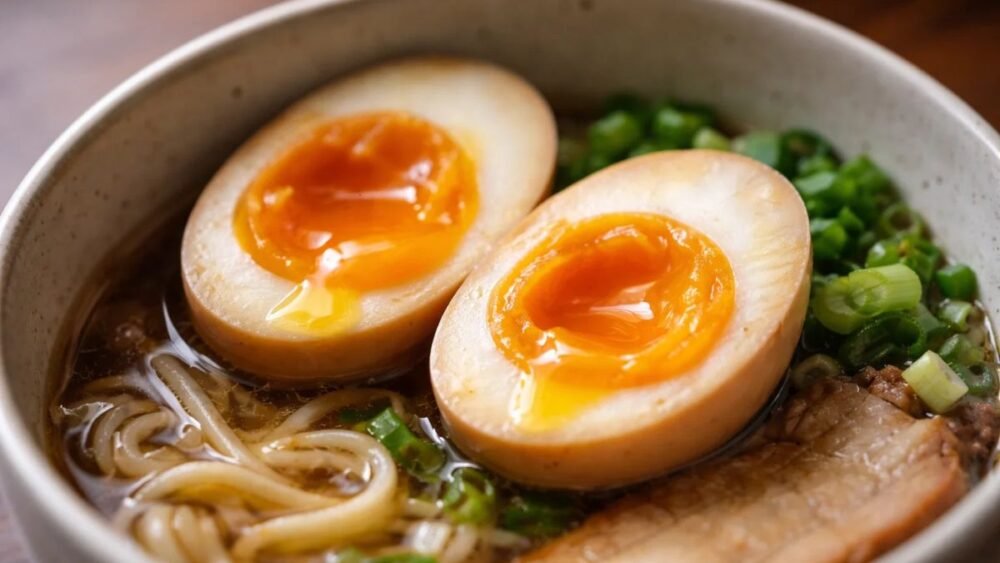
Some foods don’t shout for attention. They sit quietly on the side of the bowl, unassuming, almost modest. And then you take a bite — and suddenly everything else fades into the background.
Soy sauce eggs are like that.
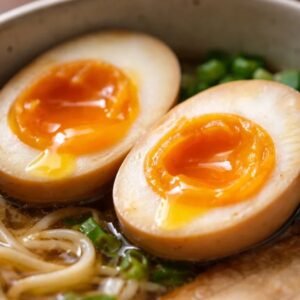
They’re not flashy. They’re not complicated. But when you crack into one with a spoon and the yolk spills out, thick and golden, carrying that salty-sweet, deeply savory punch? You realize why ramen shops guard their egg recipes like trade secrets.
I used to think soy sauce eggs were one of those things best left to professionals. Something about them felt… precise. Too easy to mess up. Too dependent on perfect timing.
Turns out, I was wrong. Not because they’re hard — but because they’re forgiving once you understand what actually matters.
This is a full, no-nonsense guide to making perfect jammy soy sauce eggs at home. Not rushed. Not robotic. Just practical, tested, and deeply satisfying.
Whether you’re topping a bowl of ramen, upgrading meal prep, or just craving something quietly addictive, you’ll find yourself coming back to this recipe more than you expect.
Note: This post has affiliate links. If you buy through them, I may earn a commission at no extra cost to you. Read our Privacy Policy for details.”
Jump To
What Are Soy Sauce Eggs, Really?
Let’s clear something up early.
Soy sauce eggs aren’t just “eggs soaked in soy sauce.” That description misses the point entirely.
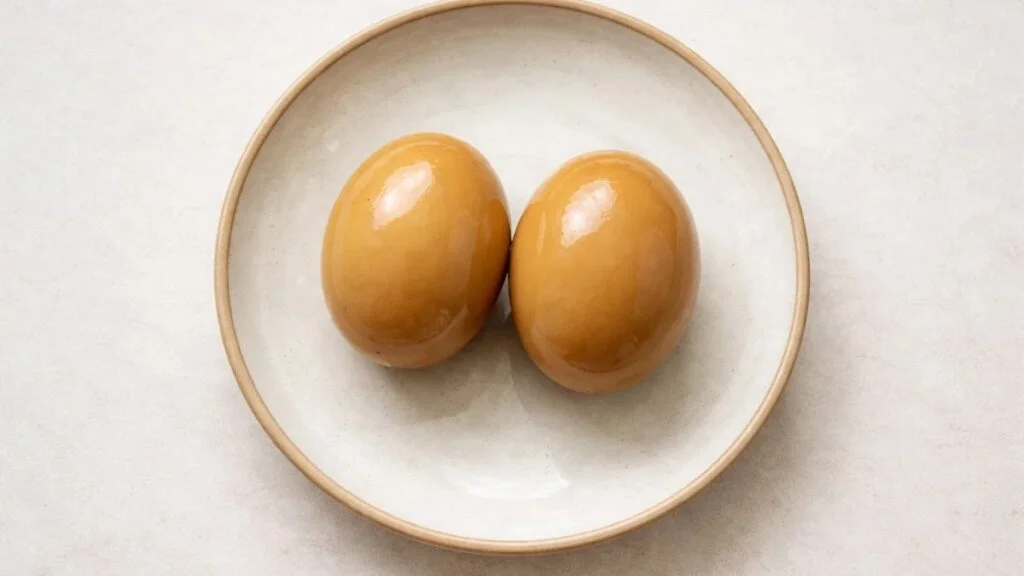
At their core, soy sauce eggs are soft-boiled eggs that are peeled and marinated in a balanced soy-based liquid, usually diluted and lightly sweetened, often with aromatics added for depth.
They show up most famously in Japanese ramen under the name ajitsuke tamago. But similar versions exist across East Asia, each shaped by local tastes.
Serve This: Hard-Boiled Eggs or Cottage Cheese: Which Is Better for Protein?
Soy sauce eggs are soft-boiled eggs marinated in a diluted soy sauce mixture until the whites absorb savory flavor while the yolk stays creamy and jammy.
People love them because they hit three sweet spots at once:
- Rich, custardy yolks
- Deep umami flavor without heaviness
- Ridiculous versatility across meals
They’re comforting without being boring. Bold without being loud.
Equipment You’ll Need
- Medium saucepan – perfect for gentle boiling and even heat distribution
- Slotted spoon – helps you lift items safely while draining excess water
- Mixing bowl – for combining ingredients smoothly and efficiently
- Ice bath bowl – essential for quickly stopping the cooking process and preserving texture
- Small container or glass jar with lid – ideal for storage and keeping everything fresh
Why Soy Sauce Eggs Taste So Good (There’s Actual Science Here)
Eggs are strange little miracles. Neutral, yet rich. Delicate, yet sturdy. And once you peel them, they become incredible flavor magnets.
Here’s what’s happening under the surface:
- Egg whites are porous once cooked and peeled
- Salt penetrates quickly, seasoning from the outside in
- Fat in the yolk carries flavor, rounding out sharp edges
- Sugar balances salt, preventing bitterness
That’s why even a short marinade can transform an egg completely.
I once tested this accidentally — marinated two identical eggs, one for three hours and one overnight. The difference wasn’t just color. It was depth. The longer egg tasted… fuller. More intentional.
But here’s the catch: too much soy sauce ruins everything. Straight soy sauce overwhelms the egg, toughens the whites, and masks the yolk’s richness.
Balance is the secret. Always has been.
Ingredients for Soy Sauce Eggs

You don’t need specialty imports or hard-to-find ingredients. This is a pantry recipe at heart.
Core Ingredients
- Large eggs
- Soy sauce (regular or light)
- Water
That’s the non-negotiable trio.
Optional Flavor Enhancers (Use Sparingly)
- Sugar, honey, or mirin
- Garlic (lightly smashed)
- Fresh ginger slices
- Green onions or scallions
- A few drops of sesame oil
Important note: Aromatics should support the egg, not dominate it. If garlic becomes the main flavor, something’s gone wrong.
Sometimes I skip aromatics entirely and let the egg speak for itself. It still works.
The Most Important Step: Boiling the Eggs Correctly
If there’s one place people mess this up, it’s here.
The marinade can’t save an overcooked egg.
The Foolproof Soft-Boil Method
- Bring a pot of water to a gentle boil
- Lower eggs in carefully (a spoon helps)
- Start timing immediately
- Boil uncovered
- Transfer straight to an ice bath
That’s it. No vinegar. No salt. No hacks.
Serve This: Duck Eggs Recipes: How to Cook and Use Duck Eggs
Timing Matters More Than Anything
| Boil Time | Yolk Result |
|---|---|
| 6 minutes | Very runny |
| 6½ minutes | Jammy, custard-like |
| 7 minutes | Soft-set but creamy |
| 8 minutes | Fully cooked |
For soy sauce eggs, 6½ to 7 minutes is the sweet spot. Anything beyond that, and you lose the magic.
Related: Jammy Eggs Recipe: Perfect Creamy Yolks Every Time
How to Peel Eggs Without Ruining Them (Yes, It’s Possible)

Peeling soft-boiled eggs can feel like defusing a bomb. One wrong move and half the white disappears.
A few hard-earned lessons:
- Slightly older eggs peel better
- Always crack from the wide end
- Peel under running water
- Remove shell and membrane together
That last part matters more than people realize. The membrane is the real enemy, not the shell.
And yes — the ice bath helps. Not because it’s trendy, but because it stops cooking and pulls the egg slightly away from the shell.
The Classic Soy Sauce Egg Marinade (Balanced, Not Aggressive)
This is the base recipe I come back to again and again. It’s adaptable, forgiving, and ramen-shop approved.
Basic Marinade Ratio
- ½ cup soy sauce
- ½ cup water
- 1 tablespoon sugar or honey
- 1 garlic clove, smashed
- 1 thin slice fresh ginger
Stir until the sugar dissolves completely.
Why dilute soy sauce?
Because full-strength soy sauce overwhelms the egg and toughens the whites. A 1:1 ratio seasons without punishing.
This single choice is the difference between “pretty good” and “why is this so good?”
Serve This: High-Protein Vegan Soup
How Long Should You Marinate Soy Sauce Eggs?
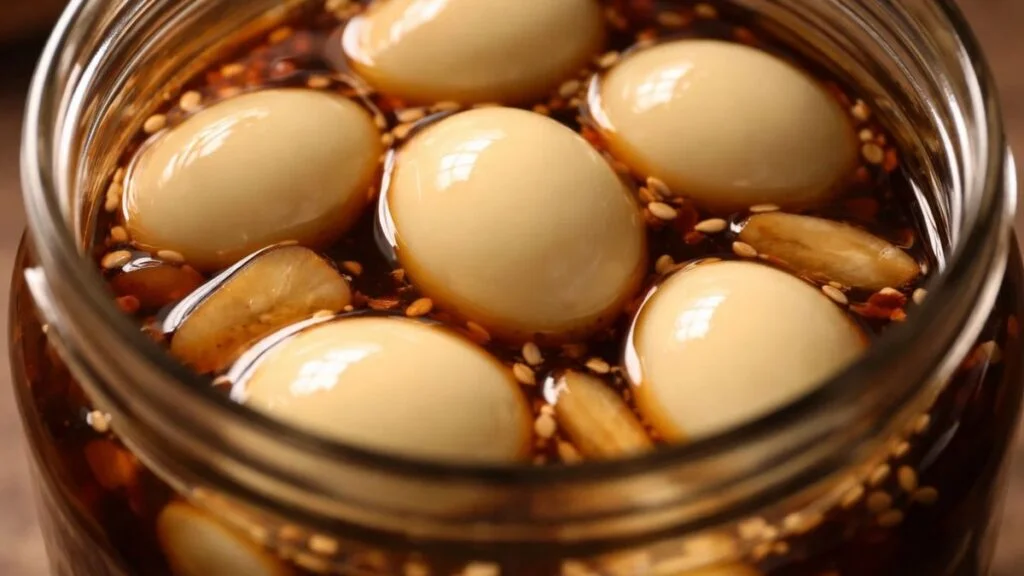
There’s no single correct answer — just ranges.
Marinade Time Guide
- 2–4 hours: Light seasoning, pale color
- 6–8 hours: Balanced, classic ramen-style
- Overnight: Deep umami, darker whites
Personally, I aim for 6 hours when serving the same day and overnight when meal-prepping.
Anything beyond 48 hours? Don’t. The whites start to firm up in an unpleasant way.
Best Containers for Marinating
You want the eggs fully submerged without using a gallon of liquid.
Good options:
- Zip-top bag (press out air)
- Small lidded container
- Tall glass jar
In professional kitchens, eggs are often rotated halfway through marinating to keep the color even. At home, a gentle shake does the trick.
Popular Soy Sauce Egg Variations Worth Trying
Once you’ve nailed the base, experimentation becomes fun instead of risky.
Japanese-Style Ajitsuke Tamago
- Add mirin instead of sugar
- Use dashi instead of water
- Skip garlic
This version is subtle and incredibly clean.
Korean-Inspired Soy Eggs
- Add sliced green chilies
- Use a touch more sweetness
- Finish with sesame seeds
These lean bolder, slightly spicy, and addictive.
Low-Sodium Option
- Use low-sodium soy sauce
- Increase water slightly
- Marinate longer for balance
Flavor stays strong, sodium drops noticeably.
How to Serve Soy Sauce Eggs
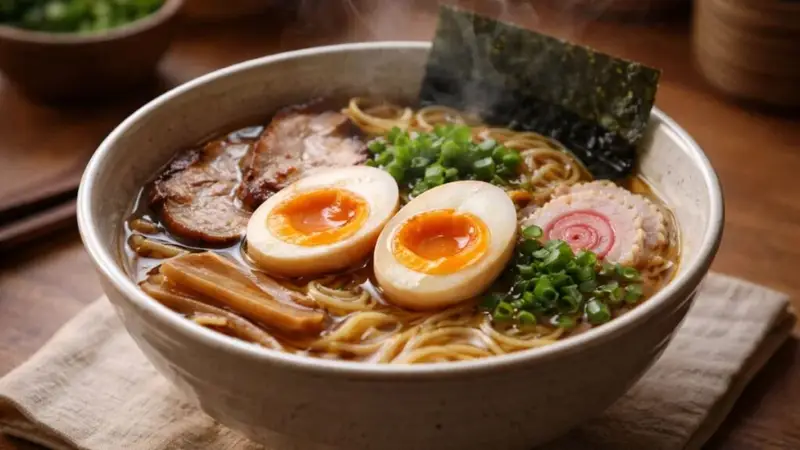
Ramen may be the star pairing, but it’s far from the only one.
Favorite Ways to Use Them
- Halved over ramen or udon
- Sliced on rice bowls
- With avocado toast
- As a protein-rich snack
- On grain or noodle salads
One of the best bites I’ve had recently? A soy sauce egg eaten whole, sprinkled with flaky salt. No garnish. No drama.
Storage and Food Safety (What Actually Matters)
According to food safety guidelines:
- Store eggs in the refrigerator
- Keep them submerged in marinade
- Use within 3–4 days
- Always use clean utensils
If an egg smells off, trust your instincts. No recipe is worth food poisoning.
Nutrition Snapshot (Per Egg)
| Nutrient | Approximate Amount |
|---|---|
| Calories | 70–80 |
| Protein | ~6g |
| Fat | ~5g |
| Sodium | Varies by marinade |
Dietitians often point out that soy sauce eggs are filling and satisfying, making them ideal for portion-controlled meals and high-protein diets.
Common Mistakes That Ruin Soy Sauce Eggs
Even simple recipes have traps.
Avoid these:
- Over-boiling the eggs
- Skipping the ice bath
- Using undiluted soy sauce
- Over-marinating
- Overloading aromatics
Fixing just one of these usually improves results instantly.
Why Homemade Soy Sauce Eggs Beat Store-Bought Every Time
Convenience is nice. Flavor is nicer.
Homemade eggs:
- Have fresher yolks
- Let you control sodium
- Cost far less
- Taste cleaner and more balanced
Once you make them yourself, store-bought versions feel flat by comparison.
Serve This: Mediterranean Quinoa Salad
Final Thoughts: Why This Recipe Works
Soy sauce eggs succeed because they respect restraint.
No tricks. No gimmicks. Just attention to timing, balance, and patience.
If there’s one takeaway, let it be this:
Perfect soy sauce eggs start with the boil, not the marinade.
Nail that, dilute your soy sauce, and let time do the rest.
That’s how ramen shops do it.
And now — so can you.
FAQs
Are soy sauce eggs the same as ramen eggs?
Yes. Ramen eggs are a Japanese variation of soy sauce eggs, often made with mirin and dashi.
Can I make soy sauce eggs without sugar?
You can, but a touch of sweetness balances saltiness. Reducing is better than removing entirely.
How long do soy sauce eggs last?
Stored properly in the fridge, they’re best within 3–4 days.
If you enjoyed this article, don’t forget to follow and subscribe for more health tools, recipes, and news!
Soy Sauce Eggs (Jammy Ramen Eggs)
Equipment
- Medium saucepan
- Slotted spoon
- Mixing Bowl
- Ice bath bowl
- Small container or glass jar with lid
Ingredients
- 8 large eggs
- ½ cup soy sauce regular or light
- ½ cup water
- 1 tablespoon sugar or honey
- 1 garlic clove smashed
- 1 thin slice fresh ginger
Instructions
- Bring a pot of water to a gentle boil over medium heat.
- Carefully lower the eggs into the boiling water using a spoon.
- Boil for 6½ to 7 minutes for jammy yolks.
- Immediately transfer eggs to an ice bath and let cool completely.
- Peel the eggs gently, starting from the wider end.
- In a bowl, mix soy sauce, water, sugar, garlic, and ginger until dissolved.
- Place peeled eggs into a container and pour marinade over them, ensuring they are fully submerged.
- Cover and refrigerate for at least 6 hours or overnight for deeper flavor.
- Slice in half and serve over ramen, rice bowls, or enjoy as a snack.
Notes
- Do not marinate longer than 48 hours or egg whites may become firm.
- For Japanese-style ramen eggs, replace sugar with mirin and water with dashi.
- Store marinated eggs refrigerated and consume within 3–4 days.

Muhammad Ahtsham is the founder of EatLikeFit.com and a nutrition researcher dedicated to healthy weight management. He provides practical, science-backed advice on high-protein diets and affordable meal planning to help readers achieve their fitness goals simply and effectively.