
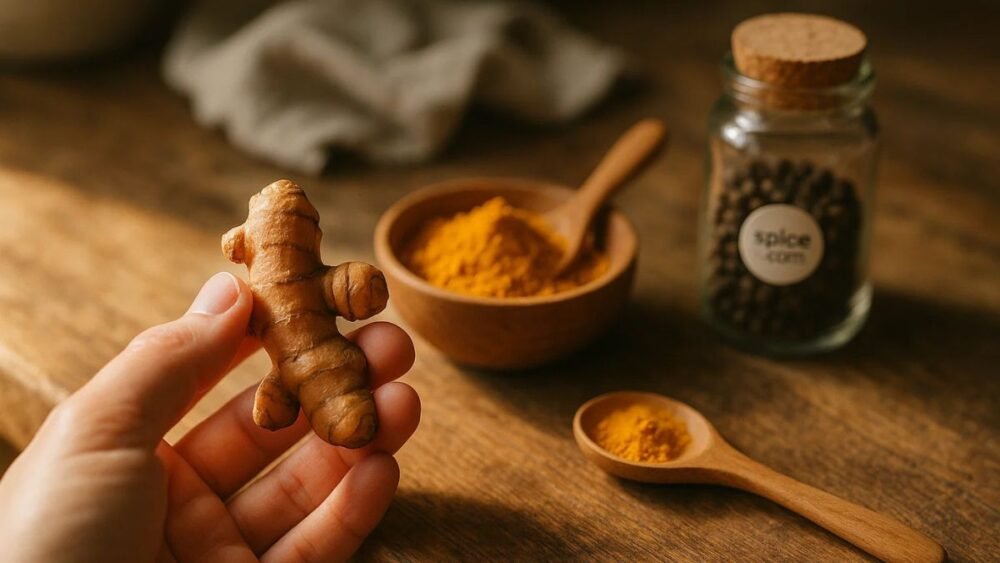
Neither is a universal winner. Both raw turmeric and powdered turmeric have strengths — raw gives a fresher, oilier nutrient profile and a vivid flavor; powdered turmeric delivers a more concentrated curcumin dose, is easier to measure, and fits into everyday routines. Choose based on what matters to you: ritual and flavor, or convenience and consistency.
Jump To
The grocery-aisle moment that tells you everything
Ever stood with a knobby piece of orange root in one hand and a tidy jar of spice in the other? I have — and that tiny hesitation says more about modern wellness culture than it does about the plant itself. Turmeric is everywhere now: golden lattes, anti-inflammatory trends, supplements. So what actually changes when that root is turned into powder?
The root is the root, but the processing matters. Washing, boiling, drying and grinding alter volatile oils, moisture and some delicate phytonutrients. Those shifts change flavor, shelf life — and how your body encounters the plant’s active ingredients.
What’s inside: curcumin and company
When people talk turmeric benefits, they usually mean curcumin — the compound researchers have studied most for inflammation, joint health and antioxidants. Nutritionists note that, gram for gram, powdered turmeric often has a higher curcumin concentration than fresh root. That’s one reason most clinical trials use powders or extracts: they’re standardized and predictable.
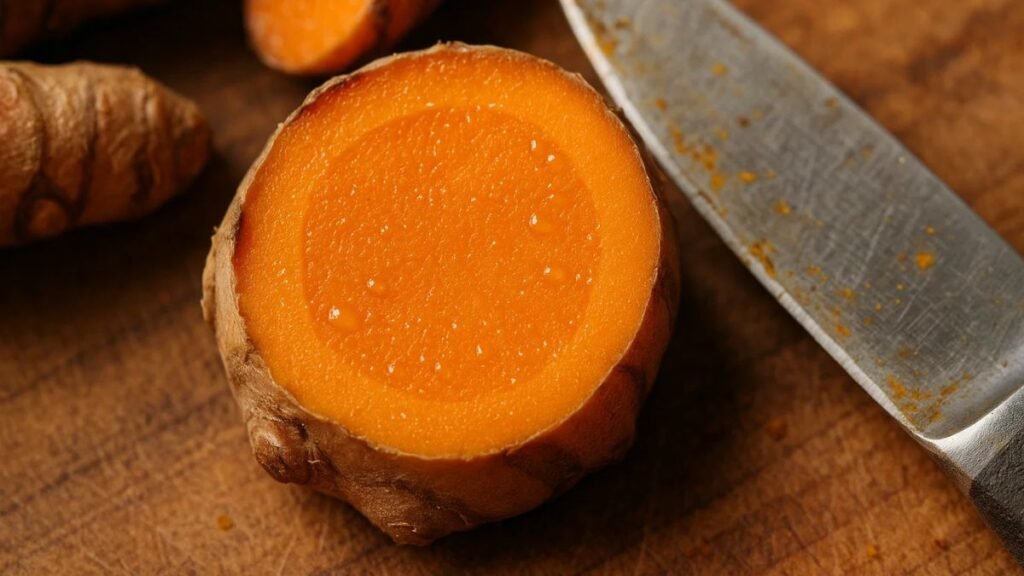
But raw turmeric isn’t just a weaker version. It carries volatile oils (like turmerones) and other phytochemicals that can be lost during drying. Some experts suggest those oils may help with absorption or provide complementary effects. So yes: powdered turmeric is better for dosing curcumin reliably; raw turmeric offers a broader spectrum of natural compounds.
How to decide — three quick use-cases
- If you want consistent dosing for long-term use (think: daily supplement-like behavior), powdered turmeric is the sensible pick.
- If you care about flavor and culinary ritual — grating a root into tea, sautéing with ginger — raw turmeric wins.
- If you’re curious about powders versus fresh forms more broadly, our piece on beetroot powder vs juice looks at the same trade-offs for another root — worth a read if you’re comparing powders and fresh foods more widely.
Daily life: what you’ll actually keep doing
Here’s where the rubber meets the road. Most of us don’t become amateur herbalists — we want something we’ll use. Powder slips into smoothies, soups, rice, eggs and “golden milk” with almost zero fuss. That convenience equals adherence, and adherence equals results over time.
Raw turmeric asks for a little ceremony: peel, grate, blend. It tastes brighter — more immediate warmth, the way fresh ginger does. You might notice that sensation after a fresh shot of turmeric in your tea. If you enjoy that ritual, it becomes part of the benefit.
Does one act faster than the other?
People often say fresh turmeric feels more “warming” right away. That’s anecdotal, but plausible: raw root contains volatile oils that can create an immediate sensory response. Powdered turmeric tends to be less about an instant jolt and more about cumulative effect when used consistently.
And remember this practical trick experts often mention: black pepper (piperine) dramatically improves curcumin absorption. A study-backed tip: add a pinch of black pepper to your turmeric drink or meal to help your body use more of what you’re taking.
What the research actually covers
Most clinical research uses standardized powders or concentrated extracts, which is why powdered turmeric has the firmer evidence base. That’s not proof that powder is inherently superior — it’s a reflection of what scientists can measure and duplicate. Where we lack head-to-head trials, practical sense and safety guidance fills the gap.
Storage, safety and shopping notes
Both forms are generally safe in culinary amounts, but here are some clear, usable tips nutritionists recommend:
Raw turmeric
- Keep in the refrigerator; use within 2–3 weeks.
- Avoid roots that are soggy or moldy.
- Wear gloves if you don’t want orange hands.

Powdered turmeric
- Buy brands that test for heavy metals and contaminants.
- Store in a cool, dry place; replace jars every 9–12 months for best potency.
If you take high therapeutic doses or are pregnant, check with a clinician — experts say high-dose curcumin isn’t the same as a pinch of spice on your dinner.
Bottom line: mix and match
If you want the shortest possible answer for a Featured Snippet: Neither is categorically better — they do different things. Choose powdered turmeric for consistent curcumin dosing and everyday convenience. Choose raw turmeric for flavor, oils and a fuller culinary experience.
Before you go: if you’re curious how powdered supplements compare to fresh forms for other ingredients, we’ve also explored mushroom coffee and powdered blends in our mushroom coffee side-effects guide — it’s a useful companion read when you’re deciding between convenience and whole-food rituals.
So yeah — there’s room for both in a modern kitchen. Try them both, add a pinch of black pepper, and keep whichever one makes you actually use it. That’s the real win.
If you enjoyed this article, don’t forget to follow and subscribe for more health tools, recipes, and news!

Muhammad Ahtsham is the founder of EatLikeFit.com and a nutrition researcher dedicated to healthy weight management. He provides practical, science-backed advice on high-protein diets and affordable meal planning to help readers achieve their fitness goals simply and effectively.