
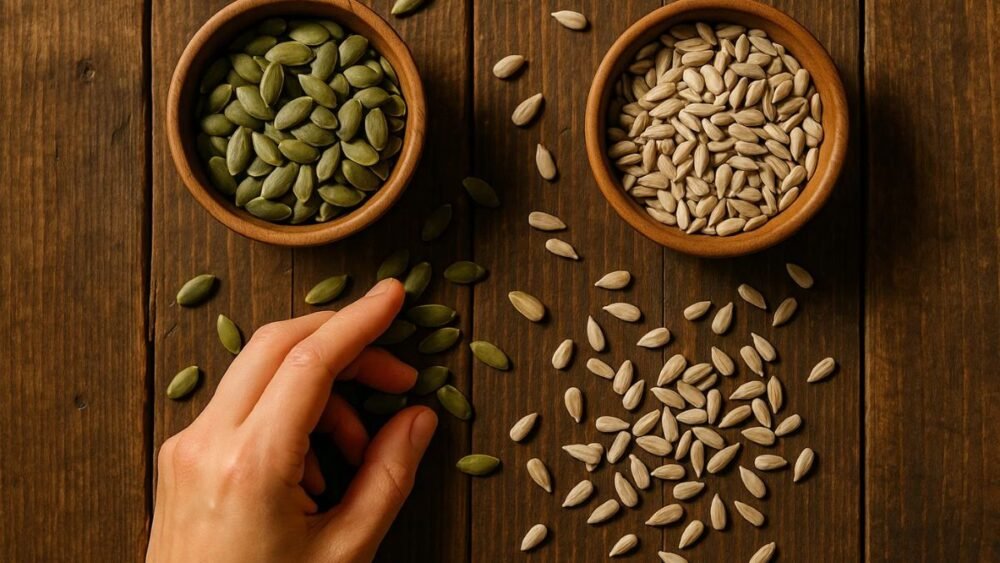
When it comes to snacks that quietly pack a punch, seeds often fly under the radar. But if you’ve ever paused by the snack aisle or scrolled past a health food article, you’ve probably noticed pumpkin seeds and sunflower seeds popping up everywhere. Both are celebrated for their nutrient density, yet they’re not interchangeable. So, which one really deserves a spot in your daily diet? I took a closer look—and here’s what I found.
Jump To
A Quick Nutritional Snapshot

At first glance, pumpkin and sunflower seeds might seem similar. Both are loaded with healthy fats, protein, and essential micronutrients—but they each shine in different areas.
| Nutrient (per 1 oz / 28g) | Pumpkin Seeds | Sunflower Seeds |
|---|---|---|
| Calories | 151 | 164 |
| Protein | 7g | 5.5g |
| Fat | 13g | 14g |
| Carbohydrates | 5g | 6g |
| Fiber | 1.7g | 2.4g |
| Magnesium | 37% DV | 9% DV |
| Zinc | 14% DV | 10% DV |
| Vitamin E | 0% DV | 37% DV |
| Selenium | 0% DV | 28% DV |
Here’s the takeaway: pumpkin seeds are the go-to for magnesium and zinc, which play a crucial role in everything from heart health to immune function. Sunflower seeds, on the other hand, boast high vitamin E and selenium—perfect if you’re focused on skin, hair, and overall antioxidant support.
For a deeper dive into pumpkin seeds, their uses, and their benefits, check out this guide on pumpkin seeds vs chia seeds.
Health Benefits: Where They Excel
Pumpkin Seeds
Heart Health: If you’ve ever been told to watch your magnesium intake, pumpkin seeds are your quiet ally. Magnesium helps regulate blood pressure, and combined with antioxidants, these seeds support cardiovascular function.
Prostate Support: Thanks to their zinc content, pumpkin seeds are linked to prostate health. Some men even keep a small handful in their daily routine just for this reason.
Better Sleep: It turns out the tryptophan in pumpkin seeds isn’t just for turkey. A small nightly snack may actually help improve sleep quality.
Anti-Inflammatory: Loaded with antioxidants, pumpkin seeds help combat inflammation and oxidative stress—two sneaky contributors to chronic disease.
Sunflower Seeds
Skin & Hair Health: With vitamin E in abundance, sunflower seeds protect cells from damage while supporting hair and skin vitality.
Immune Support: Selenium strengthens the immune system and acts as a defense against oxidative stress.
Heart Benefits: While not as magnesium-rich as pumpkin seeds, sunflower seeds are packed with heart-healthy fats that help balance cholesterol.
Anti-Inflammatory: Flavonoids and vitamin E combine to calm inflammation throughout the body.
For more insights on plant-based nutrition and oils, explore the benefits of organic pumpkin seed oil.
Taste, Texture, and Culinary Uses
Both seeds are incredibly versatile—but their flavors couldn’t be more different.
- Pumpkin Seeds: Mild, nutty, and subtly earthy. I like sprinkling them on salads or stirring them into granola. They add crunch without overpowering other flavors.
- Sunflower Seeds: Sweet, earthy, and slightly tangy. Perfect in trail mixes, baked goods, or even blended into smoothies.
Pro Tip: Light roasting can elevate the flavor, but resist the urge to add too much salt or oil—you want to keep all those health benefits intact.
Which Seed Should You Pick?
It depends on your personal goals. Here’s a quick guide:
| Goal | Recommended Seed |
|---|---|
| Boost magnesium & zinc | Pumpkin seeds |
| Support skin, hair & antioxidants | Sunflower seeds |
| Improve heart health | Both |
| Aid sleep & reduce inflammation | Pumpkin seeds |
| Strengthen immunity | Sunflower seeds |
For those curious about nuts and seeds for weight management or natural energy, this guide on the best nut for natural weight loss is worth a read.
How to Include Seeds in Your Diet
Snack Smart: A small handful daily (about 1 oz) is enough to reap benefits without overdoing calories.
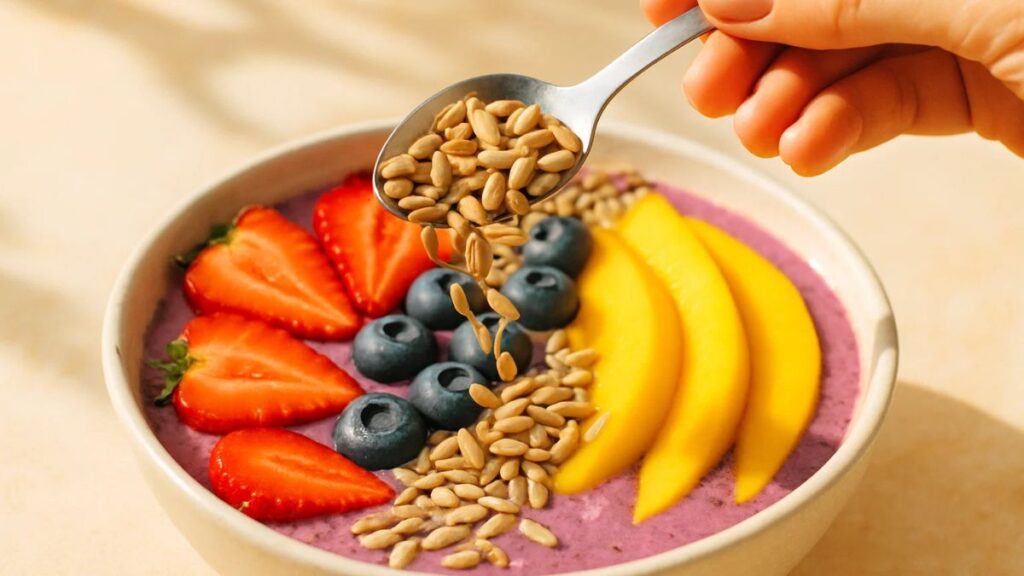
Sprinkle Into Meals: From oatmeal to yogurt, seeds add texture and nutrition effortlessly. You can also enhance smoothies or mix into energy balls.
Baking & Cooking: Seeds aren’t just for snacking. Incorporate them into muffins, bread, or granola bars to boost fiber and protein.
Serving Tip: Seeds are calorie-dense. Portion control matters, but you can enjoy them guilt-free if you keep servings moderate.
Bottom Line
Honestly, both pumpkin and sunflower seeds deserve a place in a balanced diet. Rotate between the two, mix them in your meals, and you’ll get the best of both worlds. It’s not just about one seed being “better” than the other—it’s about variety and matching nutrients to your lifestyle and goals.
Nutrition experts agree: “Seeds are nutritional powerhouses. Using both pumpkin and sunflower seeds ensures a wide spectrum of vitamins, minerals, and healthy fats,” says Dr. Sarah Mitchell, a registered dietitian at NutriWell Clinic.
Can I eat pumpkin and sunflower seeds every day?
Yes—moderate daily consumption (around 1 oz) is generally safe and beneficial for most people.
Are roasted seeds healthier than raw seeds?
Light roasting is fine and enhances flavor, but over-roasting or using too much oil can reduce nutrient content.
Which seed is better for heart health?
Both support heart health. Pumpkin seeds are richer in magnesium, while sunflower seeds provide vitamin E and heart-healthy fats.
Can seeds help with weight management?
Absolutely. Their fiber and protein help you feel full longer. Just keep an eye on portion sizes since they are calorie-dense.
If you enjoyed this article, don’t forget to follow and subscribe for more health tools, recipes, and news!
References:

Muhammad Ahtsham is the founder of EatLikeFit.com and a nutrition researcher dedicated to healthy weight management. He provides practical, science-backed advice on high-protein diets and affordable meal planning to help readers achieve their fitness goals simply and effectively.