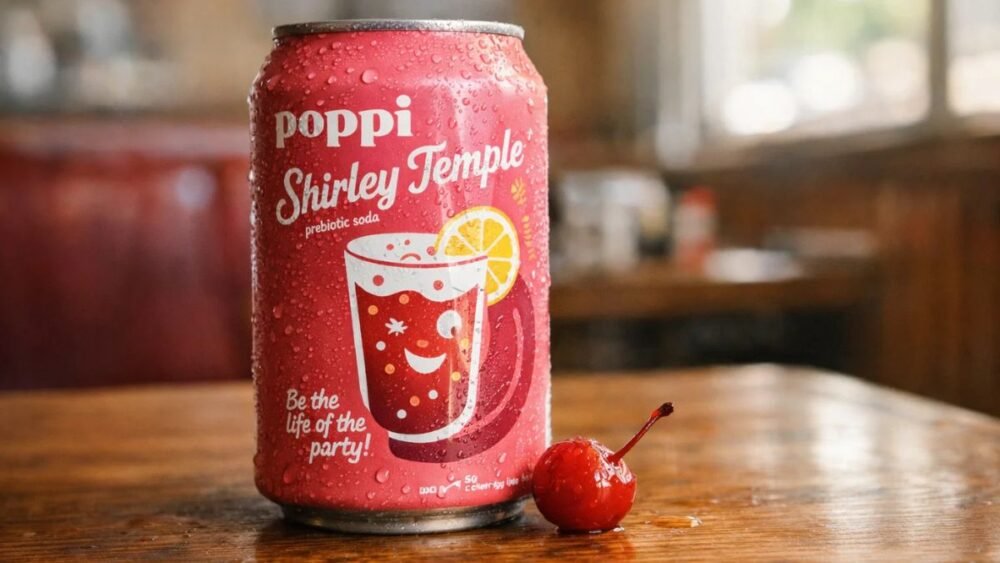
I’ll admit it: When I first saw Poppi’s Shirley Temple pop up on my feed, I paused. Not because it was flashy or loud, but because it tapped into something familiar. That name carries weight. Childhood dinners. Fancy glasses without alcohol. Feeling grown-up before you actually were.
Now, Poppi — the prebiotic soda brand that’s made a business out of remixing nostalgia — has taken that memory and bottled it. And judging by the internet’s reaction, people aren’t just sipping it. They’re dissecting it.
What started as a relatively quiet product drop has turned into a steady hum across TikTok, Instagram, and comment sections where fans, skeptics, and wellness-minded shoppers are all weighing in. The buzz says less about one soda and more about how we’re drinking in 2026.
Jump To
A Childhood Classic, Rewritten for Adult Tastes
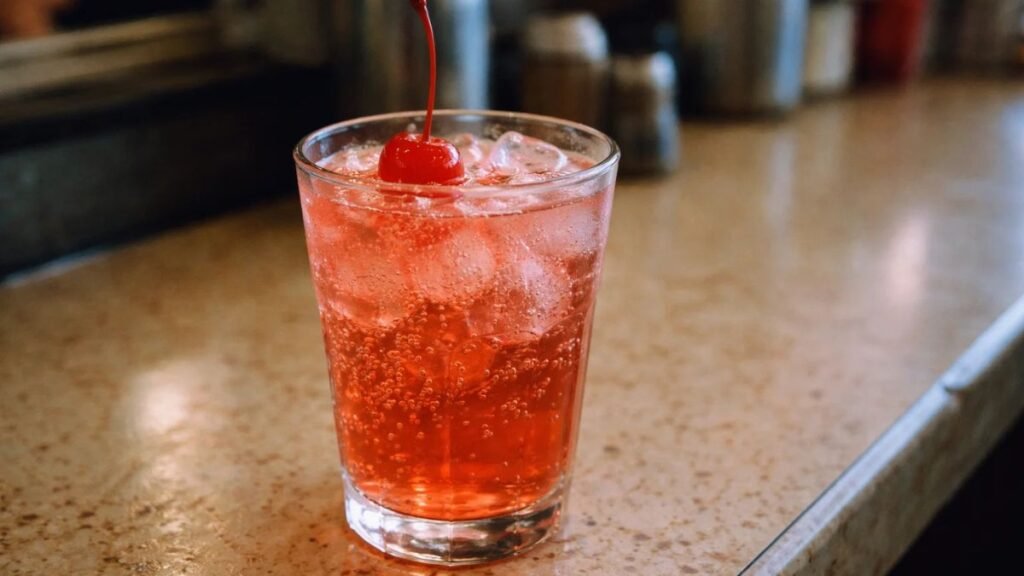
The original Shirley Temple wasn’t complicated. Ginger ale or lemon-lime soda, a splash of grenadine, and that unmistakable maraschino cherry on top. It was sweet, celebratory, and unapologetically sugary — a treat, not a health play.
Poppi doesn’t try to recreate that drink ounce for ounce. Instead, it keeps the idea of a Shirley Temple intact while shifting the formula to meet modern expectations.
You still get cherry-forward flavor. You still get the emotional callback. What you don’t get is the syrupy overload that defined the original.
That’s intentional.
Related: Zero Sugar vs Diet Soda: Which Is Healthier?
What Makes Poppi’s Shirley Temple Different
Poppi’s take leans heavily into the brand’s established identity. Compared to traditional sodas, this version focuses on:
- Significantly lower sugar levels
- Apple cider vinegar as a base ingredient
- Prebiotic positioning tied to gut health trends
- A shorter, cleaner ingredient list designed for label readers
Nutritionists often point out that sugary beverages remain one of the biggest sources of added sugar in the American diet. The U.S. Food and Drug Administration has repeatedly flagged drinks as a key contributor — and consumers have clearly taken note.
This is where Poppi has found its lane: offering something that feels indulgent without asking people to ignore what they’ve learned about sugar.
Why the Internet Can’t Stop Talking About It
What’s interesting is how little traditional marketing seems to be driving this moment. There wasn’t a massive ad blitz. No celebrity rollout dominating headlines.
Instead, the conversation grew the way food trends often do now — organically.
Short-form videos of first sips. Comment sections debating whether it “counts” as a Shirley Temple. Side-by-side comparisons with the original. People asking, Would my kid like this? Would I?
A few reasons the buzz stuck:
- The name triggers instant recognition
- Nostalgia feels genuine, not manufactured
- “Better-for-you soda” is still a hot category
- The drink photographs well, which matters more than brands admit
Food trend analysts have long noted that familiar flavors tend to outperform brand-new concepts. There’s less risk when people already know what they’re signing up for — or at least think they do.
Poppi’s Expanding Role in Functional Sodas
This isn’t a one-off experiment for Poppi. The brand has been steadily redefining what soda looks like in the wellness era, positioning itself somewhere between indulgence and intention.
Prebiotic beverages, in particular, have seen sustained growth. Consumers are more gut-health aware than ever, even if the science still gets oversimplified online.
Health experts are quick to clarify that no single drink can “fix” digestion. Harvard Health Publishing notes that prebiotics can support beneficial gut bacteria when consumed as part of a balanced diet — but results vary widely.
Poppi’s Shirley Temple doesn’t promise miracles. It doesn’t need to. It’s framed as a smarter swap, not a supplement.
Related: Are Energy Drinks Bad for You? What Experts Say
But Does It Actually Taste Like a Shirley Temple?
This is where opinions start to split.
Early reviews suggest the flavor is lighter and less sweet than the classic version — which makes sense given the reduced sugar. The apple cider vinegar adds a slight tang that some people love and others find unexpected.
Common reactions include:
- Bright cherry notes without heavy syrup
- Noticeably less sweetness
- A mild tart finish
- More refreshing than dessert-like
For fans of the original, that shift can feel jarring. For others, it’s exactly the point. The debate itself has helped keep the drink in the spotlight.
Nostalgia as Strategy — and Why It Works
Poppi’s Shirley Temple isn’t just a flavor choice. It’s a branding move rooted in cultural memory.
The Smithsonian’s National Museum of American History has documented how drinks like sodas and mocktails often reflect larger cultural moments — from prohibition-era creativity to the rise of diner culture.
By reviving a name like Shirley Temple, Poppi taps into that shared history. It’s not selling a cherry soda alone. It’s selling the feeling of being included, celebrated, and just a little bit nostalgic — without asking adults to abandon what they know now about health.
Is This a Moment or the Start of Something Bigger?
Whether this flavor becomes a permanent lineup staple or a limited-time favorite isn’t clear yet. But the response points to a bigger truth.
Market data from the U.S. Department of Agriculture shows that full-sugar soda consumption has steadily declined over the past decade, while alternative beverages continue to gain ground. People want comfort — just not at the expense of how they feel afterward.
Poppi’s Shirley Temple lands squarely in that space.
What It Signals for the Soda Industry
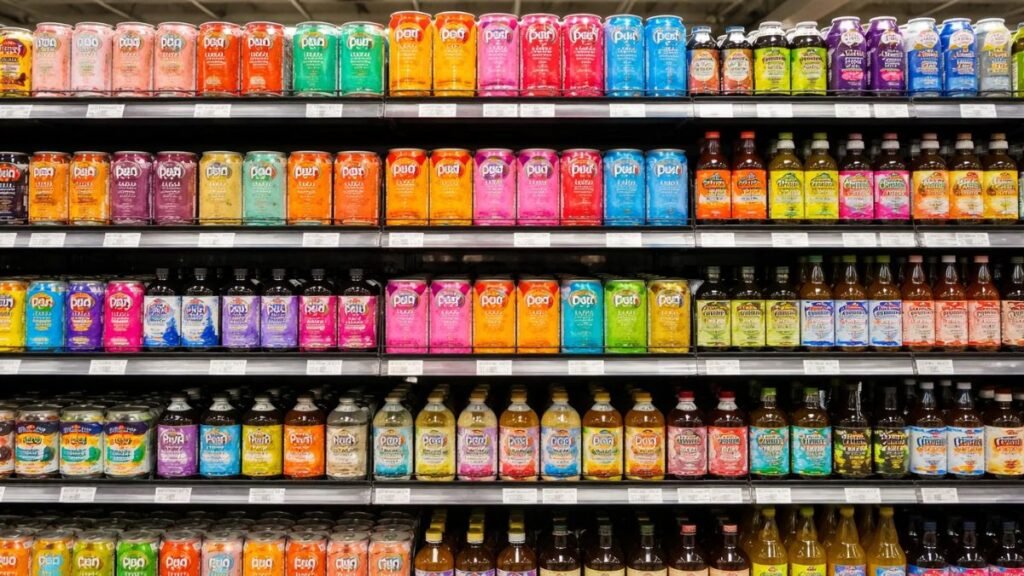
This isn’t just about Poppi. It’s a signal flare for the entire beverage aisle.
We’re likely to see more of this approach:
- Familiar flavors with lighter formulas
- Lower sugar without pretending sugar never mattered
- Story-driven branding rooted in memory, not novelty
As legacy soda brands scramble to adapt, newer companies like Poppi are shaping expectations in real time.
Final Takeaway
Poppi’s Shirley Temple twist works because it understands something simple but powerful: people don’t just want healthier options — they want emotional connection.
By blending nostalgia, modern nutrition cues, and smart storytelling, Poppi has turned a single flavor into an ongoing conversation. And right now, that conversation feels very alive.
Related: Non-Alcoholic Holiday Drinks Everyone Is Talking About
FAQs
What is Poppi’s Shirley Temple?
It’s a modern soda inspired by the classic Shirley Temple mocktail, made with prebiotics and significantly less sugar.
Is Poppi’s Shirley Temple low in sugar?
Yes. It contains far less sugar than traditional sodas, aligning with current dietary recommendations.
Why is Poppi’s Shirley Temple trending online?
The drink combines nostalgia, wellness trends, and social media-friendly visuals, sparking organic conversation and debate across platforms.
If you enjoyed this article, don’t forget to follow and subscribe for more health tools, recipes, and news!
Sources
- U.S. Food and Drug Administration (FDA) — Added sugars guidance and beverage intake data
https://www.fda.gov - Harvard Health Publishing — Expert analysis on prebiotics and digestive health
https://www.health.harvard.edu - U.S. Department of Agriculture (USDA) — Long-term trends in soda and beverage consumption
https://www.ers.usda.gov/data-products/food-availability-per-capita-data-system/

Muhammad Ahtsham is the founder of EatLikeFit.com and a nutrition researcher dedicated to healthy weight management. He provides practical, science-backed advice on high-protein diets and affordable meal planning to help readers achieve their fitness goals simply and effectively.