

I’ll be honest — energy drinks are hard to avoid these days. You see them everywhere. At gas stations, in gym bags, cracked open during late-night study sessions. They promise focus, stamina, and that sharp, electric feeling of being on. For people running on little sleep — students, shift workers, exhausted parents — that promise can feel irresistible.
Jump To
What’s Actually in an Energy Drink?
Flip a can around and you’ll usually see the same familiar lineup.
- Caffeine — often a lot of it
- Sugar or artificial sweeteners
- B vitamins, sometimes in shockingly high doses
- Herbal stimulants like guarana or yerba mate
- Amino acids such as taurine
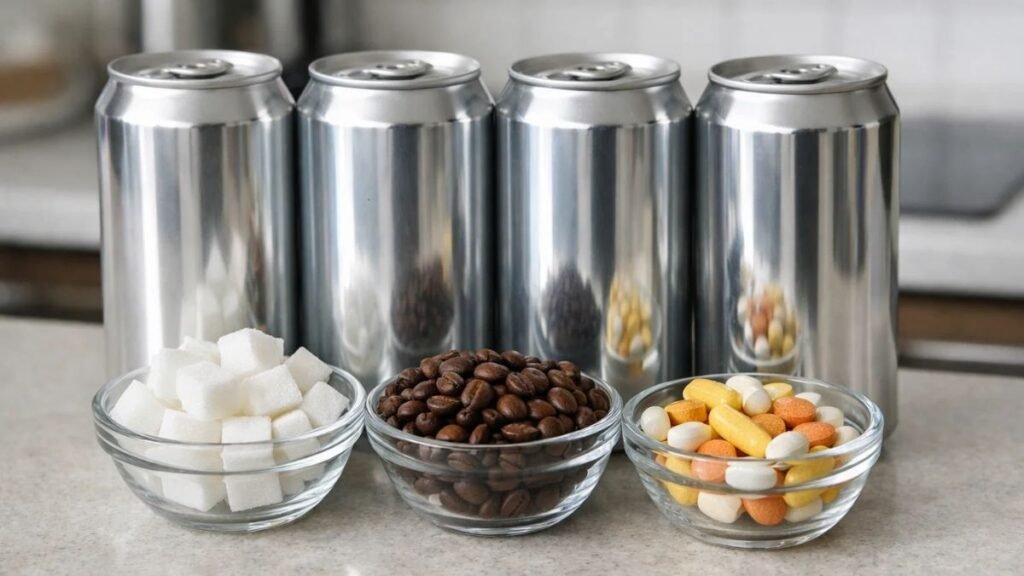
Here’s the detail many people miss: guarana and other botanicals also contain caffeine. So the number on the label may not tell the full story.
The FDA says healthy adults should stay under 400 milligrams of caffeine per day. Some energy drinks hit 200 to 300 milligrams in a single serving. Drink two? You’re already pushing the edge.
Doctors say that’s where trouble tends to start.
How Energy Drinks Hit Your Body — Fast
Caffeine blocks adenosine, the brain chemical that signals fatigue. That’s why you feel alert, sharper, and temporarily energized.
But the body doesn’t always respond politely.
Within hours, doctors commonly see complaints like:
- Racing heartbeat
- Jitters or anxiety
- Headaches
- Upset stomach
- Trouble sleeping long after the buzz fades
Cardiologists warn that sudden spikes in heart rate and blood pressure can be risky, especially for people who don’t realize they’re sensitive to stimulants.
And if you’ve ever felt shaky after finishing a can too quickly — you’re not imagining it.
Are Energy Drinks Bad for Your Heart?
This is where doctors lean forward in their chairs.
Several clinical studies have linked energy drink use to temporary changes in heart rhythm, elevated blood pressure, and palpitations. Most cases don’t end in emergency rooms — but some do.
Experts at major medical centers, including the Mayo Clinic, have raised concerns about stacking stimulants. Caffeine combined with guarana, for example, may amplify cardiovascular strain even in young, otherwise healthy adults.
There’s also growing concern about more serious outcomes. Researchers continue to examine links between frequent energy drink consumption and cardiovascular events — including stroke risk — a topic we explored in detail in our deep dive on energy drinks and stroke risk.
Serious events remain rare, but doctors agree on one thing: the risk isn’t zero.
Mental Health and the Hidden Cost of “Focus”
Energy drinks don’t just stimulate the heart. They stimulate the nervous system — sometimes too much.
Psychiatrists and sleep specialists say high caffeine intake can worsen:
- Anxiety
- Panic attacks
- Irritability
- Mood swings
Sleep is often the silent casualty. Poor sleep doesn’t just mean feeling tired — it affects memory, emotional regulation, and mental health. I’ve heard doctors describe energy drinks as fuel for a vicious cycle: exhaustion leads to caffeine, caffeine disrupts sleep, and the next day demands even more caffeine.
Over time, that cycle catches up.
Sugar, Zero Sugar, and Weight Concerns

Some energy drinks contain as much sugar as soda — 40 to 50 grams per can.
Health experts at the CDC link frequent sugar-sweetened beverage intake to weight gain, insulin resistance, type 2 diabetes, and dental issues. It adds up faster than most people expect.
What about sugar-free options?
They remove calories, yes, but doctors say they aren’t automatically “healthy.” Artificial sweeteners may affect gut health and appetite regulation, and research is still evolving. If you’re weighing those options, we’ve broken down the differences in zero sugar vs. diet soda, where similar concerns come into play.
Who Should Avoid Energy Drinks Completely?
Doctors are surprisingly consistent here.
Energy drinks are not recommended for:
- Children and teenagers
- Pregnant or breastfeeding women
- People with heart conditions
- Anyone sensitive to caffeine
- Individuals with anxiety disorders
The American Academy of Pediatrics strongly advises against energy drinks for kids and teens, citing risks to heart health and brain development.
And yes — this includes “natural” or “plant-based” versions.
Are Energy Drinks Ever Safe?
For some adults, occasional use doesn’t cause obvious harm. Doctors say moderation matters more than brand loyalty.
Safer habits include:
- Keeping total caffeine under 400 mg daily
- Avoiding energy drinks late in the day
- Never mixing them with alcohol
- Drinking slowly instead of all at once
Still, many physicians argue there are better ways to stay energized — ones that don’t overstimulate the nervous system.
Healthier Energy Boosts Doctors Prefer
Ask doctors how they stay alert, and energy drinks rarely top the list.
They usually point to basics that actually last:
- Consistent sleep
- Balanced meals with protein and fiber
- Staying hydrated
- Regular movement
- Coffee or tea in moderate amounts
Some people turn to alternative drinks for energy, but experts urge caution there too — especially with trending options. We’ve looked at this closely in our comparison of kava vs. kratom drinks, where safety and stimulation can vary widely.
Green tea, however, often gets a cautious nod. It contains caffeine, but also L-theanine — an amino acid that may smooth out jitters and promote calmer focus.
The Bottom Line
So, are energy drinks bad for you?
Doctors agree they’re not harmless, especially when consumed daily or in large amounts. For healthy adults who use them sparingly, risks may stay manageable. But for teens, people with medical conditions, or anyone relying on them as a routine crutch, the downsides often outweigh the benefits.
One physician summed it up perfectly: energy drinks don’t create energy — they borrow it. And eventually, the body sends the bill.
Are energy drinks bad for your heart?
They can increase heart rate and blood pressure, especially at high doses or when combined with other stimulants.
How many energy drinks are safe per day?
Doctors generally recommend keeping total caffeine under 400 mg — often no more than one standard energy drink.
Can teenagers drink energy drinks?
Medical organizations advise against it due to heart and brain development risks.
Are sugar-free energy drinks healthier?
They remove sugar but still contain high caffeine and stimulants, which carry their own risks.
If you’re reaching for energy drinks just to get through the day, doctors say it might be worth asking why — and whether your body is asking for rest instead.
If you enjoyed this article, don’t forget to follow and subscribe for more health tools, recipes, and news!
Sources
- American Heart Association (AHA) — Scientific statements on caffeine, blood pressure, heart rhythm changes, and cardiovascular strain
https://www.heart.org/ - Mayo Clinic — Medical expert analysis on energy drink ingredients, stimulant stacking, and heart health risks
https://www.mayoclinic.org

Muhammad Ahtsham is the founder of EatLikeFit.com and a nutrition researcher dedicated to healthy weight management. He provides practical, science-backed advice on high-protein diets and affordable meal planning to help readers achieve their fitness goals simply and effectively.