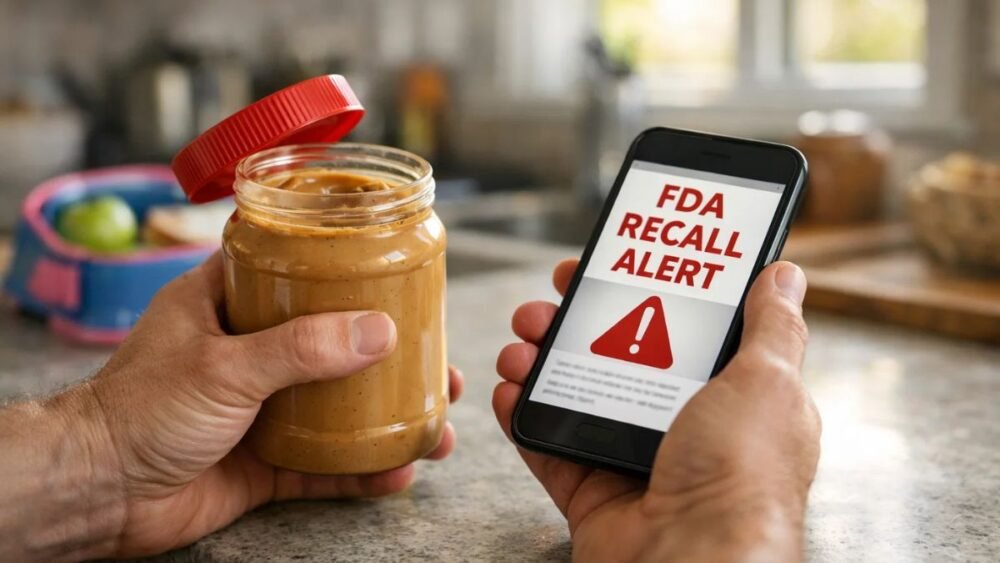
Peanut butter is one of those quiet kitchen staples you rarely question. It’s there in the morning on toast, blended into post-workout smoothies, spooned into oatmeal, or packed into a child’s lunchbox without a second thought. That’s precisely why the latest peanut butter recall announced by the U.S. Food and Drug Administration (FDA) matters so much right now — especially for health-conscious families trying to make safer, smarter food choices.
When a food as widely consumed as peanut butter is flagged for a potential safety issue, it’s not just a headline. It’s a pantry check moment.
Federal regulators have recalled select peanut butter products over concerns of possible contamination that could pose a health risk. While investigations are ongoing, officials are urging consumers nationwide to verify brand names, lot codes, and expiration dates immediately.
For readers who follow food safety updates — like our recent coverage of the Prairie Farms milk recall or the FDA butter recall 2025 — this announcement fits into a broader pattern: vigilance in the food supply chain is critical.
Jump To
Why Was the Peanut Butter Recalled?
According to federal regulators, recalls are initiated when a product may violate safety regulations or present a risk of illness. In cases involving peanut butter, contamination concerns often center on bacterial threats such as Salmonella.
Research indicates that Salmonella cannot be detected by sight or smell. A jar may look perfectly normal — creamy, smooth, even freshly opened — yet still carry harmful bacteria.
Food safety experts suggest this is what makes shelf-stable products particularly tricky. Peanut butter can sit in pantries for weeks or months. It travels across state lines. It’s eaten by children, older adults, and people with weakened immune systems — groups more vulnerable to foodborne illness.
Is the Recalled Peanut Butter Safe to Eat?
No.
If your jar matches the brand, lot number, or “best by” date listed in the official recall notice, do not consume it. Even a small taste “just to check” is discouraged.
The Centers for Disease Control and Prevention (CDC) notes that Salmonella infection can cause:
- Fever
- Diarrhea
- Abdominal cramps
- Nausea and vomiting
Symptoms typically appear between six hours and six days after exposure. For most healthy adults, illness may resolve without treatment. But for young children, seniors, and pregnant women, complications can become serious quickly.
If you or a family member have already consumed the affected product and begin experiencing symptoms, medical professionals recommend contacting a healthcare provider promptly.
Which Peanut Butter Products Are Affected?
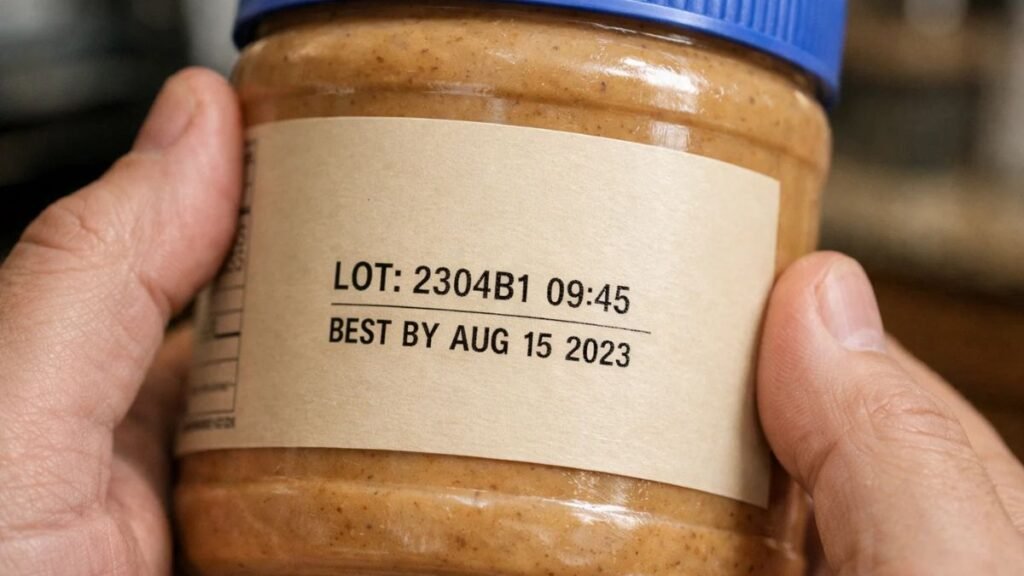
While details depend on the official recall announcement, affected products typically include:
- Specific brand names
- Certain jar sizes
- Identified lot or batch codes
- Defined expiration or “best by” dates
Consumers are advised to carefully compare labels against the recall notice. If unsure, contacting the manufacturer directly or consulting the FDA recall database is the safest move.
When handling the recalled product:
- Do not taste it
- Seal it in a bag before disposal
- Sanitize any surfaces it touched
- Wash hands thoroughly afterward
It may sound excessive, but experts emphasize that cross-contamination — especially in kitchens — is a common pathway for bacterial spread.
How Serious Is This Health Risk?
The FDA classifies recalls into three categories:
- Class I: High probability of serious health consequences or death
- Class II: Temporary or medically reversible consequences
- Class III: Unlikely to cause adverse health consequences
Peanut butter recalls involving potential bacterial contamination often fall into the more serious categories because of the product’s widespread distribution.
Globally, food safety remains a massive public health issue. The World Health Organization estimates that contaminated food affects hundreds of millions of people annually. A single production error can ripple across states and households.
That reality can feel unsettling. But it also explains why rapid recall systems exist in the first place.
How Do Peanut Butter Recalls Happen?
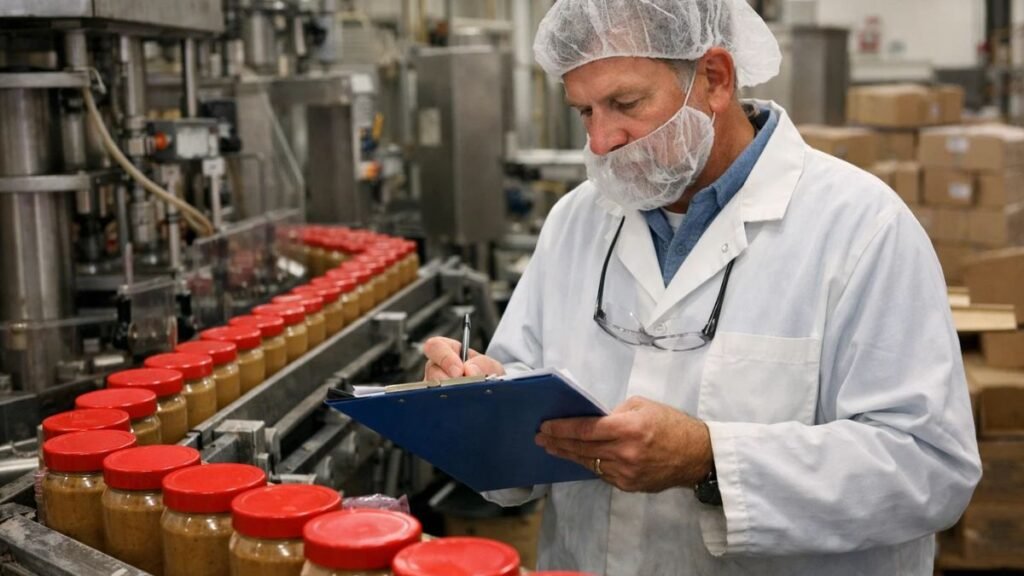
Recalls typically stem from:
- Routine FDA inspections
- Manufacturer quality-control testing
- Consumer complaints
- State health department investigations
In many cases, companies voluntarily initiate recalls after identifying a problem. While alarming, this proactive approach is part of the safety net designed to prevent larger outbreaks.
We’ve seen similar patterns in previous food alerts, including the ground beef recalled update and other multi-state investigations. Early transparency can stop small contamination events from becoming national crises.
Could the Recall Expand?
Possibly.
Food safety investigations evolve as laboratory testing and trace-back efforts continue. Additional production lots or distribution areas can sometimes be added to an existing recall.
Experts suggest relying only on official updates rather than social media rumors, which can spread incomplete or inaccurate information.
If you regularly consume peanut-based foods — from smoothies like our banana peanut butter overnight oatmeal to protein snacks — this is simply a moment to pause and verify.
The Bigger Picture: Food Safety and Consumer Trust
There’s a larger lesson here.
We often focus on macros, clean ingredients, and nutritional value. But food safety is the foundation. Even the healthiest jar of peanut butter loses its value if contamination risks are overlooked.
Recalls are not designed to create panic. They exist to protect consumers.
For health-conscious readers, this moment is less about fear and more about informed action. Check your pantry. Verify your labels. Follow official guidance. Small steps can prevent larger consequences.
And as always, staying updated through trusted sources ensures that what you’re putting on your plate supports both wellness and safety.
FAQs
What should I do if I already ate the recalled peanut butter?
Monitor for symptoms such as fever, diarrhea, or stomach cramps. If symptoms develop, contact a healthcare provider — especially for children, seniors, or pregnant individuals.
Can I cook with the recalled peanut butter to make it safe?
No. Cooking or baking does not guarantee elimination of contamination risks. The product should be discarded or returned as instructed.
How do I check if my peanut butter is included in the recall?
Look at the brand name, lot number, and “best by” date on the jar. Compare it directly to the official recall notice from the FDA or the manufacturer.

Muhammad Ahtsham is the founder of EatLikeFit.com and a nutrition researcher dedicated to healthy weight management. He provides practical, science-backed advice on high-protein diets and affordable meal planning to help readers achieve their fitness goals simply and effectively.