

The first week on semaglutide can feel like standing on a scale that refuses to cooperate.
You’ve started the injections. You’ve read the success stories. Maybe you’ve even bookmarked meal plans and cleared out the pantry. And yet — the numbers don’t plunge overnight.
For millions of Americans turning to GLP-1 medications, the central question isn’t whether semaglutide works. It’s how fast.
In a culture conditioned by crash diets, viral detox drinks, and bold “before and after” reels, patience can feel unnatural. But obesity specialists and endocrinologists are clear: semaglutide was never designed as a quick fix. It’s a long-game medication — and that timeline is precisely why it’s effective.
Here’s what the evidence actually shows.
Jump To
Why Semaglutide Matters Right Now
Semaglutide, sold under prescription brands like Wegovy and Ozempic, mimics a hormone called GLP-1 that regulates appetite and blood sugar. By activating receptors in the brain, it reduces hunger, slows gastric emptying, and stabilizes glucose levels.
You feel full sooner. You stay full longer. Food noise quiets.
For a health-conscious audience navigating everything from viral “natural Mounjaro” recipes to trending detoxes (we’ve investigated those claims in our report on the natural mounjaro recipe for weight loss), separating hype from biology is critical. Semaglutide’s power lies in steady metabolic recalibration — not dramatic overnight loss.
Experts suggest that expectation management is as important as the prescription itself.
The Early Weeks: Subtle but Meaningful Changes (Weeks 1–4)
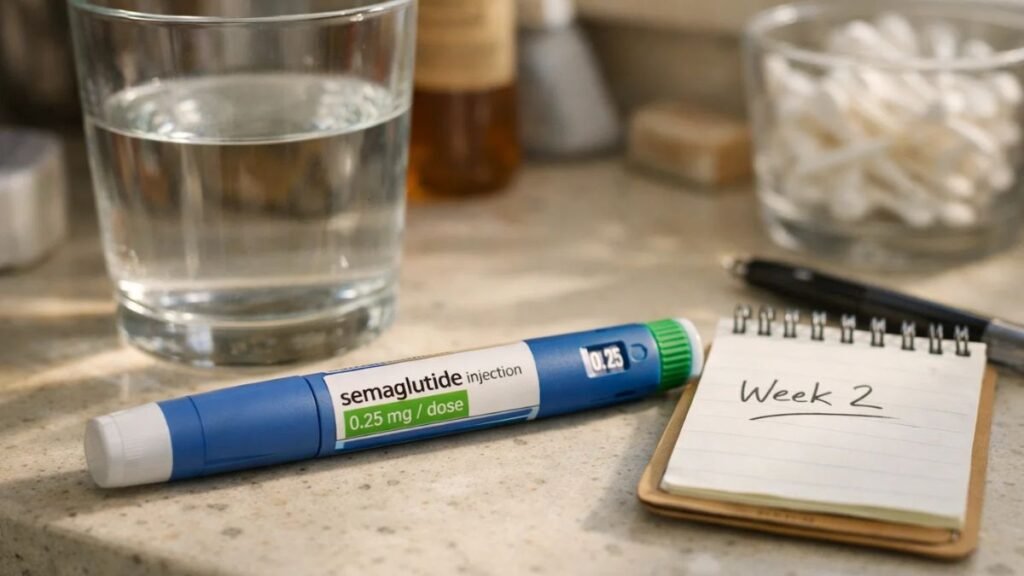
Most patients begin at a low dose to reduce side effects like nausea. Because of that, dramatic weight loss in the first month is uncommon.
But something else happens.
Research indicates appetite suppression often begins within the first two to four weeks. Patients report:
- Smaller portions feeling satisfying
- Reduced cravings for high-calorie snacks
- Less preoccupation with food
You may not see it on the scale yet. But internally, hormonal signaling is shifting.
Clinicians describe this phase as foundational. The medication is “teaching” your body a new appetite rhythm before significant fat loss begins.
When the Scale Starts Moving (Weeks 4–8)
By the second month, measurable weight loss typically becomes visible.
Clinical trial data reviewed by federal regulators show participants losing several pounds by week eight. For some, it’s gradual — one pound at a time. For others, it’s enough that clothes start fitting differently.
Still, progress is rarely linear.
One week: no change.
The next: two pounds gone.
Sustainable fat loss averages one to two pounds per week. Faster drops can happen, especially in individuals with higher starting weight, but specialists caution against expecting rapid, dramatic swings.
Pairing the medication with structured nutrition often improves consistency. Many patients find that incorporating protein-forward options — like those outlined in our dietitian-approved weight loss breakfast foods guide — helps preserve muscle mass while fat decreases.
Clinically Significant Results (Weeks 12–16)

By three to four months, patterns solidify.
Large-scale studies demonstrate that many participants achieve meaningful weight reduction by week 16, with some approaching or surpassing 10% body weight loss over time.
That number matters.
Research consistently shows that losing 5–10% of body weight can improve blood pressure, blood sugar control, and cardiovascular risk markers. For individuals with insulin resistance or polycystic ovary syndrome, structured support tools — such as our PCOS protein calculator — may complement medication by aligning nutrition with hormonal needs.
Experts emphasize that this stage is where consistency compounds. Missed doses or halted titration can slow progress. Reaching the full therapeutic dose under medical supervision often enhances results.
The Long Game: Six Months to One Year
Semaglutide was studied over extended timelines, not short bursts.
In trials lasting approximately 68 weeks, participants achieved average weight loss around 15% of their body weight. That level of reduction historically required bariatric surgery for many individuals.
But again, the timeline matters. Obesity is recognized as a chronic condition. Sustainable management rarely occurs in a matter of weeks.
If you’ve read our deeper analysis on how long it really takes to lose weight on semaglutide, you already know the pattern: gradual shifts, cumulative impact.
Why It Works Gradually — By Design
Unlike stimulant-based weight loss pills, semaglutide does not spike metabolism.
Instead, it modifies biological pathways:
- Reduces appetite via GLP-1 receptor activation
- Slows stomach emptying
- Improves insulin sensitivity
- Stabilizes blood sugar swings
Dose escalation is intentionally slow to minimize gastrointestinal discomfort.
Patience isn’t a side effect. It’s part of the protocol.
What Influences Speed of Weight Loss?
Not everyone responds identically. Several factors shape the timeline:
Starting Weight: Individuals with higher baseline weight often see larger early pound reductions.
Diet Quality: While appetite decreases, food choices still matter. Whole foods, fiber, and adequate protein accelerate visible fat loss.
Physical Activity: Resistance training helps preserve lean muscle mass, improving overall body composition rather than just reducing scale weight.
Metabolic Conditions: Thyroid disorders, insulin resistance, or PCOS can alter response speed.
Dosage Titration: Reaching the recommended maintenance dose consistently is associated with stronger outcomes.
Healthcare providers stress individualized care. Medication works best alongside lifestyle adjustments — not in isolation.
When Should You Reassess?
If there is no measurable change after 12 to 16 weeks at a full therapeutic dose, clinicians typically review:
- Adherence to dosing schedule
- Side effect management
- Underlying metabolic conditions
- Caloric intake patterns
Sometimes the issue isn’t medication efficacy. It’s expectations shaped by social media highlight reels.
Sustainable weight loss is rarely cinematic.
Safety Considerations
FDA-approved semaglutide formulations underwent rigorous clinical trials before approval for chronic weight management.
Common side effects include:
- Nausea
- Vomiting
- Constipation
- Diarrhea
These symptoms are often temporary and improve as the body adjusts.
Rare but serious risks include pancreatitis and gallbladder complications. The medication is not recommended for individuals with a personal or family history of medullary thyroid carcinoma.
Experts advise against self-prescribing or sourcing medications outside regulated channels.
The Bottom Line
Most people notice appetite changes within the first month.
Visible weight loss typically begins within four to eight weeks.
Clinically meaningful reductions build by three to four months.
Peak average results develop over six to twelve months.
It is not instant.
It is not effortless.
But for many, it is steady — and transformative.
And in a health landscape crowded with miracle drinks and overnight promises, steady may be exactly what works.
FAQs
How much weight can you lose in the first month on semaglutide?
Most individuals lose a modest amount — often a few pounds — during the first four weeks, primarily due to appetite reduction rather than full metabolic impact.
Why am I not losing weight immediately?
Semaglutide starts at a low dose and requires gradual titration. Early hormonal adjustments may occur before visible fat loss appears on the scale.
Do you need to diet while taking semaglutide?
While appetite decreases naturally, experts recommend balanced nutrition to optimize fat loss and preserve muscle mass.
Is semaglutide a permanent medication?
Obesity is considered a chronic disease. Some patients remain on long-term therapy under medical supervision, while others transition to maintenance strategies.
Source
Novo Nordisk. Wegovy (semaglutide) Prescribing Information.
https://www.novo-pi.com/wegovy.pdf

Muhammad Ahtsham is the founder of EatLikeFit.com and a nutrition researcher dedicated to healthy weight management. He provides practical, science-backed advice on high-protein diets and affordable meal planning to help readers achieve their fitness goals simply and effectively.