
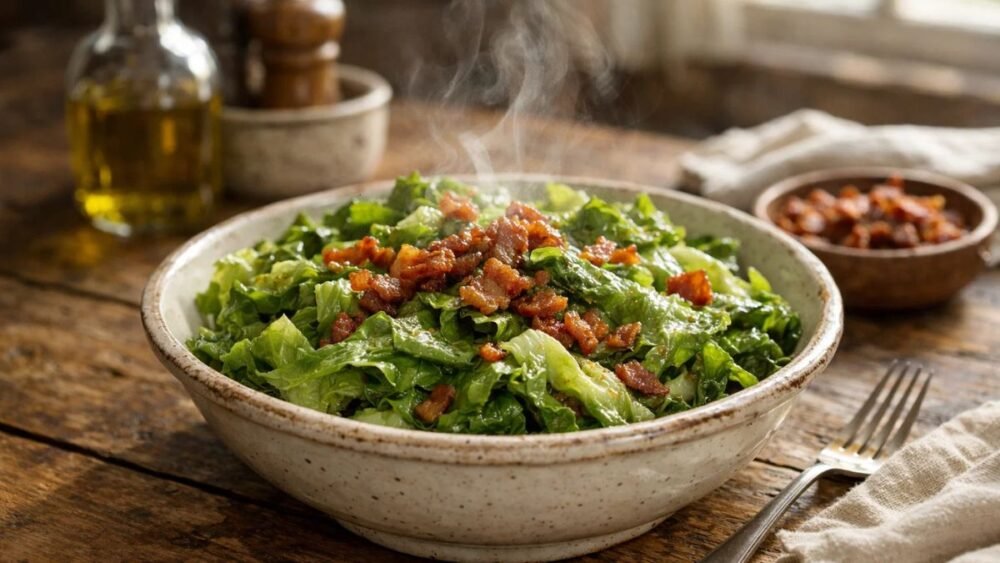
Some recipes don’t ask for attention.
They don’t chase trends.
They don’t reinvent themselves every few years.
They just stay.
The classic wilted lettuce recipe is one of those quiet survivors. It’s the kind of dish that slips onto the table without drama, yet somehow becomes the thing everyone remembers. Warm. Tangy. Comforting in a way that feels personal, not flashy.
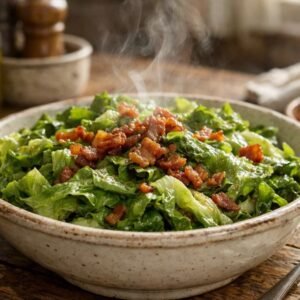
I still remember the first time I ate wilted lettuce that was done right. It wasn’t plated beautifully. There were no fancy greens or drizzles. It came in a big bowl, still steaming slightly, smelling like bacon and vinegar and something familiar I couldn’t name at the time. One bite and it clicked. This wasn’t just a salad. This was history on a fork.
If you’ve ever wondered why this old-fashioned recipe refuses to disappear, you’re about to understand.
This guide walks you through everything — what wilted lettuce really is, where it came from, why it’s served warm, how to make it properly, and how to keep it authentic while still fitting into a modern kitchen. No shortcuts. No bottled dressing. Just a deeply human recipe that works because it always has.
Jump To
What Is Wilted Lettuce, Really?
At its core, wilted lettuce is simple.
It’s a warm salad made by pouring a hot dressing — traditionally bacon grease mixed with vinegar and a touch of sugar — over fresh leaf lettuce. The heat softens the leaves just enough to make them tender without turning them limp.
That’s it.
But simplicity doesn’t mean shallow. In fact, this dish relies entirely on balance.
- Heat meets freshness
- Fat meets acid
- Crisp meets tender
The lettuce doesn’t collapse. It relaxes. It absorbs flavor instead of repelling it. And that’s where the magic happens.
If you’ve only ever eaten cold salads with bottled dressing, wilted lettuce might feel almost wrong at first. Warm lettuce? Bacon grease? Vinegar?
Then you take a bite. And suddenly it makes sense.
Serve This: Sweet Potato Brown Rice Salad
Why Wilted Lettuce Is Served Warm (And Always Has Been)
Wilted lettuce isn’t warm by accident. The temperature is the technique.
Back when this recipe first appeared on American tables, refrigeration wasn’t common. Salads weren’t icy. Dressings weren’t shaken in jars and stored for weeks. They were made on the stove, poured hot, and eaten immediately.
But even now, with modern kitchens and endless options, the warm approach still wins.
Here’s why:
- Warm fat carries flavor better than cold oil
- Heat releases aroma from vinegar
- Hot dressing clings to lettuce, instead of sliding off
- Texture improves, becoming tender but still lively
Cold dressing coats.
Warm dressing transforms.
That difference is everything.
A Brief, Honest History of Wilted Lettuce
Wilted lettuce didn’t come from a cookbook test kitchen. It came from necessity.
Across rural America — especially in the South, Pennsylvania Dutch communities, Amish farmhouses, and German-influenced kitchens — cooks learned to make the most of what they had.
Bacon drippings were never wasted.
Garden lettuce was abundant.
Vinegar preserved and brightened.
Sugar balanced acidity.
Put together, those ingredients created something filling, comforting, and deeply satisfying.
Different regions shaped the recipe slightly:
- Southern wilted lettuce leaned heavy on smoky bacon
- Pennsylvania Dutch and Amish versions emphasized vinegar and sugar
- German-style warm salads used similar hot vinaigrettes
But the soul stayed the same. This wasn’t diet food. It was sustenance. A way to feed families well without fuss.
And somehow, that honesty still tastes good today.
Serve This: Easy Grinder Salad Recipe
The Ingredients That Matter (And Why They Matter)
This recipe doesn’t hide behind extras. Every ingredient earns its place.
Core Ingredients
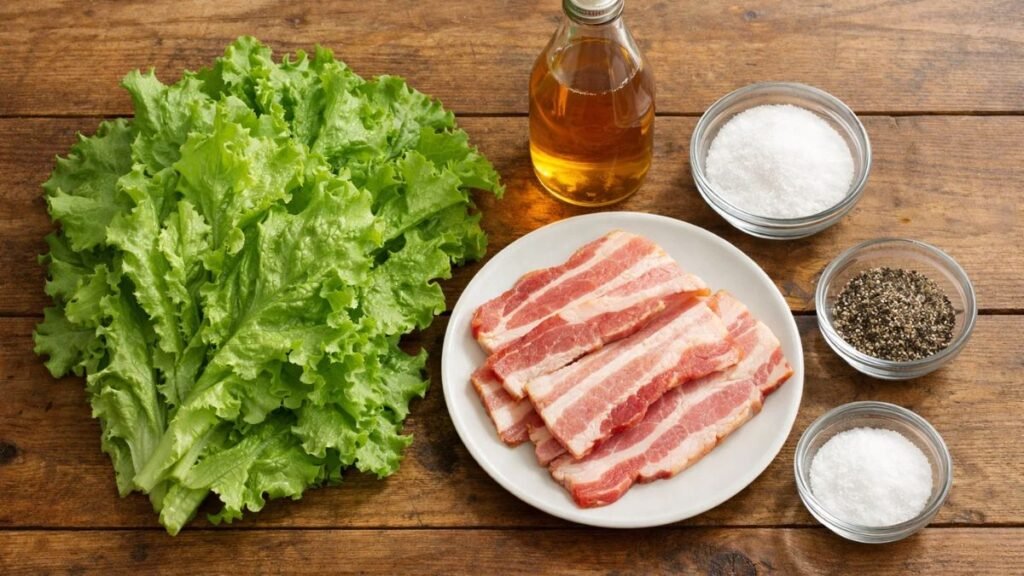
Fresh leaf lettuce
Loose-leaf varieties like green leaf or red leaf are essential. They’re tender, absorbent, and flavorful. Iceberg doesn’t work here. It resists the dressing and stays watery.
Thick-cut bacon
This provides two things: crispy bites and flavorful fat. Both are non-negotiable in the classic version.
Apple cider vinegar
Mild, slightly sweet, and perfectly matched to bacon. It gives tang without harshness.
Granulated sugar
Just enough to soften the edge of the vinegar. This isn’t meant to be sweet — just balanced.
Salt and black pepper
Simple seasoning. Nothing fancy needed.
That’s it. No garlic powder. No Dijon. No bottled shortcuts.
Optional Add-Ins (Traditional, Not Trendy)
Depending on region or family habit, you might see:
- Thinly sliced onion
- A pinch of dry mustard
- A splash of water to mellow acidity
- A sprinkle of sugar adjusted to taste
These don’t replace the base. They quietly support it.
Serve This: Lentil Beet Salad
Choosing the Right Lettuce (This Matters More Than You Think)
Not all lettuce wilts gracefully.
The best choices:
- Green leaf lettuce
- Red leaf lettuce
- Tender garden lettuce
These varieties soften evenly and soak up dressing like they’re meant to.
Avoid:
- Iceberg
- Romaine
- Pre-chopped bagged greens
Those either resist heat or turn soggy too fast.
And always, always dry your lettuce completely. Even a little water will dilute the dressing and dull the flavor.
How to Make a Classic Wilted Lettuce Recipe (Step by Step)
This dish moves fast. Have everything ready before you start.
Step 1: Prep the Lettuce
Wash thoroughly.
Dry completely.
Tear by hand — never chop.
Place it in a large bowl and let it sit at room temperature. Cold lettuce can shock the dressing.
Step 2: Cook the Bacon
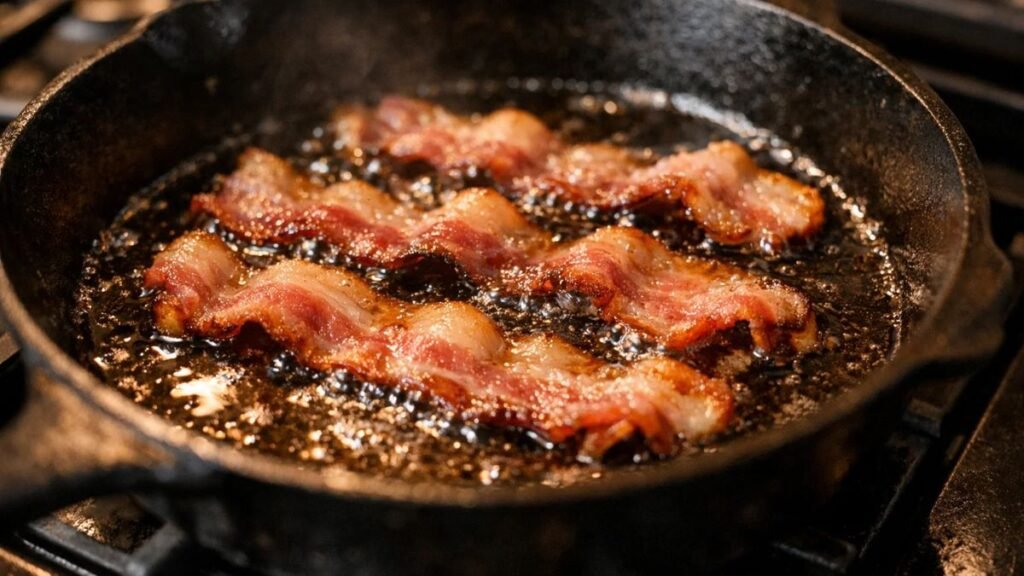
Cook bacon slowly over medium heat until crisp. You want rendered fat, not burned drippings.
Remove the bacon and crumble it.
Leave the grease in the pan.
This pan is now your dressing bowl.
Serve This: Mediterranean Quinoa Salad
Step 3: Make the Warm Bacon Dressing
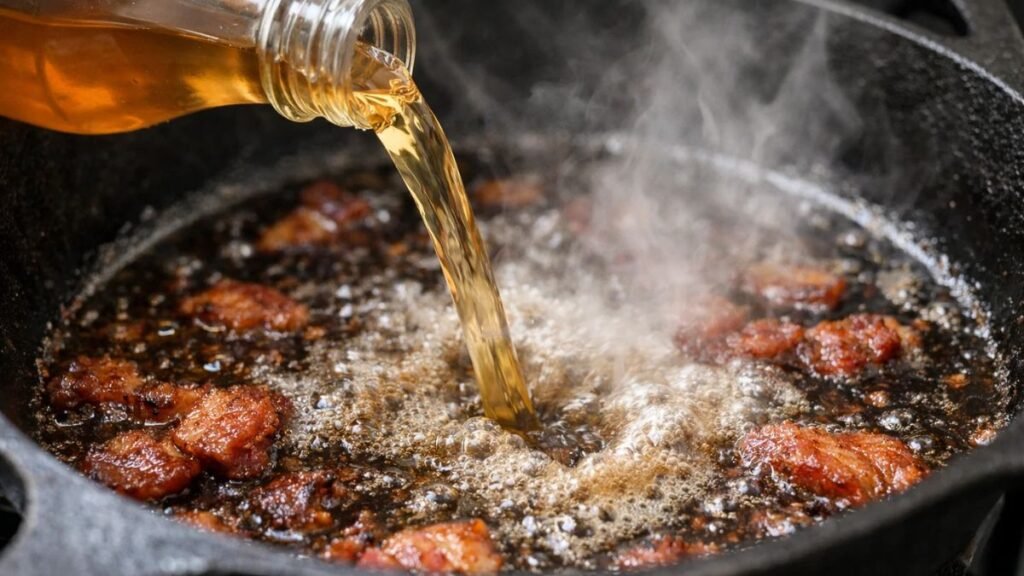
While the pan is still hot:
- Add apple cider vinegar directly to the bacon grease
- Stir in sugar, salt, and pepper
- Let it simmer briefly — just until the sugar dissolves
Do not boil.
Do not let it cool.
The dressing should be hot enough to steam, not scorch.
Step 4: Wilt the Lettuce

Pour the hot dressing over the lettuce immediately. Toss gently but quickly.
Add the bacon crumbles last.
Serve right away.
No waiting.
No reheating.
This is a moment-based dish.
The Classic Wilted Lettuce Ratio
| Ingredient | Amount |
|---|---|
| Bacon grease | ¼ cup |
| Apple cider vinegar | ¼ cup |
| Sugar | 1–2 tablespoons |
| Lettuce | 6–8 cups |
This balance creates that unmistakable sweet-tangy, savory profile people remember.
Serve This: Wendy’s Apple Pecan Salad
What Vinegar Is Best for Wilted Lettuce?
Apple cider vinegar is traditional for a reason.
It’s gentler than white vinegar.
It has subtle sweetness.
It pairs naturally with bacon fat.
White vinegar works, but it’s sharper.
Red wine vinegar adds depth, but changes the flavor profile.
Balsamic takes it in a completely different direction.
If authenticity matters, stick with apple cider vinegar.
Can You Make Wilted Lettuce Without Bacon?
You can — but it becomes something else.
Without bacon, you’re making a warm vinegar lettuce salad, not classic wilted lettuce.
That said, here are reasonable substitutions:
- Butter or olive oil for fat
- Smoked paprika for depth
- Caramelized onions for richness
It can still be good.
It just won’t taste like tradition.
And that’s okay, as long as you know the difference.
Why This Old-Fashioned Recipe Still Works Today
Modern food culture loves cold crunch. Wilted lettuce goes the opposite direction — and that’s why it stands out.
It’s warm.
It’s bold.
It’s deeply satisfying in small portions.
You don’t eat it mindlessly. You notice it.
And in a world of complicated recipes, there’s something grounding about a dish that relies on timing instead of technique.
Serve This: Is Salad and Go Healthy?
Is Wilted Lettuce Healthy?
Like most traditional recipes, it’s balanced when eaten as intended.
The positives:
- Fresh greens
- No processed dressing
- Strong flavor satisfaction
The considerations:
- Bacon grease is rich
- Portion size matters
This was never meant to be a giant bowl meal. It’s a side. A supporting act. And in that role, it fits beautifully.
Common Mistakes That Ruin Wilted Lettuce
Even simple recipes can go wrong.
Avoid these:
- Using wet lettuce
- Letting the dressing cool
- Over-sweetening
- Choosing iceberg lettuce
- Tossing too slowly
Timing matters more than perfection here.
How to Serve Wilted Lettuce (And When It Shines)

This salad belongs next to comfort food.
It pairs beautifully with:
- Fried chicken
- Meatloaf
- Roast pork
- Cornbread
- Mashed potatoes
It cuts richness.
It adds warmth.
It completes the plate.
Why People Remember This Dish
Wilted lettuce doesn’t shout. It whispers.
It reminds people of kitchens that smelled like bacon in the morning. Of gardens out back. Of meals that didn’t need explanation.
That’s why it keeps getting passed down. Not because it’s trendy — but because it feels real.
Final Thoughts: A Recipe Worth Keeping
The classic wilted lettuce recipe isn’t trying to impress you. It’s trying to feed you.
And somehow, in doing that honestly, it becomes impressive anyway.
Make it once, the right way, and you’ll understand why it never disappeared.
FAQs
What is wilted lettuce?
Wilted lettuce is a warm salad made by pouring hot bacon dressing over fresh leaf lettuce, gently softening the leaves.
Why is wilted lettuce served warm?
The heat helps the dressing cling to the lettuce and boosts flavor.
How do you wilt lettuce with bacon grease?
Hot bacon grease is mixed with vinegar and sugar, then poured directly over dry lettuce.
What lettuce works best for wilted lettuce?
Green leaf or red leaf lettuce works best. Avoid iceberg.
What vinegar is best for wilted lettuce?
Apple cider vinegar is traditional and most balanced.
If you enjoyed this article, don’t forget to follow and subscribe for more health tools, recipes, and news!
Serve These:
Classic Wilted Lettuce Recipe
Equipment
- Large skillet
- Cutting board
- Chef’s Knife
- Mixing spoon
Ingredients
- 1 head romaine or butter lettuce washed and chopped
- 2 tbsp olive oil
- 1 small shallot thinly sliced
- 1 tsp Dijon mustard
- 1 tbsp red wine vinegar
- Salt and pepper to taste
- Optional: crispy bacon bits or toasted nuts for topping
Instructions
- Heat olive oil in a large skillet over medium heat. Add shallots and sauté until soft.
- Add chopped lettuce and toss quickly in the hot oil for 1–2 minutes until slightly wilted.
- Remove from heat. Stir in Dijon mustard, red wine vinegar, salt, and pepper.
- Serve immediately, topped with optional bacon bits or toasted nuts.
Notes
- Use fresh, crisp lettuce for best texture.
- Wilt quickly; avoid overcooking to prevent sogginess.
- Add proteins like grilled chicken or shrimp for a fuller meal.

Muhammad Ahtsham is the founder of EatLikeFit.com and a nutrition researcher dedicated to healthy weight management. He provides practical, science-backed advice on high-protein diets and affordable meal planning to help readers achieve their fitness goals simply and effectively.