

Weight loss rarely fails because people don’t “try hard enough.”
More often, it fails because the system they’re using doesn’t match how their body actually works.
That’s why semaglutide has quietly reshaped the conversation around weight loss over the past few years. Not as a miracle drug—but as a tool that finally quiets the constant hunger, cravings, and mental exhaustion so many people live with every day.
Still, here’s the truth most people learn the hard way:
What you eat—and how you eat—can make the difference between smooth, steady fat loss and weeks of nausea, plateaus, or burnout.
That’s where a Semaglutide Diet Plan PDF becomes more than just another downloadable file. Done right, it becomes a roadmap. A stabilizer. A way to make sense of what your body is doing when appetite suddenly drops and food rules you’ve followed for years stop applying.
This guide walks through what a semaglutide diet plan really looks like in real life—not theory. Not perfection. Just practical, sustainable eating that works with the medication instead of fighting it.
Jump To
What Semaglutide Actually Does (And Why Diet Still Matters)
Semaglutide belongs to a class of medications known as GLP-1 receptor agonists. It was originally developed for blood sugar control in type 2 diabetes, but weight loss quickly became the unexpected headline.
Here’s what’s happening behind the scenes:
- Your stomach empties more slowly
- Hunger signals quiet down
- Cravings feel less urgent
- Blood sugar stays more stable
For the first time, many people experience what others describe as a “normal appetite.”
But here’s the catch.
When digestion slows, large meals, greasy foods, or heavy portions hit harder. What used to be “fine” can suddenly trigger nausea, bloating, reflux, or vomiting. That’s not failure—it’s feedback.
A smart eating plan adapts to that new biology.
If you’ve ever wondered how long it really takes to lose weight on semaglutide, the answer almost always depends on whether food choices support the medication or work against it — something we break down in detail.
What a Semaglutide Diet Plan PDF Really Is
Forget generic meal plans that assume endless hunger or high-volume eating.
A semaglutide diet plan PDF is designed around one core reality:
You need less food — but better food.
A well-built plan usually includes:
- Clear daily meal structure (without rigid rules)
- Portion guidance that respects slower digestion
- Protein targets to protect muscle
- Foods that minimize nausea
- Simple meals you’ll actually tolerate
- Grocery lists that reduce decision fatigue
The goal isn’t restriction.
It’s comfort, consistency, and progress.
Printable plans work especially well because they reduce mental load—something many people don’t realize they’re exhausted from until appetite finally quiets. This is why structured guides like an [Ozempic Diet Plan PDF] or Wegovy-based plans are so effective for beginners.
Who Benefits Most From a Structured Semaglutide Meal Plan?
Some people can “wing it.” Most can’t.
A structured plan is especially helpful if you:
- Are starting semaglutide for the first time
- Feel unsure what or how much to eat
- Experience nausea or digestive discomfort
- Want predictable weight loss instead of guesswork
- Prefer something printable and easy to follow
One of the most common questions is:
“Can you eat normally on semaglutide?”
Yes—but “normal” changes.
Portions shrink. Meal timing shifts. Heavy foods feel heavier. Learning that curve early prevents a lot of frustration later — especially compared to people who jump in without a plan and stall early.
Semaglutide Diet Plan for Beginners: Start Smaller Than You Think
When appetite drops, the instinct is often to eat because you should, not because you’re hungry.
That’s where problems start.
Early success with semaglutide usually follows one simple rule:
Eat less volume — but more intention.
Beginner Guidelines That Actually Work
- Aim for 2–3 small meals per day
- Eat slowly; stop at the first hint of fullness
- Prioritize protein early in the day
- Avoid drinking large amounts during meals
- Chew more than you think you need to
It sounds basic. It’s not.
Most nausea happens when people eat past fullness out of habit — not hunger.
What to Eat on Semaglutide (Foods That Make It Easier)

Protein Comes First—Always
Protein helps stabilize blood sugar, protects lean mass, and reduces side effects later in the day.
Good options include:
- Eggs
- Greek yogurt
- Cottage cheese
- Chicken breast or turkey
- Fish (salmon, tuna, cod)
- Tofu or tempeh
- Low-sugar protein shakes
Many people notice they tolerate protein best earlier in the day—especially during dose increases.
If breakfast has always been a struggle, these [dietitian-approved weight loss breakfast foods] work exceptionally well with semaglutide.
Carbohydrates That Don’t Fight Your Digestion
Carbs aren’t the enemy—but texture and portion matter.
Easier options include:
- Oats
- Brown rice
- Quinoa
- Sweet potatoes
- Berries
- Small portions of banana
Smooth, fiber-balanced carbs often feel best — similar to what you’ll see in a [7-day smoothie weight loss diet plan] when appetite is low.
Healthy Fats: Helpful, But Easy to Overdo
Fat slows digestion even more—sometimes too much.
Stick to small amounts of:
- Olive oil
- Avocado
- Nuts and seeds
When nausea appears, fat is often the first thing to scale back.
Foods That Commonly Cause Problems on Semaglutide
Everyone’s tolerance is different, but certain foods trigger side effects more often than not.
Many people limit or avoid:
- Fried foods
- Greasy takeout
- Heavy cream sauces
- Sugary drinks
- Alcohol
- Large portions of red meat
This doesn’t mean never.
It means not now, and not often.
Portion Sizes Matter More Than Calories
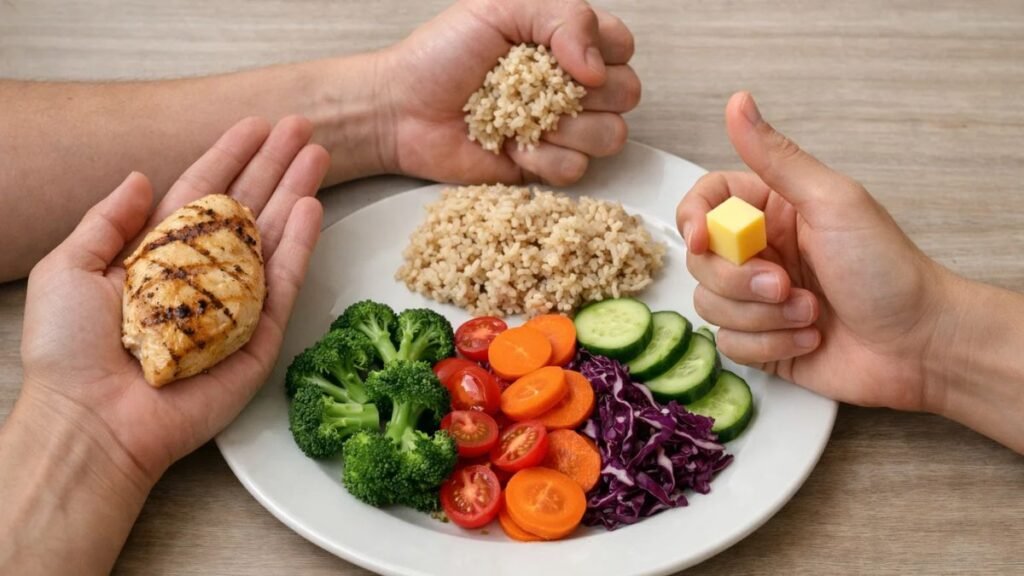
On semaglutide, calorie counting often becomes unnecessary—but portion awareness doesn’t.
Visual Portion Guide:
| Food Type | Portion Size |
|---|---|
| Protein | Palm-sized |
| Carbs | Fist-sized |
| Fats | Thumb-sized |
| Vegetables | Half your plate |
Most side effects come from eating past fullness—not from the food itself.
A 7-Day Semaglutide Diet Plan
A 30-day semaglutide diet plan PDF builds on this structure with rotation, flexibility, and built-in adjustments — especially helpful once weight loss slows.
Calories on Semaglutide: Less Obsession, More Awareness
Most people naturally land in a calorie deficit once appetite stabilizes.
Typical ranges:
- Women: 1,200–1,600 calories
- Men: 1,500–1,900 calories
But forcing low calories often backfires.
A moderate approach like a [1700 calorie diet plan] often works better long-term than aggressive restriction.
Protein Intake: Why It Protects Your Results
Losing weight too quickly can mean losing muscle. Protein helps prevent that.
A comfortable target for many people:
0.6–0.8g per pound of goal body weight (adjusted for tolerance)
This same principle applies when using GLP-1 alternatives or dose changes, including insights shared in [Do You Lose More Weight on a Higher Dose of Mounjaro?]
Managing Nausea With Food Choices

Nausea is common—especially during dose increases—but diet plays a huge role.
Helpful strategies include:
- Eating bland foods temporarily
- Avoiding fat early in the day
- Sitting upright after meals
- Sipping fluids instead of gulping
Many people also rotate in lighter prep meals similar to those found in [high-calorie meal prep] guides — just scaled down for tolerance.
Hydration: The Quiet Game-Changer

Dehydration worsens fatigue, headaches, and nausea.
Aim for:
- 2–3 liters of water daily
- Electrolytes if appetite is very low
- Minimal drinking during meals
This matters more than most people realize.
How Fast Does Weight Loss Happen on Semaglutide?
Results vary—but common patterns include:
- 1–2 pounds per week on average
- Faster loss in early months
- Plateaus when diet structure slips
Consistent eating patterns matter more than dose alone — something also seen with alternative approaches like a [fasting-mimicking diet meal plan PDF] when used strategically.
Ozempic vs Wegovy vs Rybelsus: Does Diet Change?
The principles stay the same.
- Wegovy: Higher doses → stricter portion awareness
- Ozempic: Slower titration for many users
- Rybelsus: Timing meals matters more
Do You Really Need a Semaglutide Diet Plan?
Short answer? Yes—if you want consistency.
Without structure, many people experience:
- Ongoing nausea
- Muscle loss
- Weight plateaus
- Regain after stopping medication
A plan doesn’t restrict you.
It protects your progress.
Final Thoughts: This Isn’t About Eating Less Forever
Semaglutide changes how hunger feels—but you still build the habits.
A good Semaglutide Diet Plan PDF isn’t about perfection.
It’s about learning how to eat in a body that finally gives you space to listen.
The real win isn’t the number on the scale.
It’s the moment food stops controlling your day—and starts supporting your life.
Can you eat normally on semaglutide?
Yes—but portions are smaller, and digestion needs more respect.
What happens if you overeat?
Nausea, bloating, reflux, or vomiting are common signals.
Is a diet plan required?
Not required—but strongly recommended for best results.
How long does semaglutide take to work?
Appetite changes often appear within weeks; visible weight loss usually follows in the first 1–2 months.
If you enjoyed this article, don’t forget to follow and subscribe for more health tools, recipes, and news!
Sources & References
This article draws on publicly available medical research, regulatory guidance, and expert consensus related to semaglutide, GLP-1 receptor agonists, and evidence-based weight loss nutrition. Key sources include:
- U.S. Food & Drug Administration (FDA)
Semaglutide (Wegovy, Ozempic) prescribing information and safety data
https://www.fda.gov - National Institutes of Health (NIH) – PubMed
Peer-reviewed clinical trials and systematic reviews on semaglutide and GLP-1 receptor agonists for weight loss
https://pubmed.ncbi.nlm.nih.gov/?term=semaglutide+weight+loss - New England Journal of Medicine (NEJM)
STEP clinical trials evaluating semaglutide for chronic weight management
https://www.nejm.org/doi/full/10.1056/NEJMoa2032183

Muhammad Ahtsham is the founder of EatLikeFit.com and a nutrition researcher dedicated to healthy weight management. He provides practical, science-backed advice on high-protein diets and affordable meal planning to help readers achieve their fitness goals simply and effectively.