
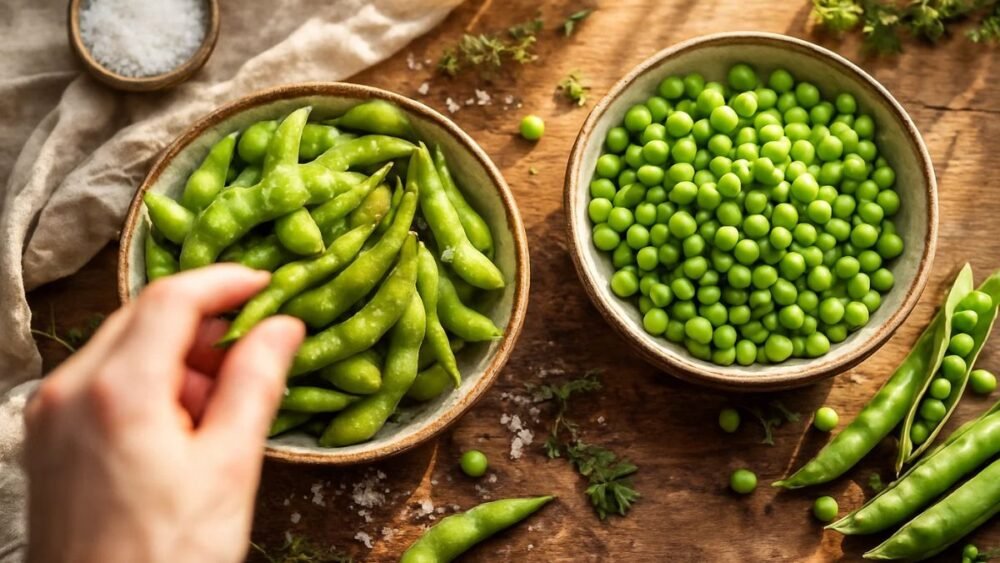
Green vegetables usually fly under the radar. You toss them in a salad, steam them for dinner, or add them to a stir-fry without a second thought. But if you pause for a moment, you’ll notice that not all greens are created equal. Take edamame and peas, for instance. On the surface, they look almost identical—bright, vibrant, and convenient—but dig a little deeper, and the differences start to matter, especially if you care about weight management, muscle building, or blood sugar control.
So, which one deserves a regular spot on your plate? Let’s break it down.
Jump To
Why the Edamame vs Peas Debate Matters
If you’re like most people, you might think edamame and peas are interchangeable. Both are legumes, both are green, and both scream “healthy.” But nutritionists will tell you they play very different roles in your diet.
Knowing the difference matters if you’re:
- Trying to boost plant-based protein
- Managing blood sugar levels
- Following a vegetarian, vegan, or flexitarian plan
- Focused on weight loss or muscle maintenance
The good news? You don’t have to memorize a nutrition textbook. Here’s the lowdown in a way that actually makes sense for everyday life.
What Is Edamame?
Edamame are young soybeans picked before they harden. Often found in East Asian cuisine, they’re typically served steamed, lightly salted, and eaten straight from the pod—kind of like snacking on little green nuggets of goodness.
What makes them special is that edamame is a complete plant protein. Yep—this humble legume contains all nine essential amino acids your body can’t make on its own.
Quick snapshot:
- Flavor: Mild, slightly nutty
- Texture: Firm and satisfying
- Availability: Fresh, frozen, or still in pods
If you’re looking for a snack that actually fills you up, edamame is your friend.
What About Peas?
Green peas are everywhere in Western cooking—from soups to casseroles to frozen veggie bags. They’re sweet, soft, and comforting, but nutritionally, they’re closer to a starchy vegetable than a protein powerhouse.
Peas in a nutshell:
- Flavor: Naturally sweet
- Texture: Soft when cooked
- Carbs: Higher than edamame
They’re versatile, yes. But if your goal is to pack in protein or control blood sugar, peas aren’t exactly your strongest ally.
Edamame vs Peas: The Nutritional Face-Off
Here’s where things get interesting.
Protein: The Clear Winner
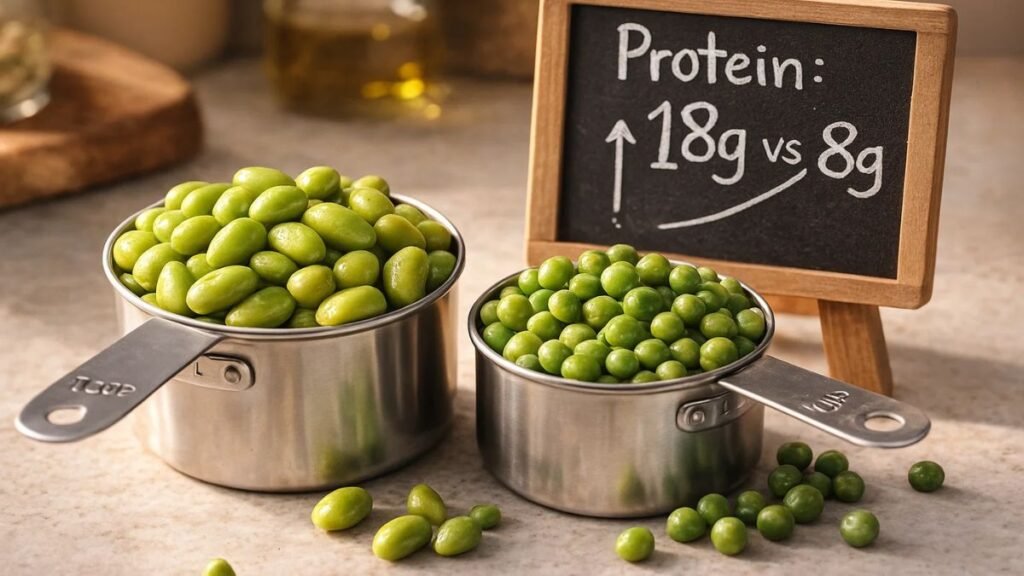
Protein is the main reason edamame pulls ahead.
- Edamame (1 cup, cooked): ~18g protein
- Green peas (1 cup, cooked): ~8g protein
That’s more than double. Experts note that higher-protein plant foods can help with satiety, support muscle maintenance, and curb cravings. For anyone reducing meat intake, edamame is a game-changer.
Winner: Edamame
Fiber and Digestion
Fiber matters—big time—for gut health, blood sugar regulation, and cholesterol levels.
- Edamame: ~8g fiber per cup
- Peas: ~9g fiber per cup
It’s a narrow win, but peas take this round. Both contribute significantly to daily fiber intake, making them a smart addition to any diet.
Winner: Peas
Carbs and Blood Sugar
Here’s where edamame shines again. Peas carry more carbs and natural sugars, while edamame has a lower glycemic impact. That means smaller blood sugar spikes—a big deal if you’re watching glucose levels or insulin response.
Winner: Edamame
Healthy Fats and Heart Health
Edamame isn’t just about protein. It packs healthy unsaturated fats, including omega-6s. Peas? Virtually fat-free. But according to the American Heart Association, swapping saturated fats for unsaturated ones can help protect your heart.
Winner: Edamame
Vitamins and Minerals
Both bring unique micronutrients to the table.
- Edamame: Iron, magnesium, folate, calcium (plant-based)
- Peas: Vitamin C, Vitamin A, Vitamin K
So, if you’re aiming for immune or skin support, peas are great. Looking to boost bone health or energy metabolism? Edamame takes the lead.
Winner: Tie (depends on your goals)
Weight Loss and Appetite Control
Here’s where real-life diet strategy kicks in.
- Edamame: Higher protein keeps you full longer, reducing the urge to snack
- Peas: Lower in calories, higher in volume—great for portion control
For curbing hunger and preserving lean muscle, edamame wins. But for sheer volume without overdoing calories, peas still have their place.
Taste, Texture, and Everyday Cooking
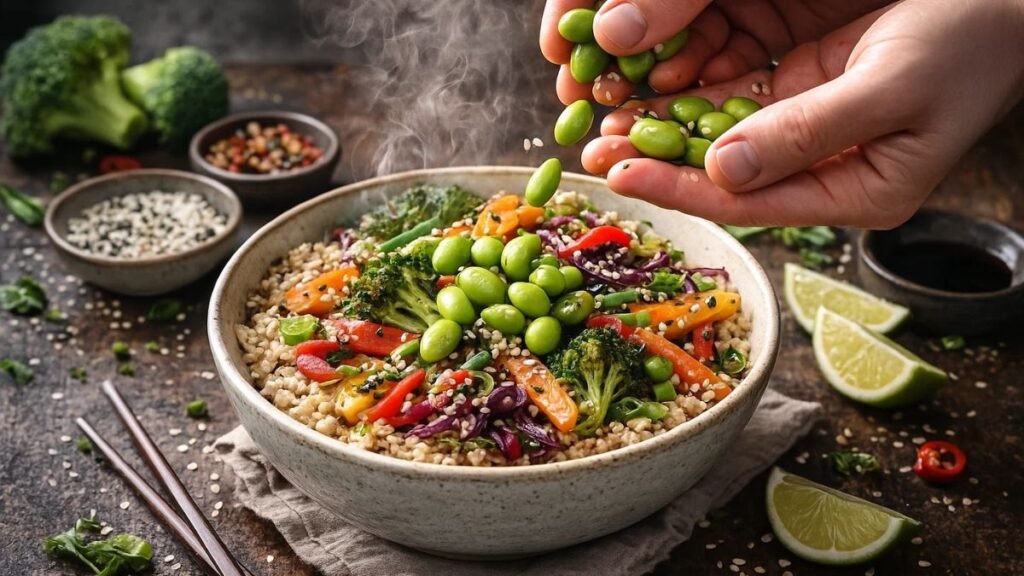
Nutrition is one thing—but food has to taste good, right?
- Edamame: Fantastic in grain bowls, stir-fries, or as a high-protein snack. They’re filling, slightly nutty, and pleasantly firm.
- Peas: Perfect for soups, pasta, rice dishes, or comfort foods. Sweet, soft, and versatile.
Culinarily, peas might win versatility. But edamame wins satisfaction.
The Bottom Line: Who Comes Out on Top?
If we judge purely by nutrition density, protein, and blood sugar impact, edamame claims the crown. But don’t ditch peas—they’re still a fiber-rich, vitamin-packed addition to your diet.
Quick summary:
- Protein: Edamame
- Digestion: Peas
- Blood sugar: Edamame
- Versatility: Peas
For most adults, the smartest approach is both—but if you want the “most bang per bite,” edamame is your go-to.
Is edamame healthier than peas?
Yes. Edamame generally edges out peas due to its higher protein content, lower carb load, and complete amino acid profile. It fills you up, supports metabolism, and is a plant-based powerhouse.
If you’re looking to mix things up, you might also enjoy exploring Broccoli vs Cauliflower for another high-protein veggie debate or Paneer vs Eggs vs Chicken for more protein-packed options. Both pair beautifully with your new edamame favorites.
If you enjoyed this article, don’t forget to follow and subscribe for more health tools, recipes, and news!
Sources
- Harvard Health Publishing – The Benefits of Plant-Based Protein: Explains how higher-protein plant foods support satiety and muscle maintenance.
https://www.health.harvard.edu - United States Department of Agriculture (USDA) – Dietary Fiber Recommendations: Provides official guidelines on daily fiber intake and nutrition content for vegetables.
https://www.usda.gov - National Institutes of Health (NIH) – Glycemic Index and Blood Sugar Response: Discusses carbohydrate impact on blood sugar and insulin regulation.
https://www.nih.gov

Muhammad Ahtsham is the founder of EatLikeFit.com and a nutrition researcher dedicated to healthy weight management. He provides practical, science-backed advice on high-protein diets and affordable meal planning to help readers achieve their fitness goals simply and effectively.