
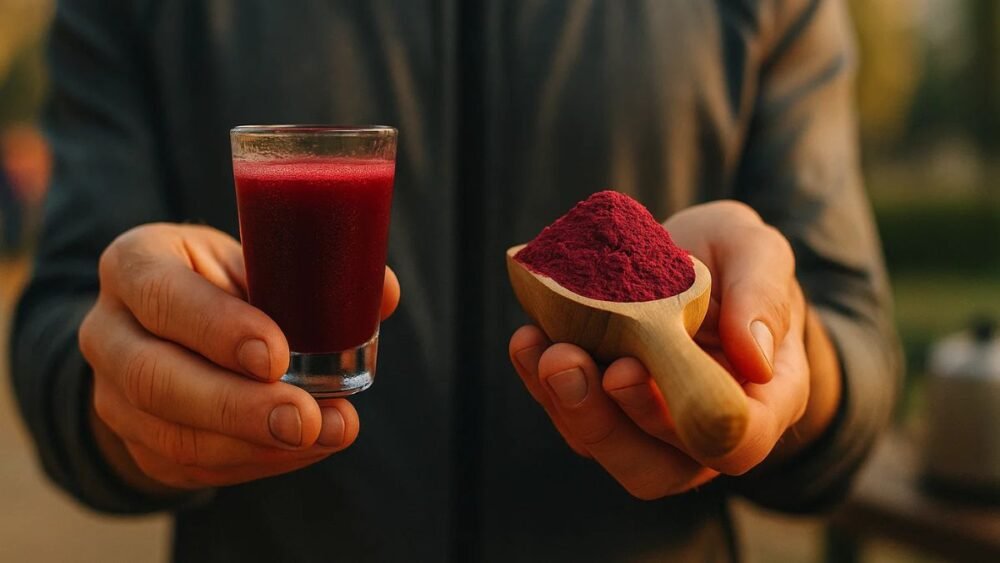
I’ll be honest: I used to think beetroot was only for fancy salads and Instagram smoothie bowls. Then I started noticing people swigging small, ruby-red shots before workouts and doctors talking about nitrates like they were the next big thing in heart care. So what’s real — the powdered scoop in your pantry, or the fresh beet juice in the fridge? Short answer: both have roles, but they’re not interchangeable. Juice gives a more reliable, fast nitrate punch; powder is convenient and lower in sugar, but its effects depend a lot on processing and quality.
Jump To
The simple science (without the lab-speak)
Here’s the part you should tuck away: dietary nitrates in beets are converted by your body into nitric oxide, a gas that relaxes blood vessels and improves blood flow. Nutritionists and physiologists point to that nitrate → nitric oxide pathway as the main reason beets get credit for lowering blood pressure and boosting endurance. A number of randomized trials and meta-analyses back this up — especially for nitrate-rich beetroot juice — so this isn’t just wellness marketing. Experts say the effect is real, measurable, and often short-term, but it depends on dose and form.
Why juice acts like the heavyweight
If you want predictable, short-term benefits — think lower systolic blood pressure within hours, or a small endurance edge before a hard session — beetroot juice is usually the safer bet. Juice tends to deliver higher and more bioavailable nitrate levels than many powders, and clinical studies often use standardized juice doses for that reason.
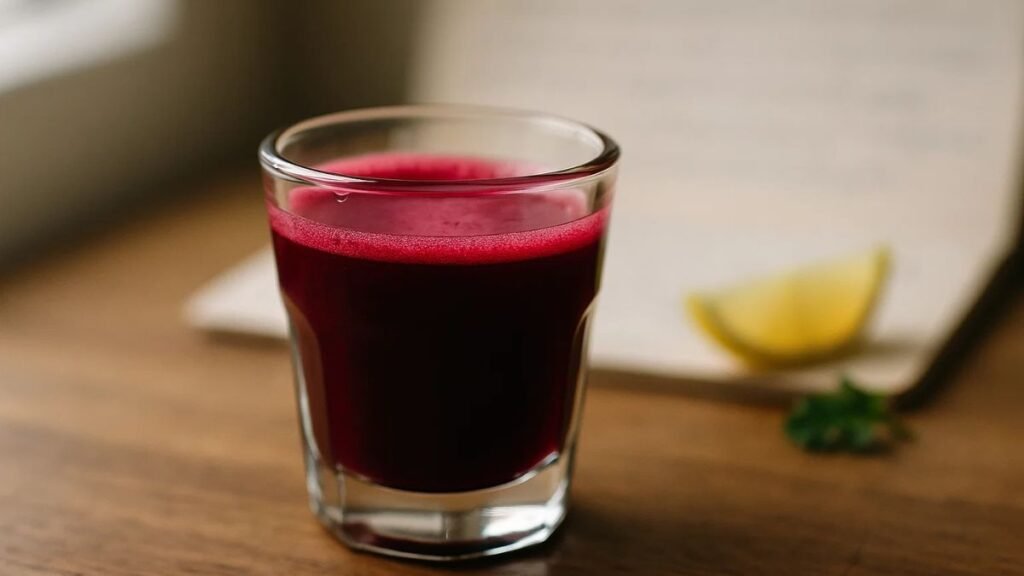
What juice gives you:
- Faster onset — effects often show up within a few hours.
- Easier dosing — labeled nitrate shots or measured volumes are simple to standardize.
- Whole-food nutrients — you get betalains and polyphenols along with the nitrates, which could add antioxidant and anti-inflammatory value.
Trade-offs:
- More natural sugar and calories per serving.
- Fresh juice needs refrigeration and doesn’t keep long.
- Taste: yeah, beet breath is a thing.
Powder: the practical, mixed bag
Powdered beetroot is a different beast. It’s shelf-stable, travel-friendly, and easy to toss into a smoothie. But all powders are not created equal. How they’re processed matters. Freeze-dried powders often retain more of the plant’s profile; heat-processed products can lose nitrates and delicate phytonutrients. That variability shows up in the research — when powders are standardized for nitrate content or use concentrated extracts, the outcomes look better. When they’re just “beet powder” with no specs? Results are unpredictable.
Why you might pick powder:
- Daily convenience and lower sugar intake.
- Longer shelf life.
- Could be a steady low-dose strategy if you choose a standardized product.
What to watch for:
- Look for nitrate concentration on the label (or standardized extract claims).
- Beware proprietary blends that hide the true beet content.
Who should choose which — practical rules
If you’re chasing a measurable blood-pressure dip or a race-day edge, reach for a beetroot juice with a known nitrate dose 2–3 hours before your test or workout. If you want to add beetroot to your daily routine without extra sugar and with minimal fuss, a high-quality powder works — but manage expectations: effects are usually smaller and build slowly.
A few important safety flags: people on blood-pressure meds should talk to their clinician before adding concentrated nitrate supplements, and anyone prone to kidney stones should remember beets contain oxalates. For long-term heart health, remember that single supplements are never magic — whole-diet patterns matter more than one shot or scoop.
How to use them — a quick checklist
- Prefer products that list nitrate concentration or use a standardized extract.
- Start with moderate servings (some studies use about 250 ml for juice; powders vary).
- Try timing: juice often peaks around 2–3 hours after intake for performance or blood-pressure measures.
- Don’t swap prescribed meds for supplements. Talk to your doctor.
The bottom line (and a little perspective)
Beetroot juice is the better tool when you want a predictable, research-backed nitrate dose for short-term blood-pressure or athletic gains. Powder is a perfectly fine everyday option if you pick a reputable, minimally processed product and accept that results will probably be smaller and slower. Neither is a miracle cure — the clearest benefits come when beetroot is part of a bigger picture: balanced diet, regular movement, and medical guidance when needed.
If you’re curious about how beet juice stacks up against other juices, we recently explored a head-to-head in our piece on beet juice vs pomegranate juice. And if you enjoy easy, nutrient-forward breakfasts that complement heart-healthy routines, check out our guide to overnight protein oats for weight loss — I use that recipe on mornings when I want convenience and a little performance support later in the day.
Honestly? Try both and see how you feel. Measure, note the timing, and — if you care about the science — choose products that tell you exactly what’s in them. Experts say small, consistent changes win over flashy one-off fixes.
If you enjoyed this article, don’t forget to follow and subscribe for more health tools, recipes, and news!

Muhammad Ahtsham is the founder of EatLikeFit.com and a nutrition researcher dedicated to healthy weight management. He provides practical, science-backed advice on high-protein diets and affordable meal planning to help readers achieve their fitness goals simply and effectively.