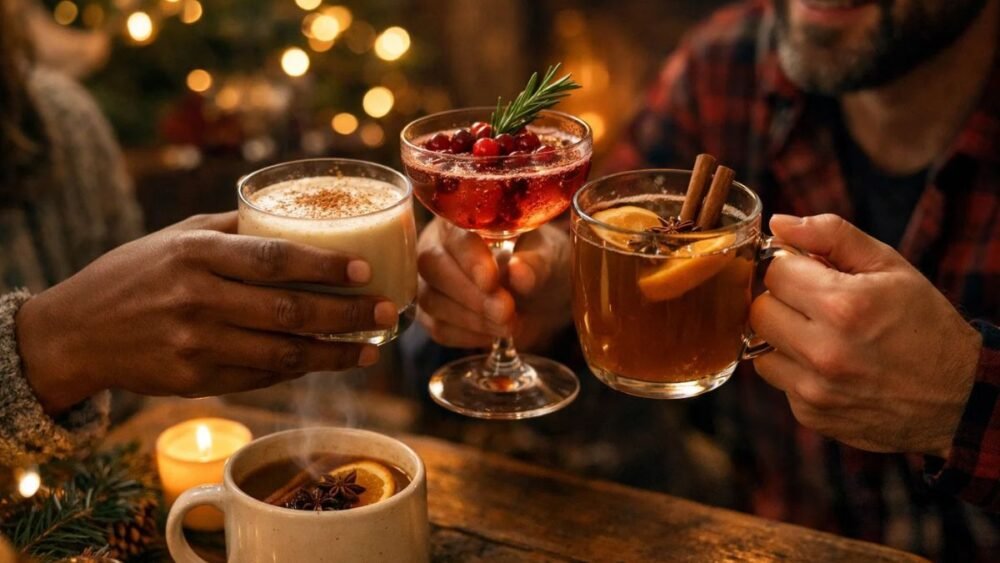
As the holidays roll in — lights blinking, playlists looping the same familiar songs — I’ve noticed something unexpected happening at dinner tables and party bars. The glasses are still clinking. The drinks still look festive. But more and more of them don’t contain alcohol at all.
This season, non-alcoholic holiday drinks aren’t hiding in the corner anymore. They’re front and center. Poured with intention. Offered with pride. And for many people, chosen gladly — not as a backup plan, but as the main event.
What once felt niche now feels normal.
In 2025, zero-proof beverages have officially crossed into tradition. From cozy mugs of spiced cider to elegant mocktails dressed with citrus peels and herbs, alcohol-free drinks are shaping the way people celebrate. Not quietly. Confidently.
And the shift isn’t accidental.
Jump To
The New Holiday Pour Feels Familiar — Just Smarter
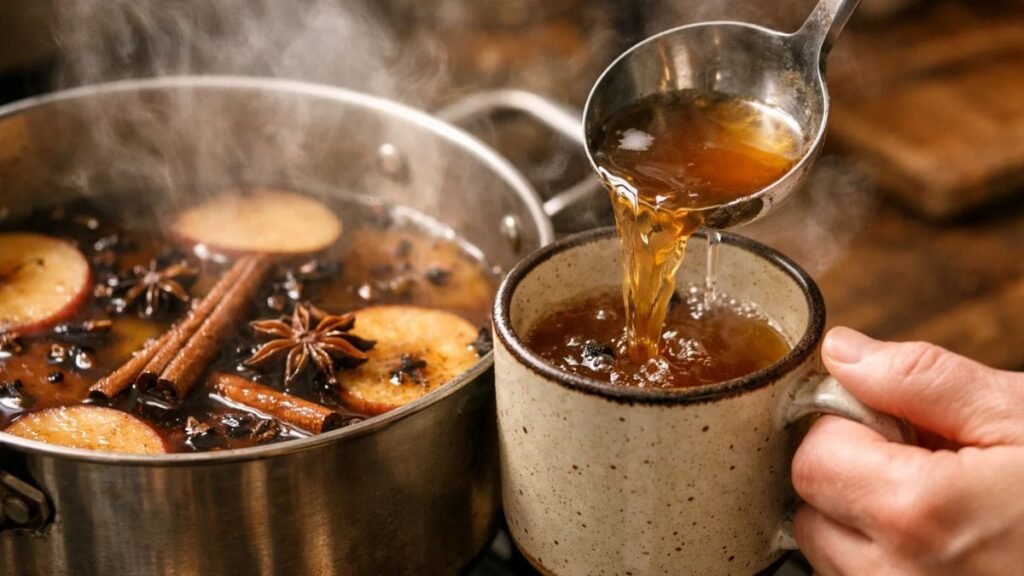
Walk into a holiday gathering this year and you’ll still smell cloves, cinnamon, and nutmeg in the air. That part hasn’t changed. What has changed is what’s in the glass.
Classic winter flavors are being reimagined without spirits, and honestly, you might not miss them. Warm apple cider simmers slowly with star anise. Eggnog shows up rich and creamy, topped with whipped cream and spice — no alcohol required.
These drinks don’t feel like compromises. They feel intentional.
I found that many hosts are leaning into nostalgia while quietly removing the booze. The ritual stays intact. The warmth stays intact. Even the indulgence stays intact.
Some favorites making the rounds this year include mulled apple cider that fills the room with aroma, cranberry-based sparklers that balance tart and sweet, and iced herbal teas infused with lavender or citrus for guests who want something lighter.
What matters most is that nobody feels sidelined anymore. Whether someone avoids alcohol for health reasons, recovery, faith, or personal choice, the drink in their hand finally feels just as celebratory.
Related: Dunkin Free Coffee December 29: One-Day Surprise for Fans
Zero-Proof Is No Longer a Trend — It’s a Choice
By now, experts say the rise of non-alcoholic drinks is tied to a much larger shift in how people think about wellness and socializing. This isn’t about abstinence alone. It’s about intention.
In 2025, analysts point to “mindful drinking” as a driving force. People are asking how alcohol affects sleep, digestion, mood, and energy — especially during an already exhausting holiday season.
Nutritionists often note that moderation doesn’t have to mean deprivation. Choosing a zero-proof option can be about feeling better the next morning, staying present during gatherings, or simply enjoying flavor without consequence.
There’s also a social piece here that’s hard to ignore.
Hosts are paying closer attention to inclusivity. Younger adults, in particular, expect drink menus that welcome everyone. And socially, ordering a beautifully crafted mocktail now carries its own kind of status.
Researchers studying beverage culture say the sober-curious movement isn’t anti-alcohol. It’s pro-choice. And during the holidays, that distinction matters.
Beyond Juice: How NA Drinks Got Sophisticated
If your mental image of non-alcoholic drinks stops at soda or fruit punch, you’re about a decade behind.
Today’s zero-proof options borrow directly from craft cocktail culture. Mixologists and home bartenders alike are experimenting with botanicals, fermentation, and layered flavors that actually require attention.
Herbs like rosemary and lavender add aroma before the first sip. Hibiscus brings color and tartness. Kombucha and other fermented bases introduce complexity — along with gentle fizz and probiotic benefits.
Non-alcoholic botanical spirits are also having a moment. Designed to mimic the bitterness and depth of traditional liquors, they allow mocktails to taste grown-up without ethanol.
Functional ingredients are showing up too. Ginger adds warmth. Turmeric brings earthiness. Experts say these additions often appeal to guests who want drinks that feel both indulgent and purposeful.
The result? Alcohol-free drinks that feel crafted, not childish. Thoughtful, not rushed.
How Hosts Are Making NA Drinks Feel Special
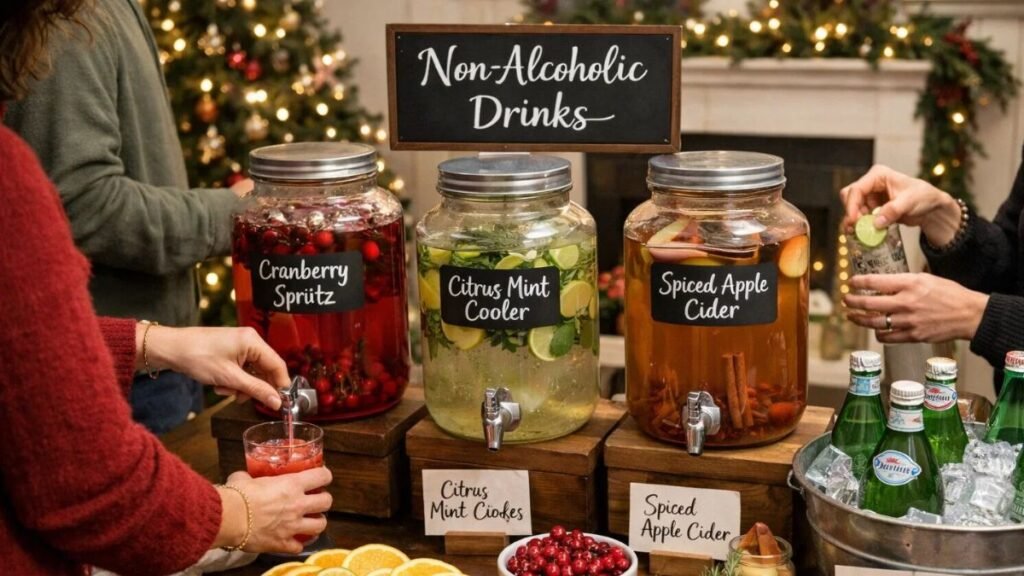
One thing I keep hearing from partygoers: presentation matters. A lot.
Health experts often point out that social cues influence how included people feel. That’s why savvy hosts are giving non-alcoholic drinks their own spotlight instead of quietly offering them on request.
Dedicated zero-proof stations are becoming common. Festive ice buckets. Fresh garnishes. Handwritten labels. Even themed drink names that sound just as playful as their boozy counterparts.
Some hosts add interactive elements — recipe cards, mix-your-own spritzers, or sparkling water pairings — so guests can customize their drinks.
These details do more than decorate a table. They send a message: this drink matters too.
Related: Dunkin Holiday Menu 2025
A Note on Health — Balance Still Counts
While non-alcoholic holiday drinks often align with wellness goals, health professionals are quick to add nuance. Not all mocktails are created equal.
Some zero-proof options, especially those heavy on syrups or juices, can carry significant sugar. For people managing blood sugar or calorie intake, that’s worth noting.
Experts also caution that for individuals in recovery, even alcohol-free beers or cocktail replicas can trigger emotional or sensory cues. Those decisions are personal — and best made with professional guidance when needed.
Still, the overall movement points toward healthier relationships with drinking, not rigid rules.
Where Festive Drinking Is Headed Next
As this holiday season unfolds, it’s clear that non-alcoholic drinks aren’t just filling glasses. They’re reshaping rituals.
What we’re seeing in 2025 is a broader cultural shift — toward mindful consumption, inclusive celebrations, and drinks that support how people want to feel, not just how they want to toast.
Whether it’s a mug of spiced cider by the fire or a sparkling botanical spritz at midnight, the modern holiday table finally has room for every choice.
And for anyone who’s ever wanted the joy of the ritual without the aftermath, this season feels like a long-overdue invitation to raise a glass — comfortably.
What are the most popular non-alcoholic holiday drinks right now?
Spiced apple cider, cranberry spritzers, alcohol-free eggnog, herbal iced teas, and botanical mocktails lead the list.
How can I make festive mocktails at home easily?
Start with sparkling water or kombucha, add seasonal fruit, herbs, and spices, and focus on aroma and garnish.
Are non-alcoholic drinks healthier than alcoholic ones?
Often, yes — especially for sleep and hydration — but sugar content still matters, so balance is key.
If you enjoyed this article, don’t forget to follow and subscribe for more health tools, recipes, and news!
Sources
- Mocktails and festive alcohol‑free drink ideas — URMC Newsroom (University of Rochester Medical Center) for health‑focused suggestions. University of Rochester Medical Center
- Ginger, turmeric, and wellness ingredients in non‑alcoholic drinks — expert breakdown of functional components. minglemocktails.com
Muhammad Ahtsham is the founder of EatLikeFit.com and a nutrition researcher dedicated to healthy weight management. He provides practical, science-backed advice on high-protein diets and affordable meal planning to help readers achieve their fitness goals simply and effectively.