I didn’t expect deer jerky to feel… comforting again. But here we are.
In a year packed with protein bars engineered in labs, glossy “functional snacks,” and food trends that seem to change by the week, something surprisingly old-fashioned is slipping back into American kitchens. No hype. No TikTok countdown. Just venison, salt, time, and patience.
Across rural Midwest basements, hunting cabins, and even suburban garages humming with dehydrators, more people are dusting off old deer jerky recipes their grandparents once relied on. Not reinventing them. Remembering them.
It’s not loud. You probably won’t see it promoted by influencers. But if you listen closely, you’ll notice it’s everywhere.
Jump To
When Food Wasn’t Content — It Was a Skill
Long before deer jerky became a snack aisle product, it was survival food. Hunters preserved venison to last through winter, using methods that didn’t rely on labels or timers. Salt mattered. Airflow mattered. Smoke mattered. Everything else was optional.
Back then, nobody called it “clean eating.” It was just eating.
That mindset feels relevant again in 2025. Many consumers are burned out by ultra-processed foods and rising grocery bills. Nutritionists often point out that people aren’t necessarily eating more — they’re just eating more products. Venison jerky, by contrast, is food in its most stripped-down form.
According to data from the USDA, venison remains significantly lower in fat than most cuts of beef while delivering high-quality protein and iron. That combination alone explains why it’s showing up again in conversations about sustainable, minimally processed diets.
And for people who already hunt, the appeal is obvious: use what you harvest, waste nothing, and preserve it properly.
Why This Old Recipe Is Suddenly Relevant Again
What’s interesting is how this comeback is happening. It’s not driven by marketing. It’s driven by fatigue — and memory.
First, the ingredient lists are refreshingly short.
Traditional deer jerky recipes often use just salt, pepper, and maybe garlic or crushed red pepper. No soy sauce baths. No liquid smoke. No “natural flavors” that nobody can explain. In a time when food labels read like chemistry notes, that simplicity feels grounding.
Second, preservation skills are trending quietly.
Homesteading groups, hunting forums, and private food-prep communities have seen renewed interest in curing, smoking, and drying meats at home. Jerky is often the entry point because it’s practical and forgiving. You don’t need fancy equipment — just attention.
Third, texture is no longer the enemy.
Old-school jerky is chewy. Dense. Sometimes tough. That’s intentional. You don’t inhale it; you work through it. And strangely, that’s part of the appeal now. People want food that slows them down.
It’s the same reason interest has grown in things like homemade seasoning blends and traditional preservation methods — similar to what you see with slow-simmered dishes or even classic spice mixes like this homemade beef stew seasoning that favor control over convenience.
What “Old-School” Deer Jerky Actually Means
Not everything labeled “traditional” really is. Old-school venison jerky tends to follow a few consistent rules — no shortcuts.
Lean cuts only.
Top round, bottom round, eye of round. Fat is trimmed aggressively because fat shortens shelf life. Old hunters didn’t debate this — they learned it the hard way.
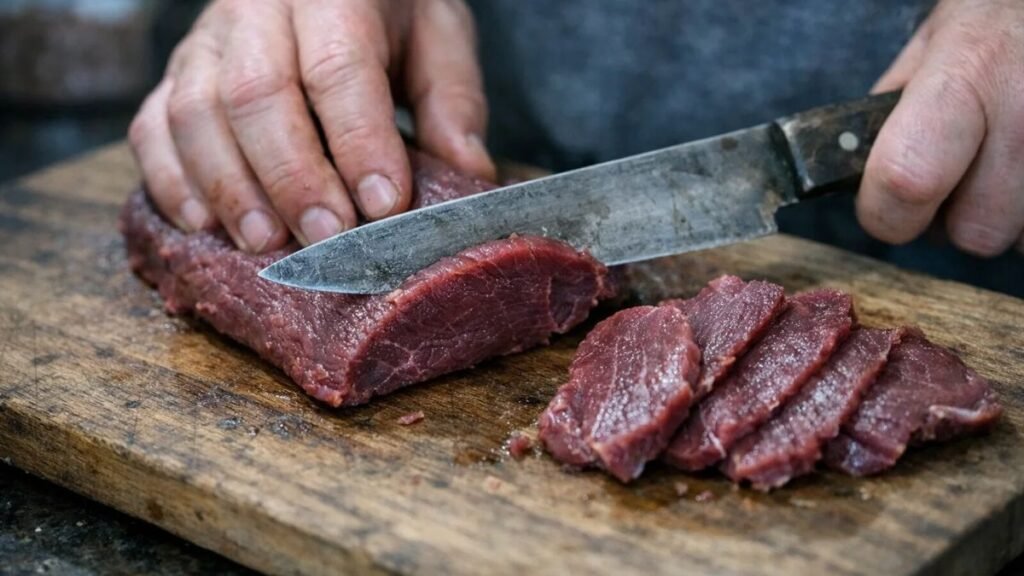
Hand-sliced, usually with the grain.
Slicing with the grain creates a tougher chew, which helps the jerky hold together during long drying periods. It’s not meant to crumble.
Salt-forward seasoning.
Salt isn’t just flavor. It’s preservation. Many early recipes used dry rubs instead of marinades, allowing moisture to escape slowly.
Slow drying, low heat.
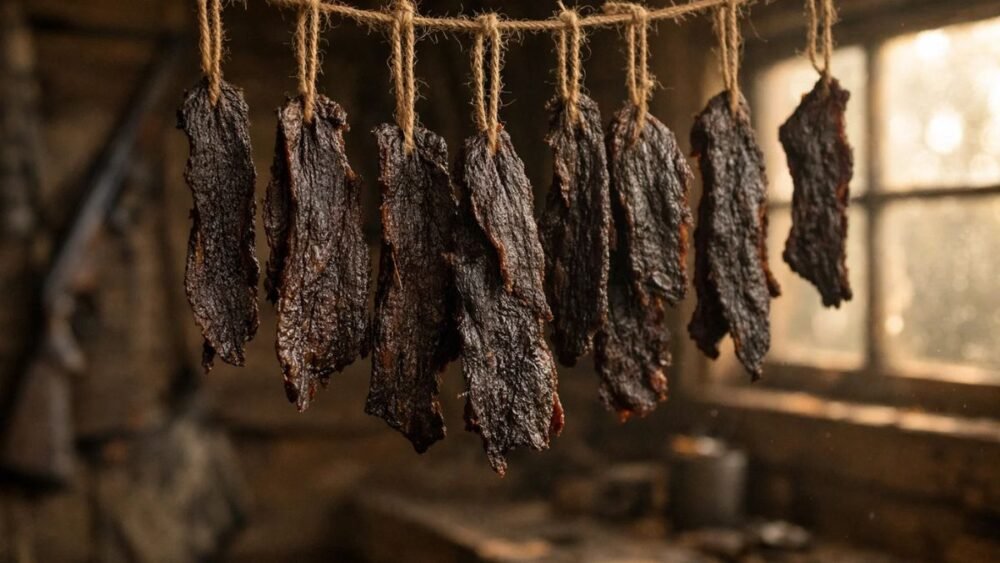
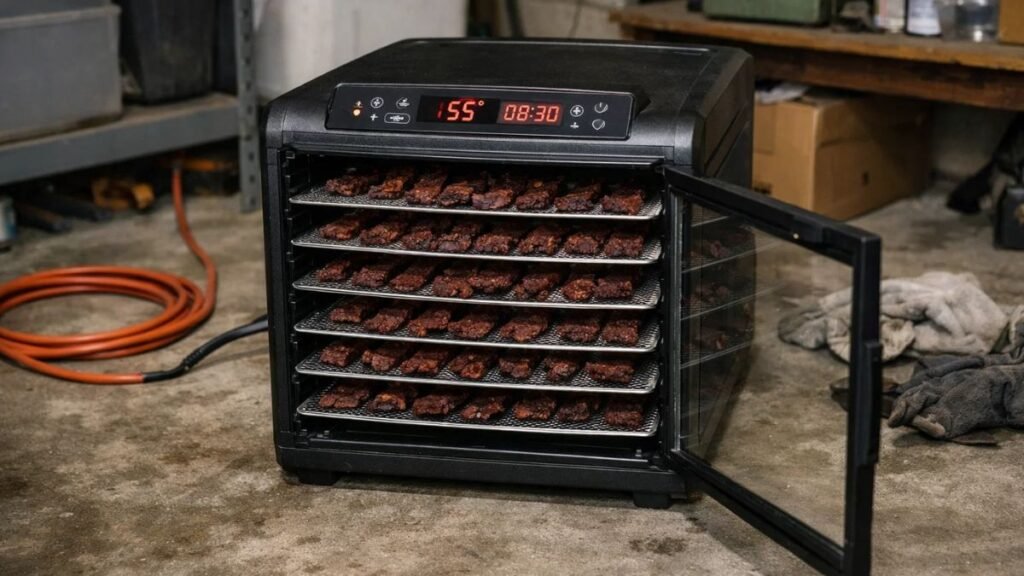
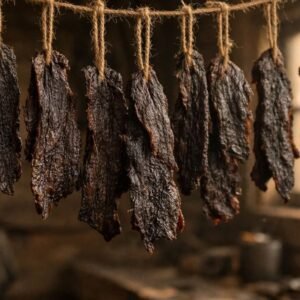
Instead of modern high-temp dehydrators, jerky was often air-dried in screened sheds, hung near wood stoves, or lightly smoked over hardwood. The process took days. Sometimes longer.
If you’re familiar with traditional venison snack-making, you’ll notice similar principles show up in modern variations like this best venison snack stick recipe — same philosophy, slightly different execution.
Modern Safety Meets Old Wisdom
One reason these methods faded for a while was fear — specifically around food safety. That concern wasn’t misplaced.
Today, cooks are smarter and better informed. The USDA recommends heating meat to an internal temperature of 160°F before drying to reduce risks from pathogens like E. coli or Salmonella. Many home jerky makers now include a brief pre-heating step, then finish with traditional air-drying or smoking.
It’s not abandoning tradition. It’s refining it.
Food safety experts often emphasize that respecting old methods doesn’t mean ignoring modern science. The two can — and should — work together.
This Isn’t Just Food. It’s Memory.
Ask anyone why they still make deer jerky this way, and you’ll rarely get a nutritional answer first.
You’ll hear stories instead.
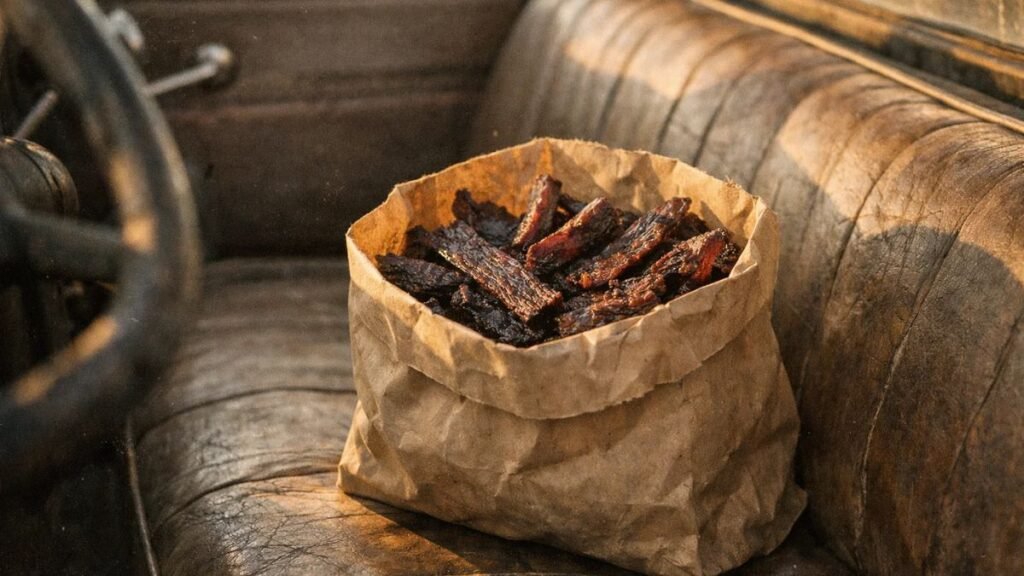
Grandparents slicing meat at kitchen tables. Cold mornings at deer camp. Paper bags of jerky tucked into glove compartments for long drives. The smell of smoke clinging to coats.
In 2025, those memories matter. Especially as food becomes more abstract and less personal.
It’s similar to the renewed interest in simple, diet-aligned foods — even crossover topics like pork rinds on the carnivore diet — where people want clarity instead of confusion.
What Home Cooks Are Doing Differently Now
The heart of the process hasn’t changed, but small upgrades are common:
- Food-grade mesh racks instead of open lines
- Humidity tracking with inexpensive sensors
- Careful labeling with dates and salt ratios
- Quiet sharing of results in private groups
Nobody’s chasing perfection. They’re chasing consistency.
A Slow Food Revival That Feels Permanent
Old-school deer jerky isn’t a trend built on novelty. It’s built on usefulness.
It preserves food.
It tastes honest.
It rewards patience.
As grocery prices fluctuate and interest in sustainable protein grows, these methods aren’t going anywhere. They’re not flashy enough to burn out.
And maybe that’s the point.
In 2025, knowing how to preserve your own food — and trusting yourself to do it — feels quietly radical again.
What makes deer jerky “old school”?
Traditional deer jerky relies on lean cuts, minimal seasoning, and slow air-drying or smoking instead of modern marinades and high-heat dehydrators.
Is venison jerky safe to make at home?
Yes, when proper food safety guidelines are followed. Experts recommend heating venison to 160°F before drying to reduce pathogen risks.
How long does traditional deer jerky last?
Properly dried and stored venison jerky can last several weeks at room temperature and even longer when refrigerated or frozen, depending on moisture and fat content.
If you enjoyed this article, don’t forget to follow and subscribe for more health tools, recipes, and news!
Old-School Deer Jerky Recipe
Equipment
- Sharp boning knife
- Cutting board
- Large mixing bowl
- Food-grade drying racks or dehydrator trays
- Smoker or dehydrator (optional)
- Meat thermometer
- Paper towels
Ingredients
- 2 lb venison top round, bottom round, or eye of round, fat fully trimmed
- 2 tbsp coarse salt
- 1 tbsp freshly cracked black pepper
- 1 tsp garlic powder optional
- ½ tsp crushed red pepper flakes optional
Note: No liquid marinade is used in traditional versions.
Instructions
- Prepare the Meat
- Partially freeze the venison for 30–45 minutes until firm but not solid. This makes slicing easier and more consistent.
- Slice the Venison
- Using a sharp knife, slice the meat with the grain into strips about ¼ inch thick. Trim away any remaining fat.
- Season Simply
- Place the strips in a bowl. Sprinkle evenly with salt, black pepper, and optional spices. Toss gently by hand to coat evenly.
- Rest the Meat
- Lay the seasoned venison strips on racks or trays in a single layer. Let rest at room temperature for 1–2 hours to allow salt to draw out moisture.
- Heat for Safety (Recommended)
- For modern food safety, heat venison strips in an oven at 160°F (71°C) for 10 minutes before drying.
- Dry the Jerky
- Transfer strips to a dehydrator, smoker, or well-ventilated drying area. Dry at 130–150°F (54–65°C) for 10–14 hours, turning once if needed.
- Check for Doneness
- Jerky should bend and crack slightly but not snap. There should be no visible moisture inside.
- Cool and Store
- Let jerky cool completely before storing. Keep in paper bags for short-term use or airtight containers for longer storage.
Notes
Nutrition
- Calories: 120 kcal
- Protein: 22 g
- Fat: 2 g
- Carbohydrates: 0 g
- Iron: 15% DV
Notes:
- Always trim fat thoroughly — fat shortens shelf life.
- Chewier texture is traditional; slicing with the grain matters.
- Store at room temperature up to 1 week, refrigerated up to 1 month, or frozen up to 6 months.
- If mold appears, discard immediately.

Muhammad Ahtsham is the founder of EatLikeFit.com and a nutrition researcher dedicated to healthy weight management. He provides practical, science-backed advice on high-protein diets and affordable meal planning to help readers achieve their fitness goals simply and effectively.