
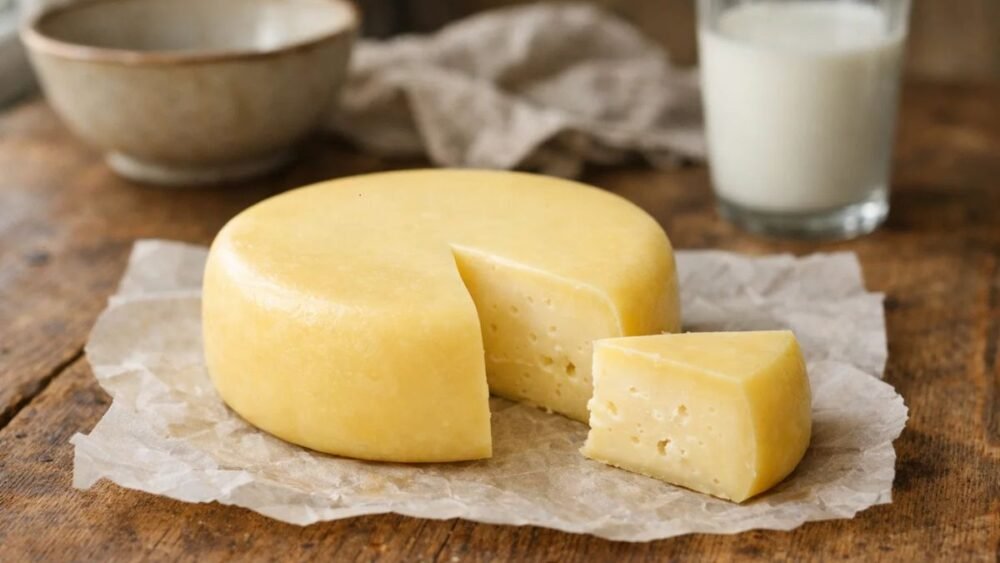
Butterkäse has a way of sneaking up on you.
You might first notice it melted quietly into a sandwich, or resting innocently on a cheese board, pale and unassuming. Then comes the surprise — that soft, buttery bite that doesn’t shout, doesn’t bite back, just melts and lingers. It’s the kind of cheese that wins people over who swear they “don’t really like European cheese.”
Lately, I’ve noticed more home cooks asking the same question: Can you actually make Butterkäse at home?
Short answer: yes. And once you do, store-bought versions feel a little less magical.
This is a practical, home-kitchen-friendly Butterkase cheese recipe — with the why behind each step, not just the how.
Jump To
What Exactly Is Butterkäse?
Butterkäse — literally “butter cheese” — was developed in Germany in the early 1900s as an everyday option. Think approachable. Friendly. Designed for people who wanted something smoother than Alpine cheeses but more interesting than plain sandwich slices.
You’ll recognize it by a few defining traits:
- Semi-soft, supple texture
- Pale yellow interior with no natural rind
- Mild, buttery flavor with low acidity
- Excellent melting ability
Cheese historians and German dairy groups often describe Butterkäse as an entry-point cheese — one that bridges traditional European cheesemaking and modern comfort food.
And honestly? That’s exactly how it tastes.
Why Home Cheesemakers Are Turning to Butterkäse
There’s a quiet shift happening in home kitchens. People are reading labels more closely. They want fewer additives, better control, and food that feels intentional.
Butterkäse checks a lot of boxes.
Making it yourself means:
- No preservatives or stabilizers
- Adjustable salt levels
- Fresher flavor than retail cheese
- Lower cost if you make cheese regularly
Food science educators and university extension programs often recommend washed-curd cheeses like Butterkäse to beginners because the process is forgiving — and the aging time is short. You’re not committing to months of babysitting a wheel of cheese.
Butterkase Cheese Recipe: Ingredients You’ll Need
This method stays close to traditional European techniques, but it’s adapted for home kitchens — no industrial equipment required.
Ingredients
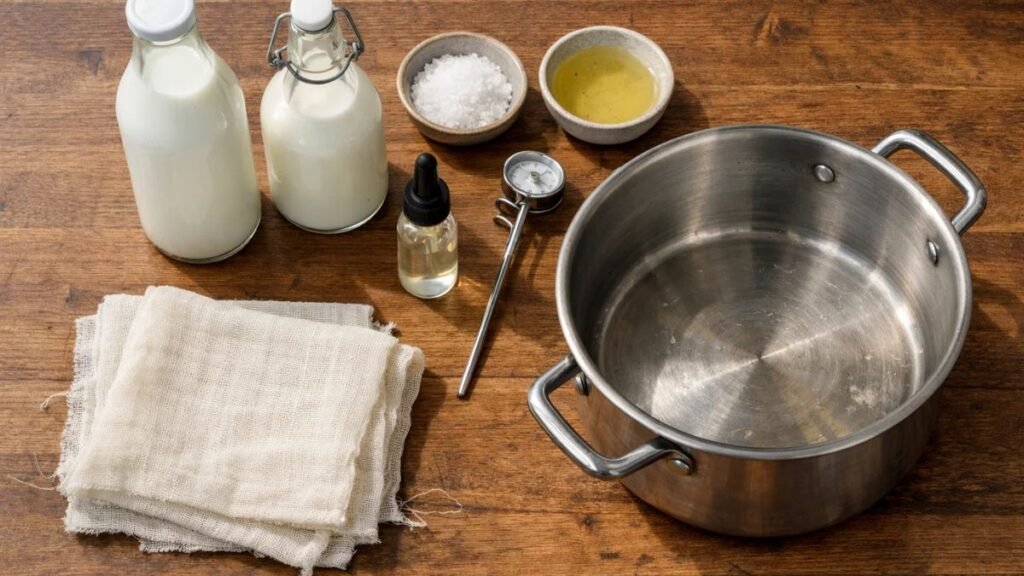
- 2 gallons whole milk (non-homogenized if possible)
- Mesophilic starter culture
- Liquid rennet (animal or vegetable)
- Calcium chloride (optional, but helpful for pasteurized milk)
- Non-iodized cheese salt
- Clean, filtered water
Milk quality matters more than people realize. Dairy scientists consistently point out that protein structure and fat content directly affect curd formation — which is why fresh, high-quality milk produces noticeably creamier Butterkäse.
Related: The Three-Cheese and Macaroni Recipe
Step-by-Step Butterkase Cheese Recipe
Step 1: Heat and Culture the Milk
Slowly warm the milk to 86°F (30°C). Stir gently — don’t rush it.
Add the mesophilic starter, cover the pot, and let it rest for about 45 minutes. This quiet pause is where Butterkäse develops its mild, buttery personality.
Step 2: Add Rennet and Set the Curd
Dilute the rennet in cool water and stir it in using slow, vertical motions.
Then walk away.
After 30–40 minutes, check for a clean break. If the curd splits neatly, you’re right where you want to be. Cheesemakers will tell you this moment determines texture more than almost anything else.
Step 3: Cut and Heal the Curds
Cut the curd into ½-inch cubes, then let them rest for five minutes. This “healing” step helps the curds hold moisture — essential for Butterkäse’s softness.
Stir gently for about 15 minutes, encouraging whey release without toughening the curds.
The Washed-Curd Step That Defines Butterkäse
This is where Butterkäse separates itself from sharper cheeses.
Step 4: Wash the Curds
- Drain about 30% of the whey
- Replace it with warm water (95–100°F)
- Stir gently for 10 minutes
This washed-curd technique reduces acidity. Food science researchers often point to this step as the reason Butterkäse stays mild, smooth, and slightly sweet instead of tangy.
If you’ve ever wondered why it tastes so approachable — this is it.
Pressing and Salting
Step 5: Mold and Press
Transfer the curds into a cheese mold lined with cheesecloth.
Press lightly at first. Increase pressure gradually over 6–8 hours, flipping the cheese a few times. Butterkäse prefers a gentle touch — too much pressure, and you lose that signature elasticity.
Step 6: Salt the Cheese
Remove the cheese from the mold and dry-salt it over two days, flipping between applications.
Many cheesemakers prefer dry salting here instead of brining. It offers better control and keeps the flavor clean rather than overly sharp.
Aging Butterkäse at Home
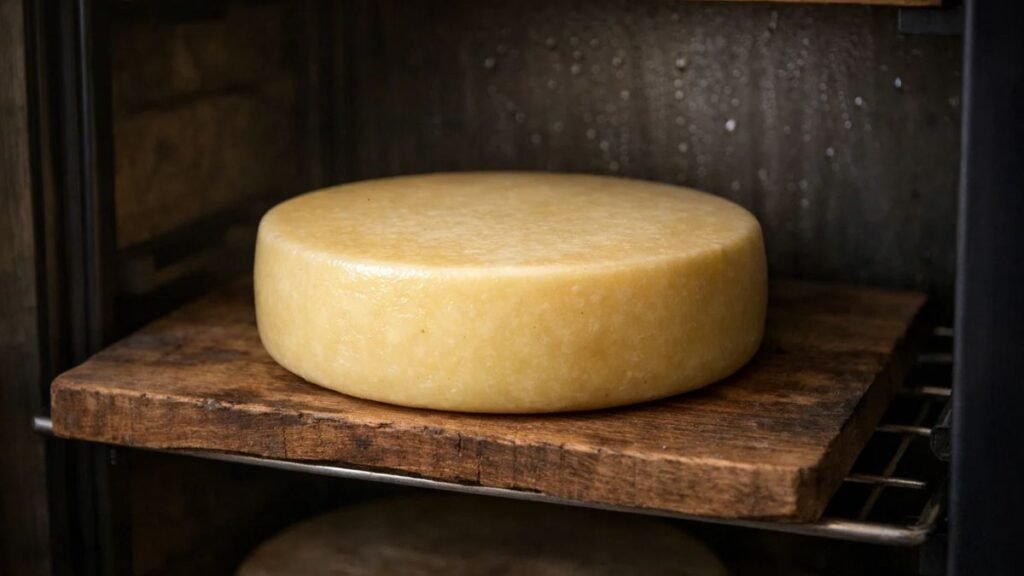
Step 7: Age Briefly
Age the cheese at 55°F (13°C) with 85–90% humidity for 2–4 weeks.
During aging:
- Flip daily
- Wipe lightly with saltwater if moisture appears
- Watch for an even, smooth surface
Unlike long-aged cheeses, Butterkäse doesn’t form a rind. It matures quietly, without drama — which, frankly, makes it perfect for home kitchens.
How People Actually Use Butterkäse
This is where Butterkäse shines.
- Layered into sandwiches
- Melted over potatoes or pasta
- Used for grilled cheese
- Served simply with fruit and bread
If you enjoy mild, melt-friendly cheeses, you might also appreciate how Butterkäse compares nutritionally to other everyday options. We recently broke down similar protein-forward choices in our comparison of edamame vs peas — another example of how subtle differences matter more than people think.
Storage and Shelf Life
Once aged, wrap Butterkäse in cheese paper or parchment — not plastic.
- Refrigerator life: 3–4 weeks
- Best flavor: within 10 days of refrigeration
Plastic traps moisture and dulls flavor, something food safety experts consistently warn against with soft cheeses.
Is Butterkäse a Good Beginner Cheese?
Most cheesemaking instructors say yes — with one condition.
You must respect cleanliness and temperature control.
Butterkäse is forgiving, but dairy safety still matters. That’s why many beginners start here before moving on to more complex styles. If you’re already experimenting with balanced meals or protein-rich foods, pairing homemade cheese with structured nutrition — like tools such as a rowing pace calculator — can help keep indulgence intentional rather than accidental.
Why Butterkäse Is Having a Moment
Traditional foods are coming back — not because they’re trendy, but because they feel real.
Butterkäse fits neatly into that shift. It’s comforting without being boring. Simple without being plain. And it bridges generations — kids love it, adults appreciate its restraint.
In a world of bold flavors and louder food trends, Butterkäse does something rare: it stays quiet and wins anyway.
And once you’ve made it yourself, you’ll understand why some home cooks never go back.
What does Butterkäse taste like?
Mild, buttery, slightly sweet, and low-acid — very smooth with no sharp bite.
How long does Butterkäse need to age?
Typically 2–4 weeks.
Can Butterkäse be frozen?
Freezing is not recommended; it alters texture.
Is Butterkäse similar to Havarti?
Yes, but Butterkäse is usually milder and softer.
If you enjoyed this article, don’t forget to follow and subscribe for more health tools, recipes, and news!
Butterkase Cheese Recipe (Traditional German Butterkäse)
Equipment
- Large stainless-steel pot
- Dairy thermometer
- Long knife
- Cheesecloth
- Cheese mold
- Cheese press or weights
- Slotted spoon
Ingredients
- 2 gallons
- whole milk
- Notes: Non-homogenized preferred
- ¼ teaspoon
- mesophilic starter culture
- ½ teaspoon
- liquid rennet
- Notes: Animal or vegetable
- ¼ teaspoon
- calcium chloride
- Notes: Optional for pasteurized milk
- 1½ teaspoons
- cheese salt
- Notes: Non-iodized
- ½ cup
- filtered water
- Notes: For diluting rennet and curd washing
Instructions
- Slowly heat the milk to 86°F (30°C) in a large pot, stirring gently to prevent scorching.
- Sprinkle the mesophilic starter culture over the milk, stir well, cover, and allow it to ripen for 45 minutes.
- Dilute the rennet in filtered water and stir into the milk using an up-and-down motion. Cover and let set undisturbed for 30–40 minutes, until a clean break forms.
- Cut the curd into ½-inch cubes and let rest for 5 minutes to allow the curds to heal.
- Gently stir the curds for 15 minutes to release whey while maintaining a soft texture.
- Drain about 30% of the whey, then replace it with warm water (95–100°F). Stir gently for 10 minutes to reduce acidity.
- Transfer the curds into a cheesecloth-lined mold. Press lightly at first, gradually increasing pressure over 6–8 hours, flipping occasionally.
- Remove the cheese from the mold and dry-salt it over two days, flipping between applications.
- Age the cheese at 55°F (13°C) with 85–90% humidity for 2–4 weeks, flipping daily and wiping with light saltwater if moisture appears.
Notes

Muhammad Ahtsham is the founder of EatLikeFit.com and a nutrition researcher dedicated to healthy weight management. He provides practical, science-backed advice on high-protein diets and affordable meal planning to help readers achieve their fitness goals simply and effectively.