
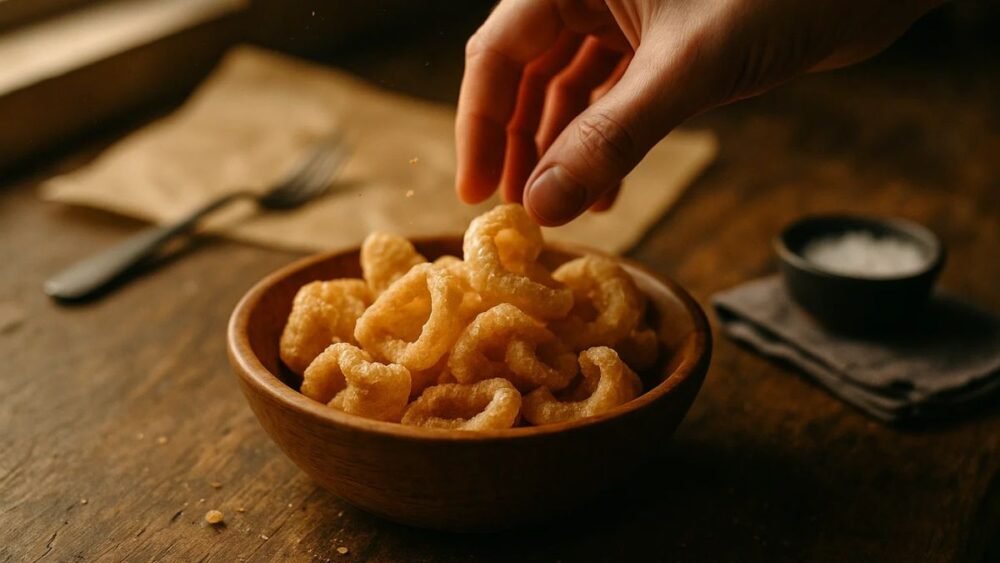
Yes — pork rinds are technically allowed on a carnivore diet. They’re animal-derived, nearly zero-carb, and give you that much-missed crunch. But they’re also highly processed, often very salty, and low in the vitamins and minerals you’d get from whole cuts or organ meats. Use them as a treat, not a mainstay.
There’s a small, honest pleasure in a bowl of crackling pork rinds. That first snap — loud, immediate — can feel like a tiny victory on a strict animal-only plan. For people on the carnivore or strict low-carb routes, pork rinds answer a simple problem: how do you get texture and convenience without sneaking in carbs? The answer: you don’t — you get a crunchy, portable snack that keeps carbs essentially at zero. 🍽️
But comfort and convenience rarely come without trade-offs. Let me walk you through the why, the how, and the caution flags.
Jump To
Key Points
- Allowed? Yes — typically zero carbs. ✅
- Per 1 oz: ~140–160 kcal, 8–12 g protein, 9–15 g fat, 0 g carbs.
- Upside: crunchy, portable, satisfying, useful as low-carb crumb. 🥓
- Downside: often high in sodium and saturated fat; processed; low vitamins. ⚠️
- Tip: choose short ingredient lists (pork skin + salt), avoid veggie oils.
- Portion: treat as an occasional snack, not a meal.
- Health watch: consult your doctor if you have high BP or high LDL. 🩺
- Diet balance: prioritize whole cuts & organ meats for nutrients. 🍽️
Why carnivore dieters gravitate toward pork rinds
The carnivore diet is austere by design: no plants, centered on meat, fish, eggs, and animal fats. Pork rinds — fried or roasted pig skin — are mostly protein and fat, with virtually no carbs. That makes them an obvious fit on paper. They’re also ready-to-eat, shelf-stable, and useful in the kitchen: crushed, they work as a low-carb “breadcrumb” for coating or binding. For busy people who want the zero-carb convenience without fuss, pork rinds feel like a neat hack.
You’ll also see them used as a way to manage hunger between meals — fat and protein together tend to blunt appetite, and a small bag fills the hands and the mouth fast.
A quick nutrition snapshot (per ~1 oz / 28 g)

- Calories: ~140–160 kcal
- Protein: ~8–12 g
- Fat: ~9–15 g (including saturated fat)
- Carbs: ~0 g
- Sodium: varies — often 250–600+ mg depending on brand
Numbers depend on the brand, the cooking oil, and any added flavors. That sodium figure? Don’t ignore it.
The practical benefits — and the real trade-offs
Benefits are obvious: zero carbs, portable, and satisfying crunch. They’re also surprisingly versatile in recipes — think crust for fried chicken or as a textural topping on meat casseroles.
But here’s where things get messy: most pork rinds are processed. Many manufacturers use added oils, flavorings, or preservatives. Salt levels can be very high. And compared to liver, sardines, or a fatty steak, pork rinds are nutritionally thin — they don’t supply the vitamins and trace minerals organ meats do. So if you lean on them often, you risk creating micronutrient gaps.
If you have high blood pressure, elevated LDL cholesterol, or a family history of heart disease, the sodium and saturated fat are a real concern. Talk to a clinician — candidly, not in passing.
How to include pork rinds without derailing your health goals
- Read the label. Short ingredient lists win: pork skin, salt, maybe animal fat. Skip products listing vegetable oils or a long laundry list of additives.
- Treat them like a garnish, not a meal. Use crushed pork rinds to add texture or as an occasional snack. Don’t let them replace steaks, eggs, or organ meats.
- Portion intentionally. It’s easy to crush a whole bag in minutes. Measure a serving and put the rest away.
- Rotate your animal foods. Make sure your diet includes nutrient-dense options — liver, oily fish, eggs, and fatty cuts — to cover vitamins and minerals. (If you’re tracking cooking inspiration, check out a few carnivore-friendly drink pairings and snack ideas at EatLikeFit’s guide to carnivore diet drinks.
- Monitor health markers. Keep an eye on blood pressure and lipid panels if you snack on pork rinds regularly.
Real-world use-cases (short)

- Busy travel day? A sealed pack is handy.
- Need a crunchy breadcrumb substitute for a keto-friendly chicken fry? Crushed pork rinds do the job.
- Craving crunch after a stew? A small sprinkle can satisfy without adding carbs.
Bottom line — where pork rinds belong on the plate
They’re a convenience food with a useful place: occasional texture, quick calories, and a zero-carb fix. But they’re not a nutrition solution. Think of pork rinds as seasoning or a treat, not a foundation. Keep portions small, choose minimally processed brands, and anchor your meals with whole animal foods for real nutrient coverage.
If you’re exploring weight-loss-friendly carnivore options more broadly, you might also enjoy EatLikeFit’s pieces on favorite foods for fast weight loss and dietitian-approved weight-loss breakfast choices — helpful when you want variety without losing the plan:
Caveat: if you have hypertension, heart disease, or high LDL, consult a healthcare provider before making pork rinds a habit. Want recipes that keep you full and on-plan? Try swapping in carnivore-friendly coffees or low-carb breakfast swaps from this collection. ☕️
Crunch is fun. Balance matters more. Choose both, intentionally.
If you enjoyed this article, don’t forget to follow and subscribe for more health tools, recipes, and news!

Muhammad Ahtsham is the founder of EatLikeFit.com and a nutrition researcher dedicated to healthy weight management. He provides practical, science-backed advice on high-protein diets and affordable meal planning to help readers achieve their fitness goals simply and effectively.