
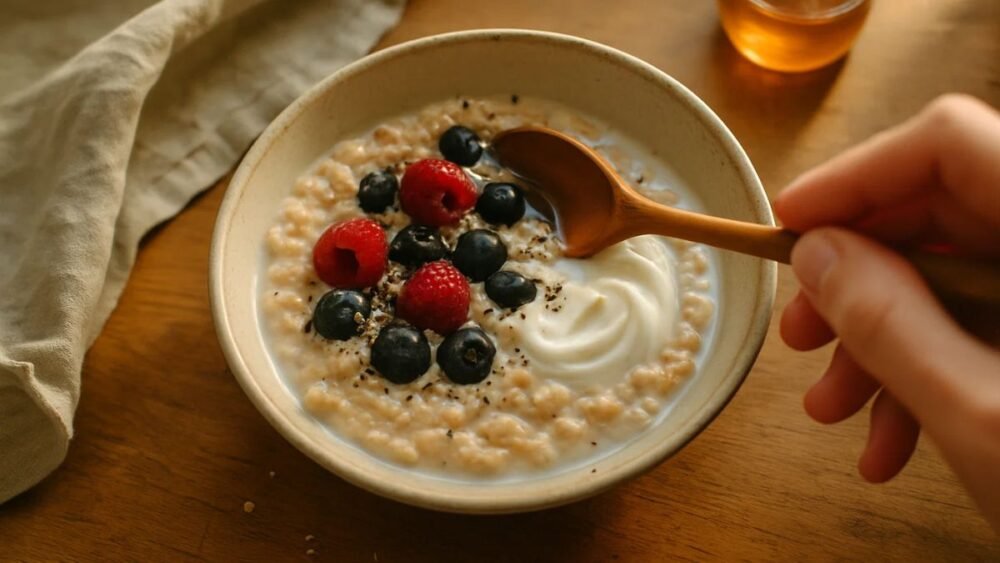
Add protein to oatmeal by stirring in Greek yogurt or cottage cheese, mixing a scoop of protein powder, folding in nut butter, cooking oats in milk or soy milk, topping with seeds and nuts, or stirring in a cooked egg — quick swaps that boost satiety and help protect muscle without wrecking flavor.
Oatmeal is a reliable breakfast anchor: cheap, portable, and quietly comforting. But eaten plain, it’s mostly carbs — which is why you might find yourself raiding the snack drawer midmorning. If you want a bowl that actually keeps you full, you need to add concentrated protein. One neat trick I recommend right away: swirl in a half-cup of plain Greek yogurt for instant creaminess and a jump in protein (here’s a solid how-to for a high-protein yogurt bowl if you want visuals and recipe ideas).
Protein slows digestion and stabilizes blood sugar. It also helps preserve lean tissue — useful whether you’re trying to lose weight, get stronger, or simply make mornings less hangry. With a few simple swaps a typical 6–8 g bowl of oats can become a 15–30 g meal. That’s meaningful.
Jump To
Key points
- Add concentrated proteins (Greek yogurt, cottage cheese, protein powder, nut butter, milk/soy, egg, seeds) to boost satiety and slow blood-sugar swings.
- Simple swaps can raise a plain oat bowl (~6–8 g) to ~15–30 g protein — more filling and muscle-supporting.
- Watch added sugars in flavored products and consult a clinician if you have kidney disease or other medical limits.
Why protein in oatmeal matters
Short version: protein fills you up. Longer version: when you add protein at breakfast you reduce midmorning cravings, make better choices later, and support daily protein targets that fuel muscle repair. For older adults and athletes, that extra protein is everything. For busy people? It’s the difference between an energizing breakfast and a midmorning meltdown.
7 easy, real-food hacks
| Hack | What to add | Typical protein per serving* |
|---|---|---|
| 1. Greek yogurt swirl | ½–1 cup plain Greek yogurt | 10–20 g |
| 2. Protein powder boost | 1 scoop whey or plant powder | 15–25 g |
| 3. Nut butter stir | 1–2 tbsp almond or peanut butter | 4–8 g |
| 4. Cottage cheese blend | ½ cup cottage cheese | 12–14 g |
| 5. Milk or soy swap | Cook oats with milk or soy milk | +6–8 g |
| 6. Seeds & nuts topping | 2 tbsp chia/hemp/flax + almonds | 4–8 g |
| 7. Savory egg mix-in | 1 soft-cooked egg stirred into hot oats | 6–7 g |
Approximate — brand and portion will change totals.
How to use each hack (taste tips)
Greek yogurt swirl
Stir ½–1 cup plain Greek yogurt into warm or overnight oats after cooking. It cools the bowl slightly, adds a tangy lift, and makes the texture luxuriously creamy. Top with berries and a drizzle of honey if you like.
Protein powder boost
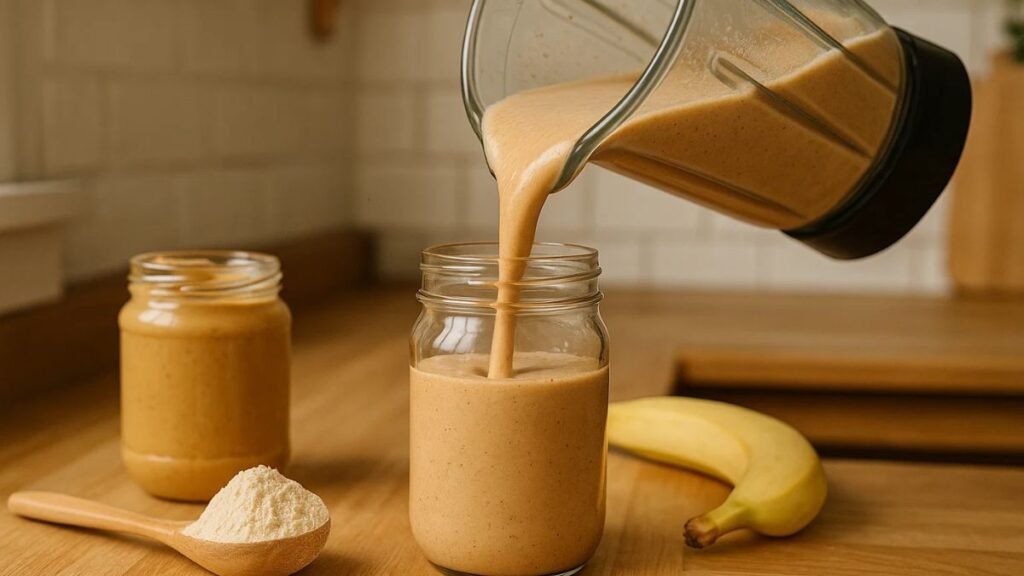
Pick an unflavored or vanilla powder and whisk it in. If the texture gets a little chalky, blend the oats with milk or whirl in a frozen banana. If you like the idea of a portable shake, try the peanut-butter protein shake approach for a blended, on-the-go version — especially useful on rushed mornings.
Nut butter stir
A spoonful of almond or peanut butter makes oats richer and more satisfying. Warm the nut butter briefly so it mixes smoothly. If you’re after a breakfast that tastes like dessert but behaves like dinner, nut butter is your friend.
Cottage cheese blend
This one surprised me the first time I tried it. Blend ½ cup cottage cheese into cooked oats for a tangy, custardy result. Add scallions and cracked pepper for a brunchier, savory bowl — and yes, this works as well as it sounds.
Milk or soy swap
Cooking oats in milk or fortified soy milk gives both creaminess and an extra protein bump versus water. Use whole or reduced-fat depending on calories and how indulgent you want your bowl to feel.
Seeds & nuts topping
Hemp, chia, and flax are tiny but mighty — they add protein, fiber, and healthy fats. If you want a quick primer on which seed to choose and why I like them, check out this comparison of pumpkin seeds vs chia seeds. Toasting nuts first gives you that warm, toasty crunch that makes every spoonful satisfying.
Savory egg mix-in

This is one for the curious eaters: whisk a soft-cooked or poached egg into hot oats for a custardy, savory bowl. Add a splash of soy sauce or a shower of grated cheese for umami. It’s not Twitter overnight viral, but it might change how you think about breakfast.
If you want to flip oats into a smoothie, toss cooked oats in the blender with cold coffee and a scoop of protein — you get a coffee-protein smoothie that tastes like a café order.
Two quick recipes to try
Berry-Greek Protein Oats
Cook ½ cup oats in 1 cup milk. Stir in ½ cup Greek yogurt and 1 scoop vanilla protein. Top with mixed berries and 1 tbsp chia.
Savory Cottage Cheese Oats
Cook oats in water. Stir in ½ cup cottage cheese and 1 soft-cooked egg. Finish with scallions, cracked pepper, and a dash of hot sauce.
- Add Greek yogurt or cottage cheese for creaminess + 10–14 g protein.
- Mix one scoop of protein powder for a 15–25 g boost.
- Use milk or soy milk instead of water for extra protein.
- Top with seeds, nuts, or a spoonful of nut butter for combined protein and healthy fats.
- Stir in a cooked egg for a savory, 6–7 g protein lift.
Who benefits most
People trying to lose weight and want fuller mornings; older adults looking to preserve muscle mass; busy professionals who need portable, satisfying food; athletes aiming for higher daily protein.
Practical notes & safety
Watch added sugar in flavored yogurts and powders. If you’re dairy-intolerant, choose soy yogurt, pea protein, or nut options. If you have kidney disease or other health issues, check with your clinician before increasing protein.
How much protein do you need?
Everyone’s target differs. If you want a tailored estimate to guide your breakfast choices, try the PCOS protein calculator or the reverse BMI calculator to help personalize how much protein to aim for.
If you enjoyed this article, don’t forget to follow and subscribe for more health tools, recipes, and news!
Sources:
National Academies of Sciences — Dietary Reference Intakes (Protein)
Harvard T.H. Chan School of Public Health — The Nutrition Source (Protein)

Muhammad Ahtsham is the founder of EatLikeFit.com and a nutrition researcher dedicated to healthy weight management. He provides practical, science-backed advice on high-protein diets and affordable meal planning to help readers achieve their fitness goals simply and effectively.